What is a comma splice

Comma Splice

… and how have I remained in happy ignorance

of them for all these years? I’m sure Miss Redford never mentioned splicing when she was teaching us how to parse sentences in P6. But then the memory fades – I’ve just had to look up how to parse a sentence. And Miss Redford would certainly have never countenanced beginning a sentence with ‘and’ or ‘but’.

And there’s another thing the dash – well that’s what I always knew it as, but it would appear that we have an abundance of dashes and using the wrong one in the wrong way brings down the punctuation police. I understand, I really do. If you know your grammar it must be annoying to see lazy, arbitrary slap-dashing (and get in the way of the story, which is certainly not what a writer wants). Actually overusing brackets gets in the reader’s way too, must remember that! And the horrible overuse of exclamation marks these days has spoilt it for when they are appropriate.

Where was I …

So to clarify on the dash … there are three types (she writes using an ellipsis – I never knew that dot, dot, dot were called an ellipsis until recently, and I think I prefer saying dot, dot dot anyway) oops brackets again. And I’ve only just discovered that ellipsis have a specific use and should not be scattered arbitrarily and liberally like confetti throughout my books … yet another bad, and wrong, habit to correct.

Back to the dash – so we have:

The hyphen – the wee shortie
The en dash – little bit longer
The em dash — the stretchy one

But it’s easy really. The em dash is described by some as an Americanism so this British writer can discard it, the hyphen is for linking two words together and the en dash is for any other dashing required. See I can do grammar.

Now back to the comma splice, I don’t fully understand it.

And the sentence above is an example of a comma splice which happens, I am reliably advised, when two independent clauses are joined together by the incorrect application of a comma. One solution is to make them into two sentences, another is to bring in a joining word – which is a correct application for and or but. Yet another is to make use of colons … but I’ll leave it to another day to get to grips with them.

If you’d like to test yourself on recognising a comma splice click here.

Ps The above is how I make sense of grammar, I’m no expert. (Oops just spliced another comma )

Stirling Castle and La Belle Écossaise

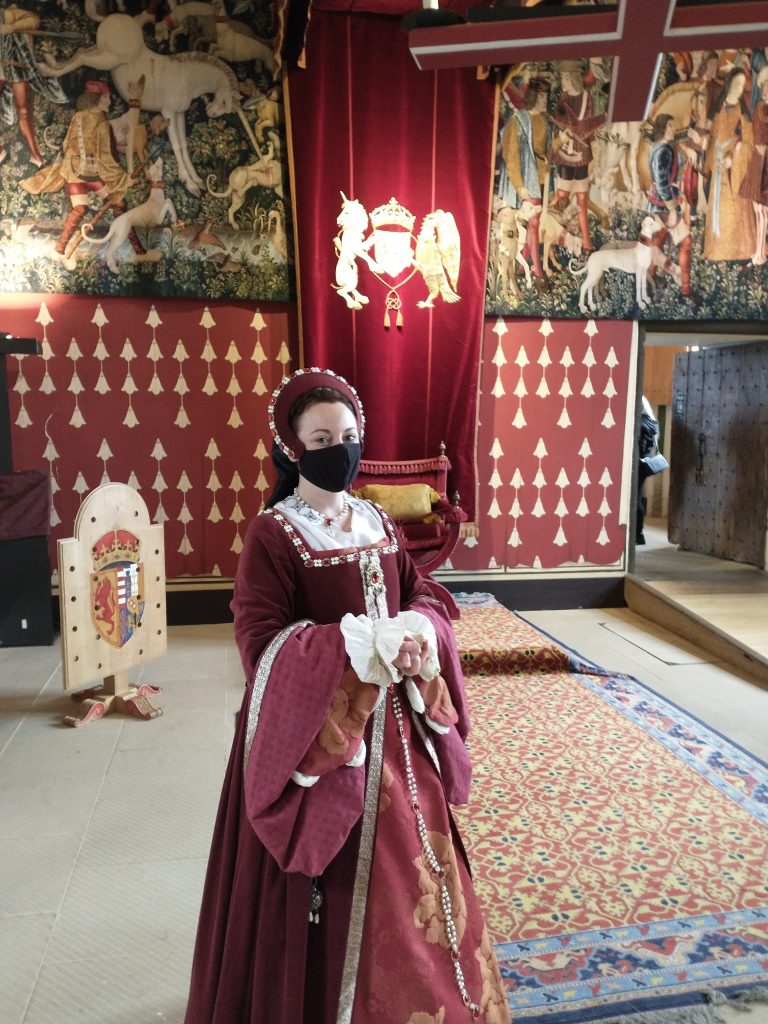
La Belle Ecossaise, complete with face mask, in Mary of Guise's throne room
La Belle Ecossaise, complete with face mask, in Mary of Guise’s throne room

On a recent visit to Stirling Castle I met La Belle Écossaise hovering in Queen Mary of Guise’s chambers. She was not as discrete as one would expect from a lady in waiting and even told me that the queen holds her most intimate audiences in her bed chamber, where she chats from behind a screen as she washes and dresses. The queen, she said, does not sleep there but in a much smaller room up a private staircase. I was wild with curiosity to be shown the secret room but on this The Beautiful Scotswoman’s (doesn’t it sound much better in French) lips were sealed.

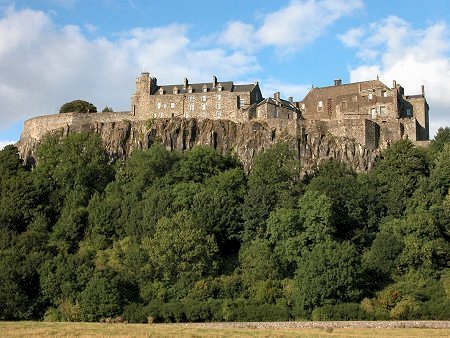
Stirling Castle

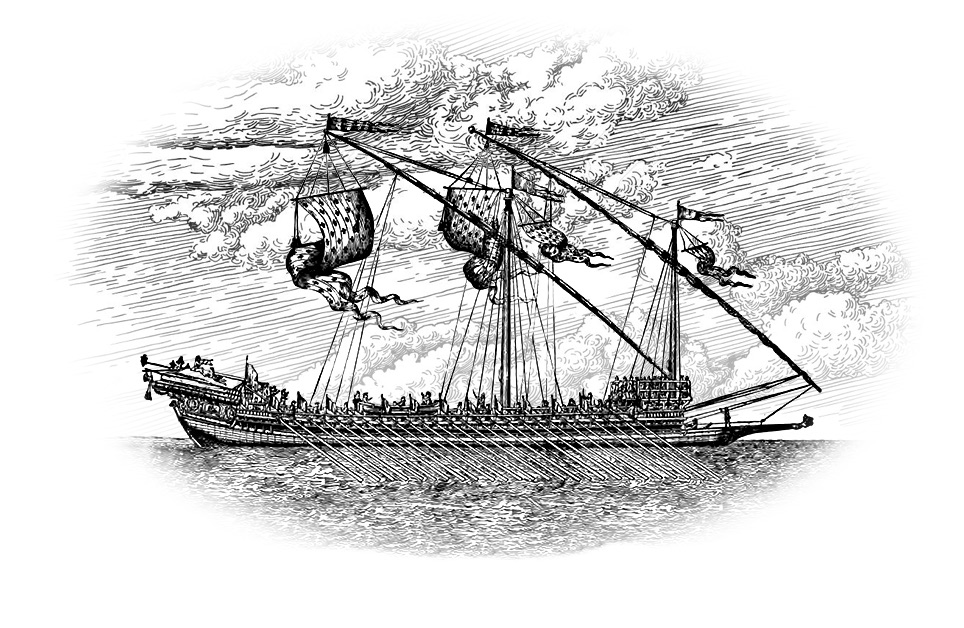
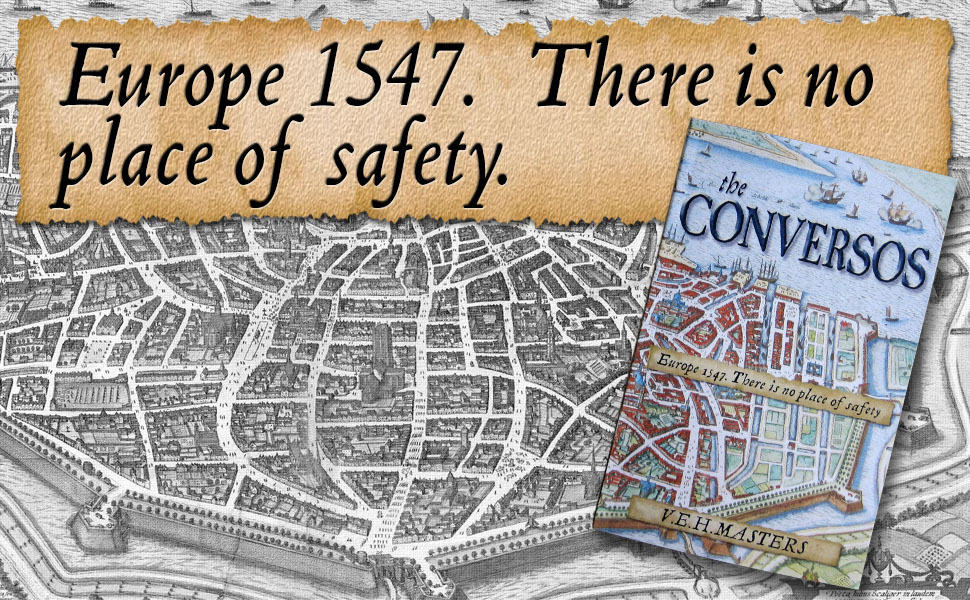
My character Will (in The Conversos) also has sight of La Belle Écossaise while he is a galley slave on the ship that transports the infant Mary Queen of Scots to France. La Belle Écossaise was amongst the wee queen’s retinue, even though as she herself told me, she could not speak French. Yet she is quite the demanding lady as Will observes.

After three days of riding at anchor during the storm La Belle Écossaise is seen arguing with the Captain. ‘It is too much, this swinging aimlessly in the sea. Take us ashore.’

The captain shrugs, Will doubts if he even understands what she says since she speaks in Scots. A gust of rain sends her scurrying undercover.


She’s back the next day demanding, ‘let me off this boat immediately. I must repose myself, and the children too.’


The captain evidently does understand Scots for he bows low saying, ‘I give you the choice my lady. You can either stay on board, or leave and drown.’


She stands for a moment clearly not believing what she’s heard, then the ship lurches rocked by a large wave. She staggers and is only saved from falling overboard by Logie who has appeared in time to catch her. He escorts her below, and Will can see she has much to say.

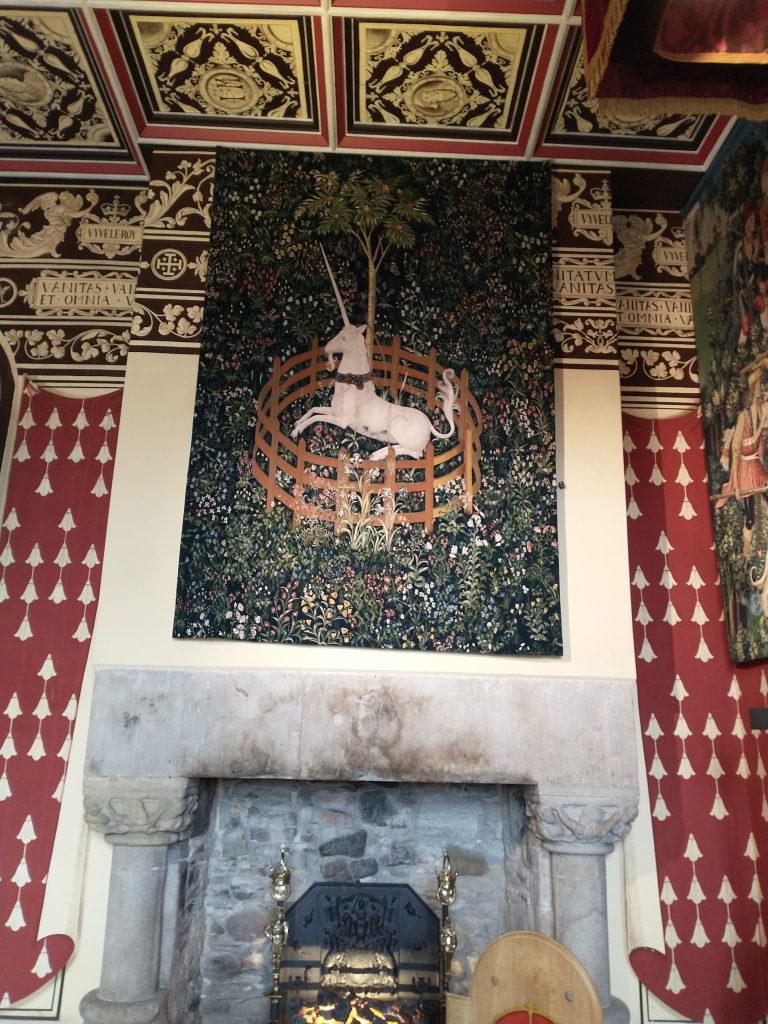
Unicorn above the fireplace

Some remarkable restoration work has been carried out at Stirling Castle and the rooms are bright with colour, the tapestries have been recreated based on what would have hung there during the time of James V and Mary of Guise. The symbolism is everywhere as powerful images were used to convey the king’s droit de seigneur. The unicorn above is sign of purity and strength.

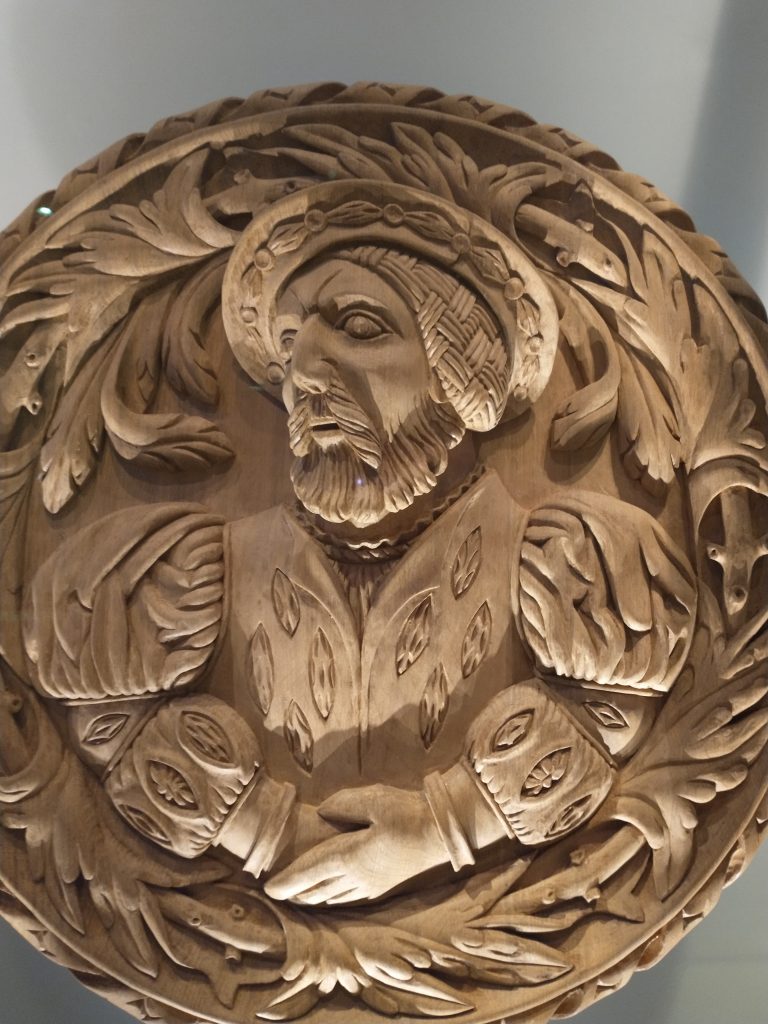
Carved Head of James V

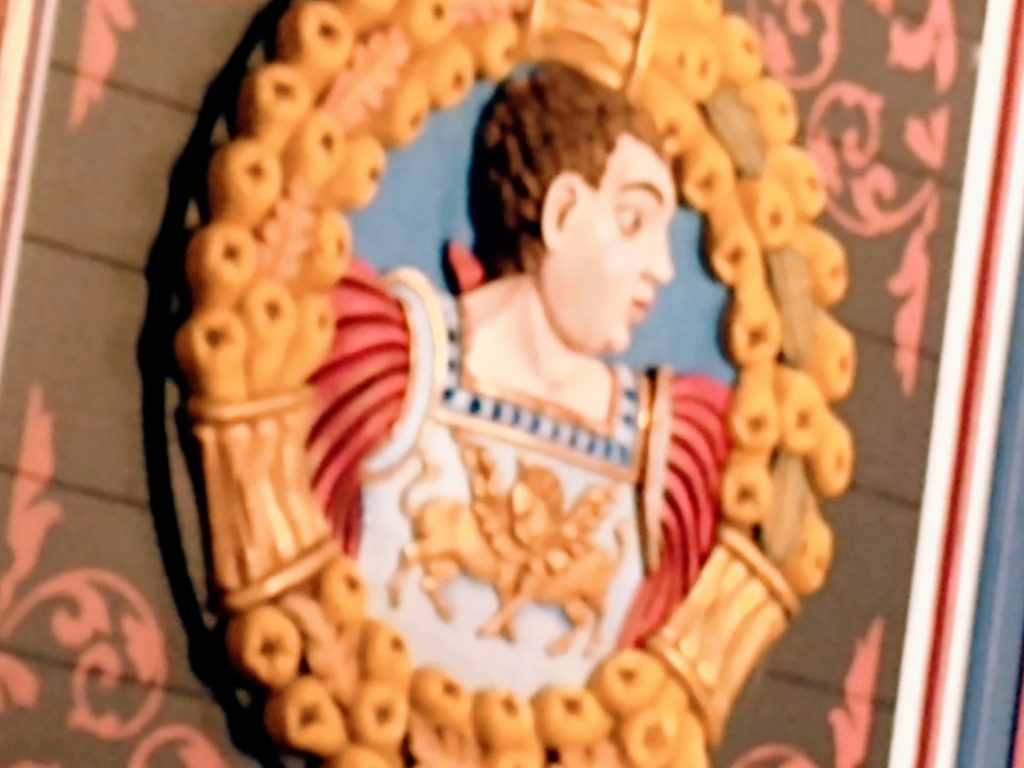
Other restoration work includes the carved heads found on ceilings – and a replica of every known head has been hand carved in oak and then painted after the worn originals were studied in detail. The imagery and choice of heads including Julius Caesar is again all about underlining James’s power as king.

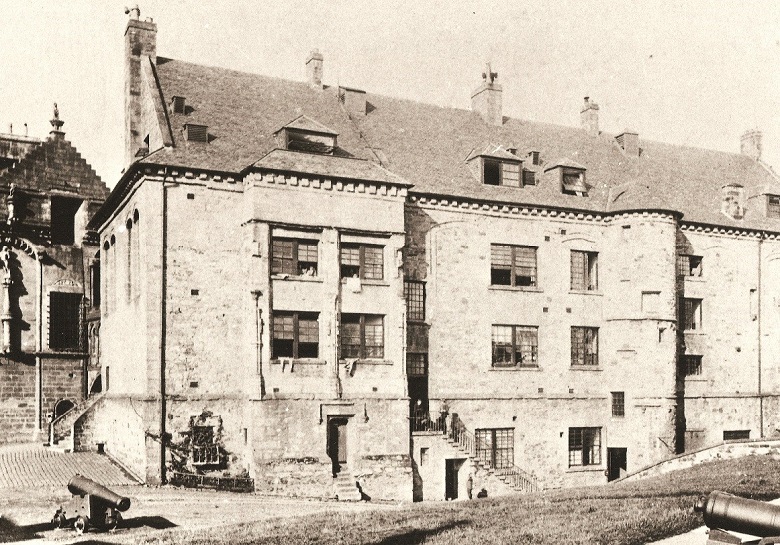
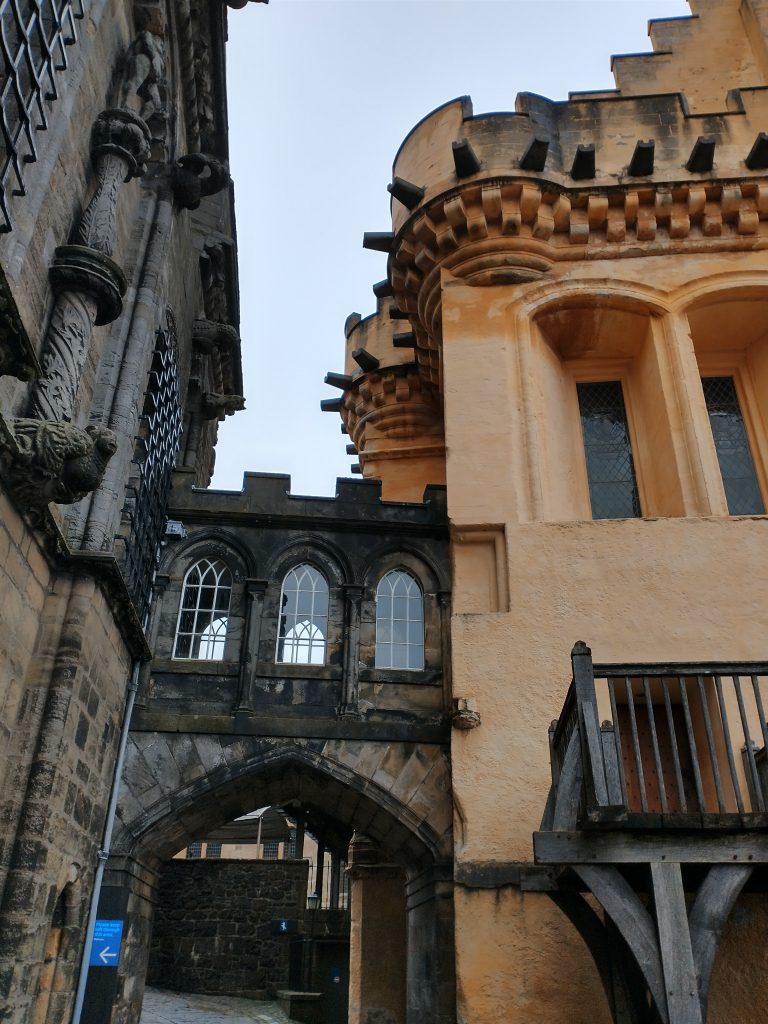
Outside the block which contained the Great Hall has been magnificently restored. It was used (and rather abused ) by the army for many many years, and they inserted sash windows, removed others and cut holes in wall.

Now repaired and painted in ochre mixed with lime, as it would have been when La Belle Écossaise walked these courtyards, giving a soft golden hue – and the gold confirmed the king’s wealth. It’s fascinating to see the contrast with how faded the rest of the buildings are.

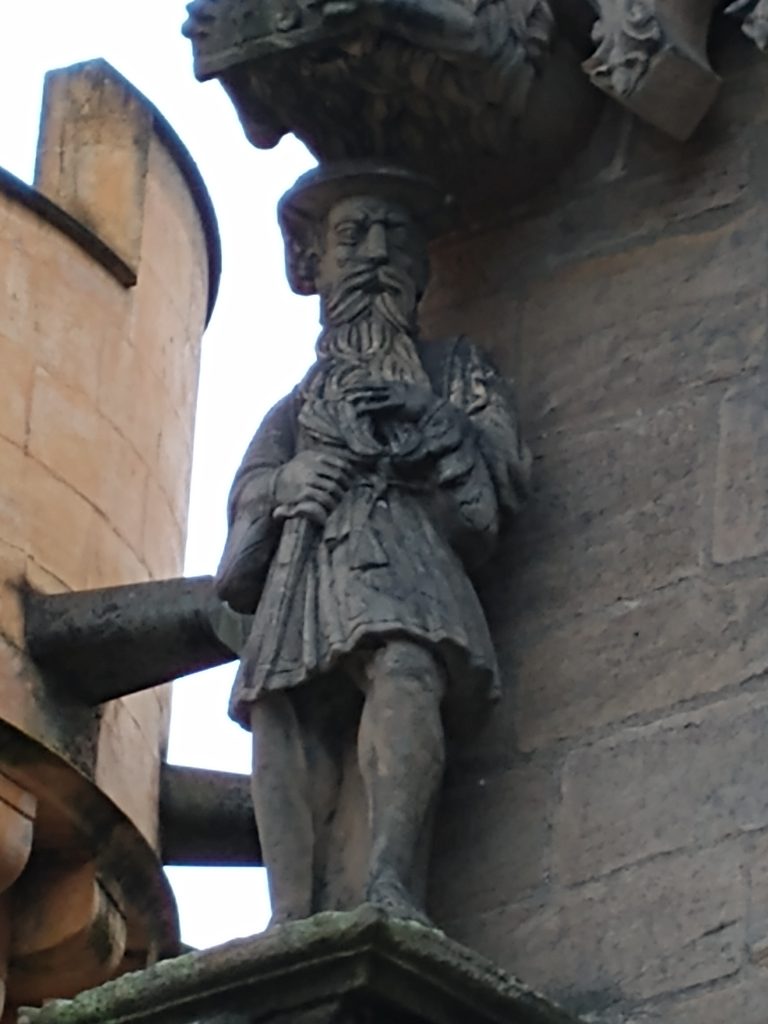
The statutes which line the outside walls would also once have been colourfully painted. The castle is a dull place nowadays in comparison to its one time splendour.

Statute of James V which would once have been brightly painted – with lots of gold leaf

As for La Belle Écossaise she was Lady Janet Fleming who caught the attention of King Henri II of France while she was in attendance on the infant Mary Queen of Scots – despite her lack of French… but then it wasn’t her language skills the king was interested in.

Lady Fleming

She had a son by him, but was decidedly indiscrete about it which led to the Queen of France, Catherine de Medici, and the king’s mistress, Diane de Poitiers, uniting in their dislike and arranging for Lady Fleming to be shipped back to Scotland, without her son. The rather unkind nickname of The King’s Whore was bestowed upon her. The king however did make sure this son was well provided for.

Ps If you are in Scotland and only have time to visit one castle then make it Stirling Castle – the restoration is remarkable and gives a fantastic sense of time and place …and the actors are a lot of fun.

Ref: Mary Queen of Scots by Antonia Fraser

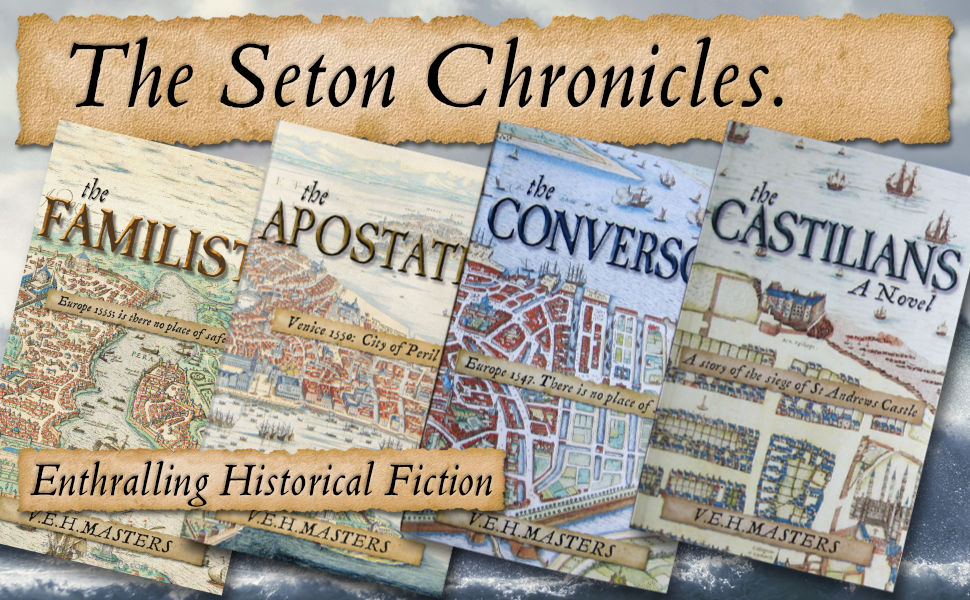
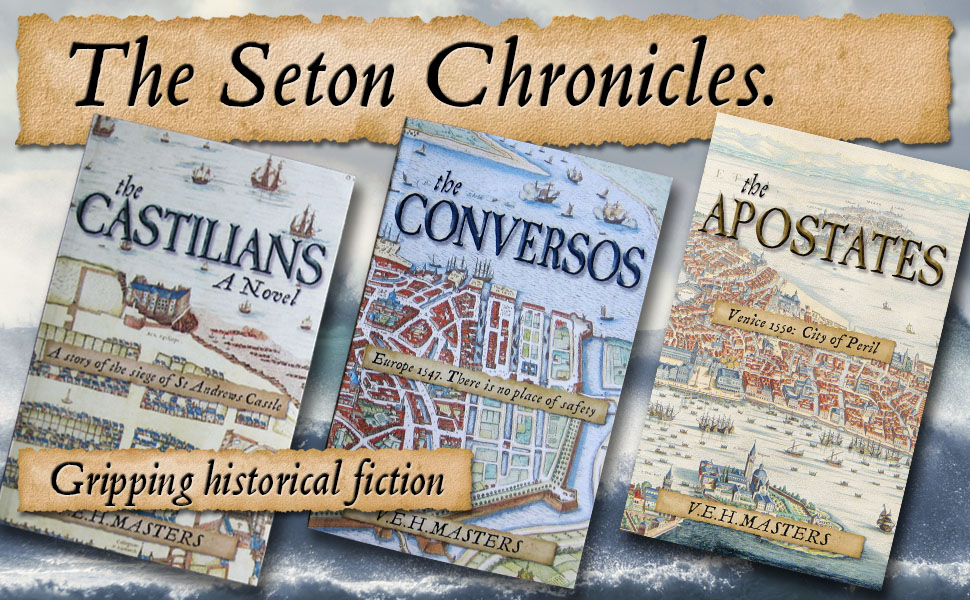
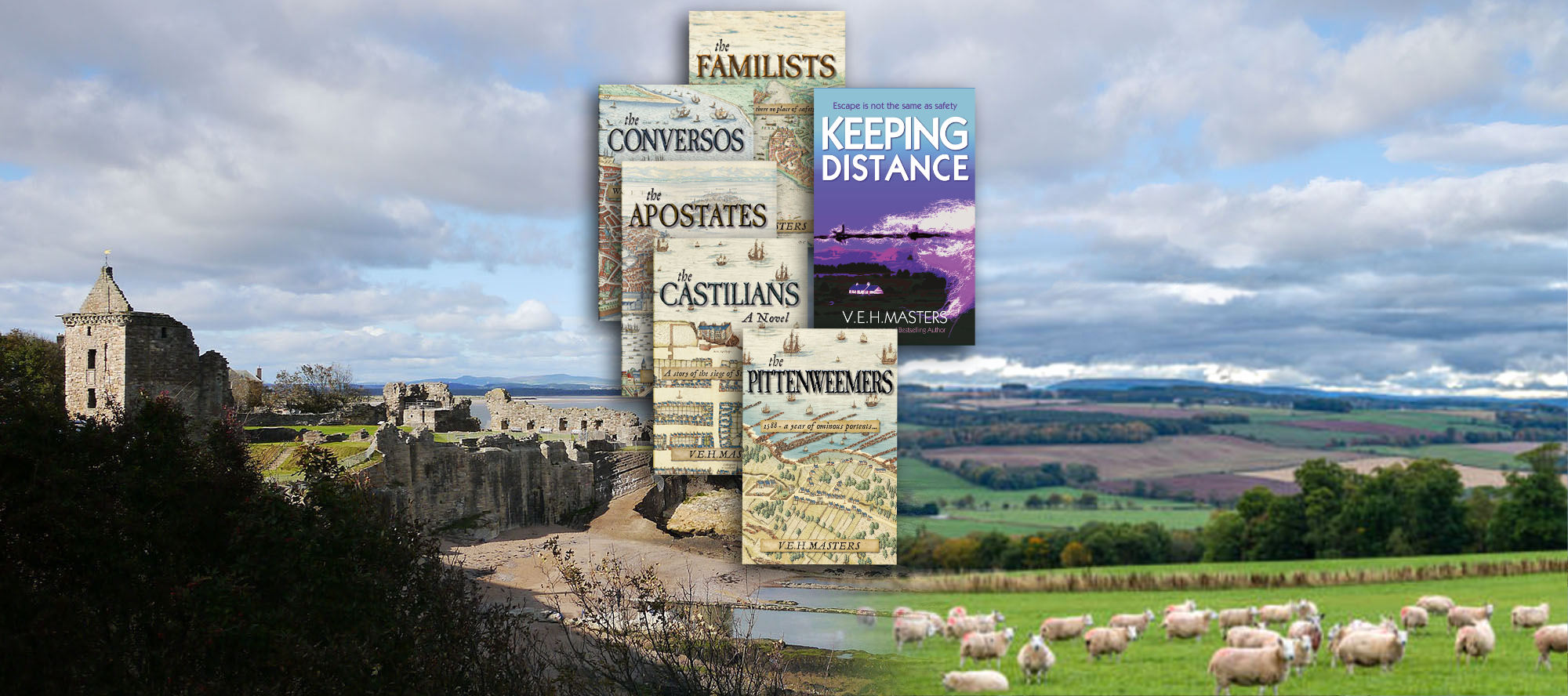
The Seton Chronicles by V.E.H. Masters

What a Good Editor Does

Margaret Atwood describes a good copy editor as ‘the person who will save you from yourself,’ and I have to agree. I am fortunate to have Richard Sheehan as mine. After he emerged from editing my series The Seton Chronicles I asked him if he would share some of his secrets in a guest post, which he generously agreed to do.

So here it is… from the editor’s pen.

The manuscript arrives in your email – where do you start?

The very first thing I do I to set up a folder structure on my computer, which includes folders for the original file, the work in progress, and the completed manuscript. I then add all my standard files for my timesheet, synopsis, character list, style sheet, and editing notes.

Then I back all these up to my online storage, which I regularly back up to several times a day when I’m working on an edit.

Then I run a set of macros on the manuscript. These give me an overview of how it’s written. They show me the numbering style, the hyphenation, capitalisation, spelling errors, and so on. I work through the results of the macros and check what’s been found with the manuscript. Then I run consistency-checking software to pick up anything the macros might have missed.

Then I begin the first of two read-throughs. Every project starts this way. But from this point on, the process can differ based on what’s required.

I hadn’t realised until I started writing that there are different types of editors – can you explain a little about that and where you fit in?

There are several types of editors, and their titles vary a little depending on location, but basically there are the following:

Developmental, Content or Substantive Editors

This form of editing looks at the big picture of the manuscript. The editor will look at it overall, chapter by chapter, particularly in areas such as the structure of the novel, characterisation, plot, pace, and point of view. The purpose of this type of edit is to develop the manuscript with the writer.

Copy-editors

The copy-editor works with the manuscript in a raw form before it is typeset and will look at grammar, spelling, punctuation, capitalisation, hyphenation, use of UK or US English, consistency, style, and accuracy. Depending on the project, the copy-editor may also address some aspects of developmental editing and fact-checking.

Note: line-editing is based at the sentence level and is sometimes referred to as separate to copy-editing. However, in the UK, I’ve found that lots of copy-editors do it as part of their work.

Proofreaders

Proofreading is traditionally done after the book has been typeset and is concerned with accuracy, quality, and consistency. A proofreader will check for typographical errors, spelling, punctuation, grammar, capitalisation, hyphenation, layout, headings, pagination, front and end matter, and anything that may not have been on the manuscript that was checked by the copy-editor.

What are the most common errors you see your authors making?

Aside from the obvious typos, punctuation, and grammar issues (and I don’t mind that, it’s my job to correct it after all), these are some of the issues I come across regularly.

Dialogue Tags and Dialogue Formatting.

Tags first. Lots of writers feel that using tags like ‘said’, ‘replied’, ‘answered’, etc. is repetitive and that readers don’t like it. As a result, they begin using tags like ‘he laughed’, ‘she smiled’, ‘he cringed’, ‘she grimaced’, ‘he hurried’, and so on. These aren’t really speech tags. They don’t describe the act of speech. People don’t ‘grimace’ words. When a lot of agents and publishers see them, they think ‘new writer!’

It’s often best to stick with the more familiar dialogue tags. There has been research done that suggests that when readers see words like ‘said’ they automatically register the dialogue and ignore the repeated use of the tags. Of course, if there are lots of short bursts of dialogue with ‘he said’, ‘she said’, this can have the opposite effect. As with lots of things in writing, it’s about judgement.

I see quite a lot of dialogue formatted incorrectly. For example, something like:

‘Hi.’ She said.

It should, of course, be:

‘Hi,’ she said.

There are plenty of websites (and style guides) that will show the correct way to format dialogue.

Timeline Errors

Writing a novel is difficult, and keeping track of everything even more so. Even the most assiduous author can have problems synchronising all the action and events in their novel. Another eye on this can be vital in avoiding stinging rebukes in those reviews.

Head-hopping

This is when an author is using a multiple third-person perspective and switches regularly between points of view. The safe way to do this is to use a specific point of view per chapter or section. It’s possible to change point of view within scenes and do it well, but it’s very difficult and requires a lot of writing skill. When done badly, it appears to the reader as if they’re bouncing between characters’ thoughts and losing track of what’s happening.

Style Sheet compiled by Richard for The Familists – where I confuse discrete and discreet

I’m always amazed what you do find because I genuinely send off my MS thinking ‘it doesn’t need much’ – and it’s amazing how many things I’ve missed. Have you ever received a MS which in your view wasn’t yet ready for copy-editing? If so, how did you decide that and what did you do?

This happens more than people probably realise, and delicate diplomacy is needed.

I usually realise pretty quickly if a manuscript isn’t ready for editing. Over the years I’ve developed quite a good sense for this. It’s why I ask for samples from the beginning, middle, and the end of the text. Sometimes the first few chapters have been polished, so it’s worth seeing other sections.

Writing a book is incredibly difficult and takes a lot of dedication, persistence, and the opening up of your imagination and inner thoughts to strangers. Taking the step of looking for an editor is also a leap of faith, and, particularly for a first-time writer, an editor needs to be very sensitive to the author’s feelings. If I get a manuscript that isn’t ready for a copy-edit, I always try to accentuate the positive and suggest if a different form of editing (perhaps a critique or developmental work) might be better at this stage in the novel’s progress. Sometimes I might propose that a writer joins a writers’ group to get feedback that way. There are lots of resources to help these days; usually it’s just a case of being pointed in the right direction.

I struggle with keeping track of dates, as you know having had to pick me up a few times most recently with the MS of The Familists where I had characters older or younger than they could be according to the timeline. Have you got any tips on how I might manage this better?

There are two issues here. One is keeping track of the chronology, and the other is keeping a record of characters. When I’m editing, I keep spreadsheets for both of these.

The character list is fairly straightforward and includes fields for physical descriptions, relationships to other characters, personality traits, significant possessions, and anything else that might be relevant during the progression of the story.

The timeline/chronology can vary a little depending on the structure of the story. From short timelines and keeping track of things by the hour, to longer timelines and keeping track of days, weeks, months, years, whatever is required.

This gets more complicated if there are several timelines and sub-plots, but it’s even more important because it’s easier for threads to get out of sync. And if you’re working on a series of books, then you need to keep a check on how everything develops over the writing of them, so you probably need to keep records over a period of years.

I’ve found spreadsheets are the best tool for me to do this. The most straightforward way of doing it can be to have a row for each chapter and allocate the columns to each timeline/character. It can get quite complicated, but it’s a good way to see at a glance if there’s a problem.

How do you balance keeping the author’s voice with making sure the editing is robust?

Good question. Firstly, as the editor, you need to keep your own preferences out of it. It’s the author’s work, and whether you would write it the same way is irrelevant. So don’t change things just because you think it should be done differently.

Look for stylistic techniques that are used consistently. The use of commas is a biggie. It’s almost like a fingerprint. Look for how dialogue and thoughts are formatted. See how adjectives and adverbs are used. How are sentences structured? Lots of short concise phrasing, or long, winding digressions with multiple clauses? Or both?

I don’t think of rules in editing, I think of conventions. And it’s okay to break conventions. So if a writer breaks conventions but the story benefits, stick with it.

Most of all though, remember whose story it is and ‘do no harm’.

Any Final Thoughts?

It’s hard to think of editing as a job sometimes, because I feel so fortunate to be reading other people’s writing and getting paid for it. So it’s a great privilege, and I see my prime purpose as trying to bring the very best out of the writing I’m working on. Sometimes I just look at a piece of writing and realise that I can’t do anything, it’s wonderful as it is, but that’s okay too – don’t mess with something that’s good.

***

I started editing after a twenty-year career in IT. I’d been writing for a few years and was looking for a change of career. I spent over a year completing courses run by the Society for Editors and Proofreaders (now the Chartered Institute of Editing and Proofreading) and The Publishing Centre, and qualified as a copy-editor and proofreader. I then started working freelance with publishers, authors and businesses, and I’ve continued doing so for the past twelve years, working on over 350 books in that time.

Richard can be contacted as follows:

Email: richard.sheehan@richardmsheehan.co.uk

Website: www.richardmsheehan.co.uk

Twitter: @RichardMSheehan

Reedsy: reedsy.com/richard-sheehan

Facebook: https://www.facebook.com/RichardMSheehan/

LinkedIn: https://www.linkedin.com/in/richard-sheehan-b7279044/

The Seton Chronicles Historical Fiction by V E H Masters

Click here to buy in Canada.

Click here to buy in USA

Click here to buy in Australia

Click here to buy in UK

Researching Constantinople of 1555

A visit to Istanbul yielded a rich seam of research for my most recent in series The Familists. Here’s some highlights.

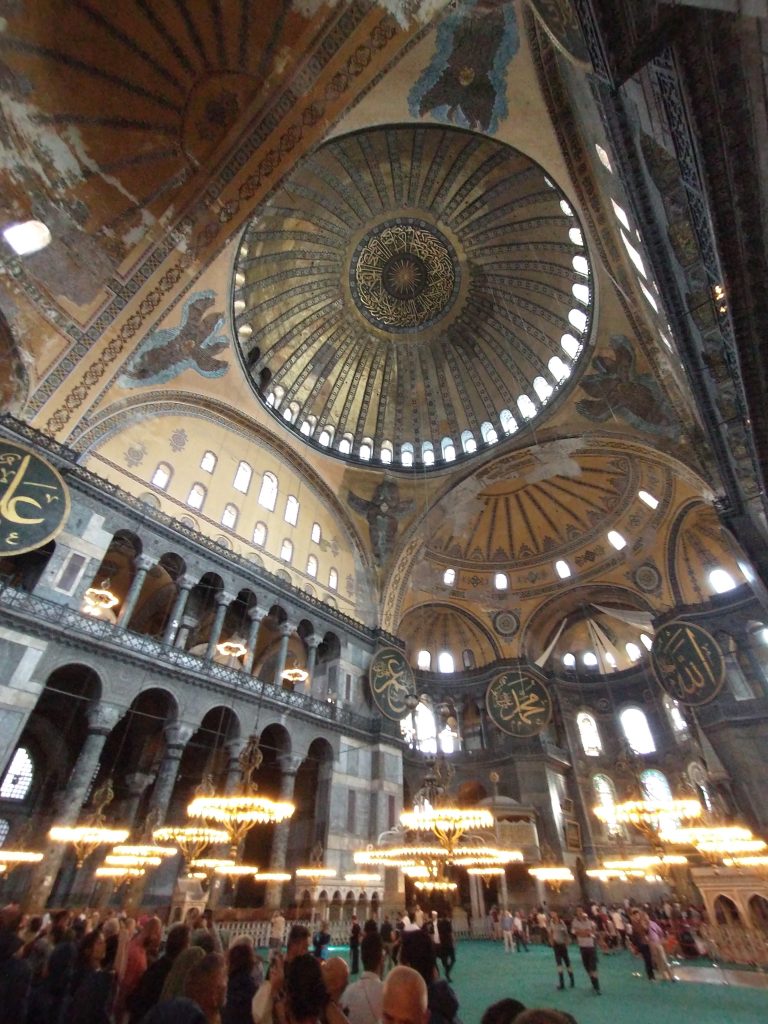
Mehmet II besieged and conquered Constantinople in 1453 and simply moved into what the Byzantines had vacated, re-purposing and repairing as he went. The stunning Hagia Sofia, built nine hundred years earlier in 537 , as the principle church of the Byzantine Empire, became a mosque

Ceiling of the Hagia Sofia Mosque

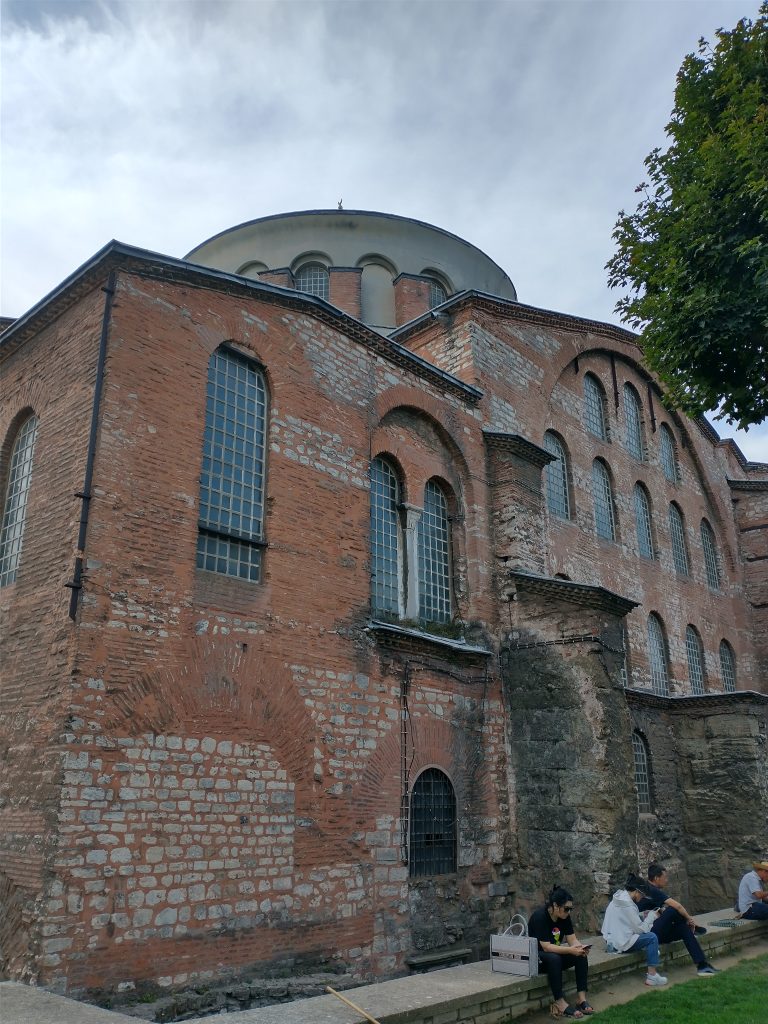
and the church within the Topkapi Palace grounds was used as an arsenal.

Hagia Eirene, a church in grounds of the Palace

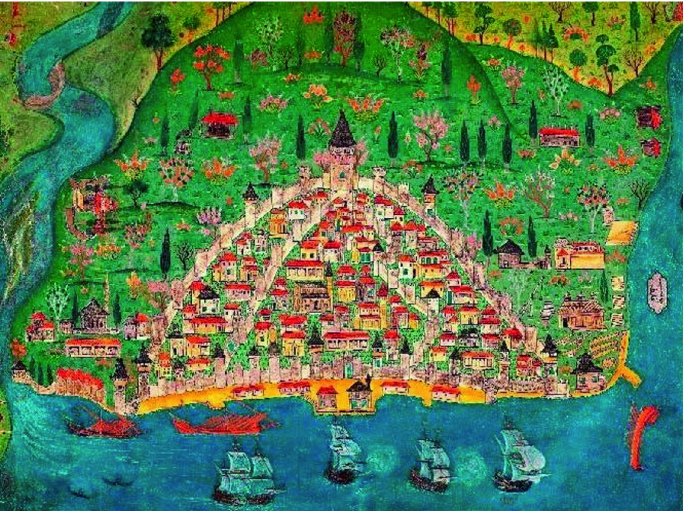
My characters find themselves in Constantinople barely a hundred years later, or more accurately, living across the Golden Horn in an area known as Galata where the many Conversos (Jews who had been forcibly converted to Christianity) fleeing across Europe finally settled .

Map of Galata 1500s

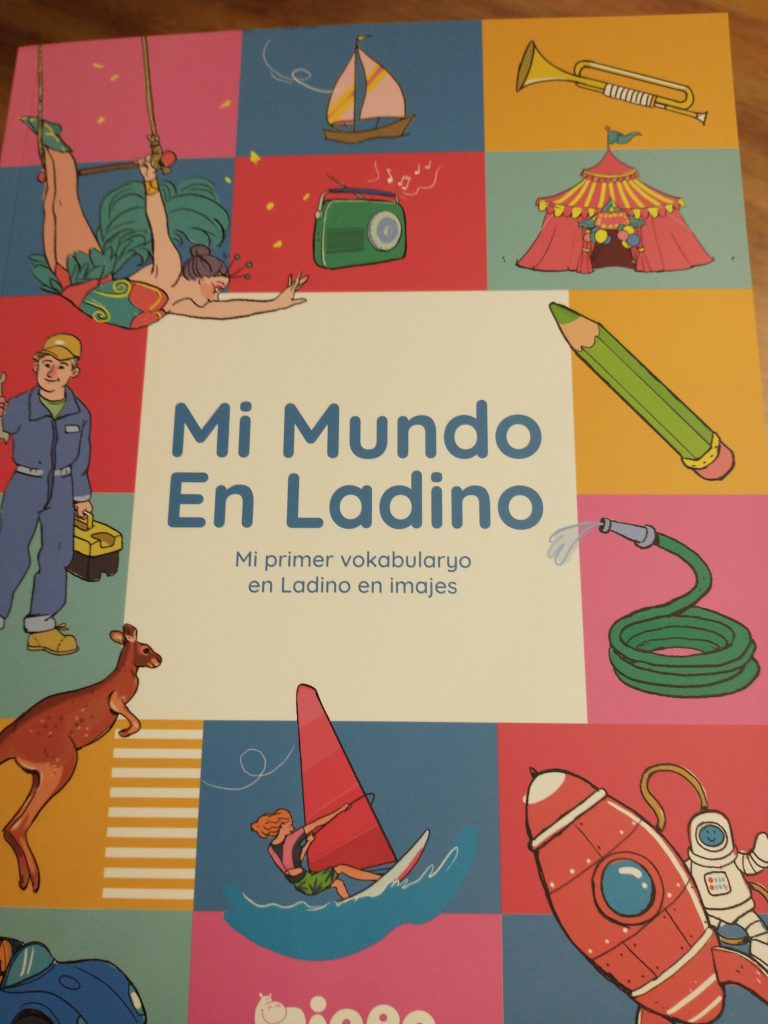
Conversos were originally expelled from Spain and spoke a Judeo Spanish known as Ladino (the Greek Jews of Constantinople who’d been there long before the Spanish Jews arrived spoke a Judeo-Greek known as Romaniote). I was very interested to see a child’s Ladino textbook in the museum of Turkish Jews in Galata

Ladino (Judeo-Spanish) Text Book

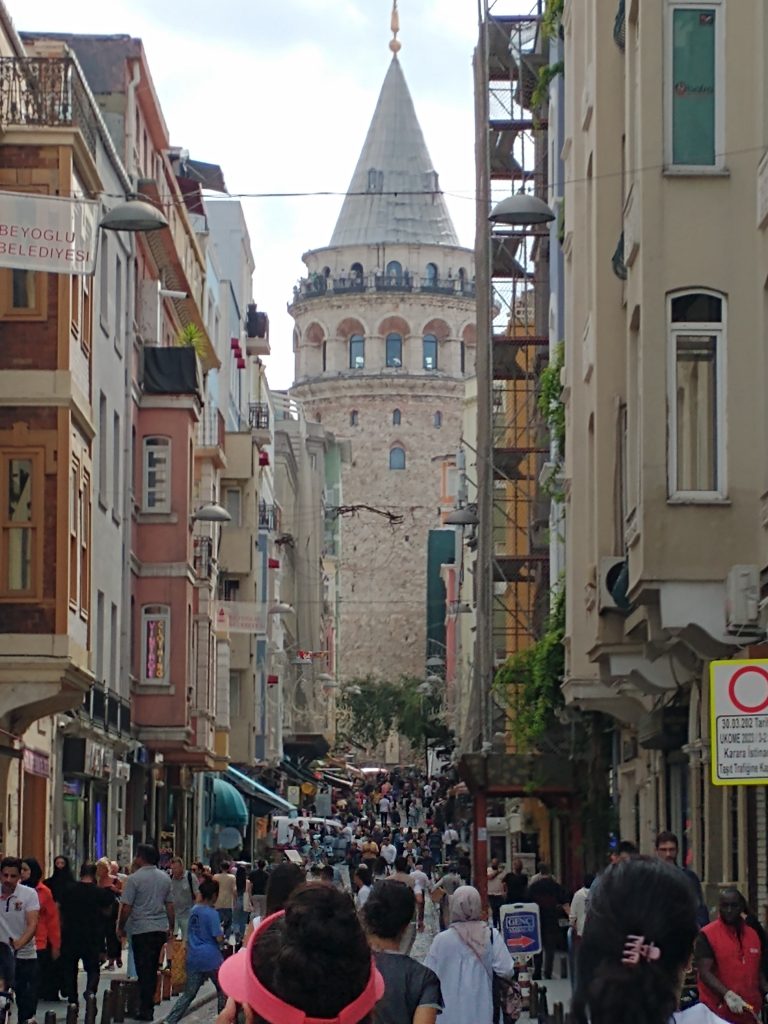
Galata is dominated still by its watch tower built by the Genoese when they captured Galata in the 1300s.

Galata Tower built by Genoese

The area was famous for its fish market even then, which is well worth a visit.

Famous Fish Market of Galata

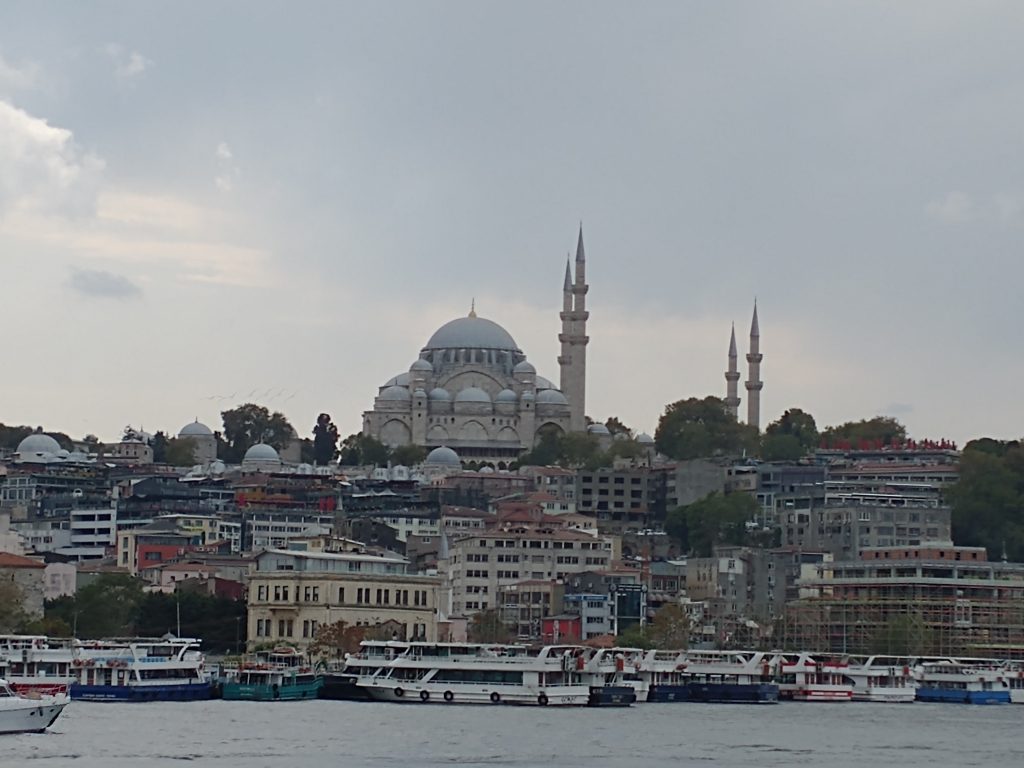
I had debated whether a trip to Istanbul was necessary since I had already done a lot of research for The Familists and of course it would have changed dramatically since 1555. But I’m glad we made the trip for, apart from being a magnificent city, there were at the very least the vistas which cannot be captured in the same way through looking at images. The view Bethia would have seen whenever she crossed the Golden Horn to take goods to the harem in the Topkapi Palace or visit the Grand Bazaar would have included the Süleymaniye Mosque rising behind the city walls.

Suleymaniye Mosque built 1550-7

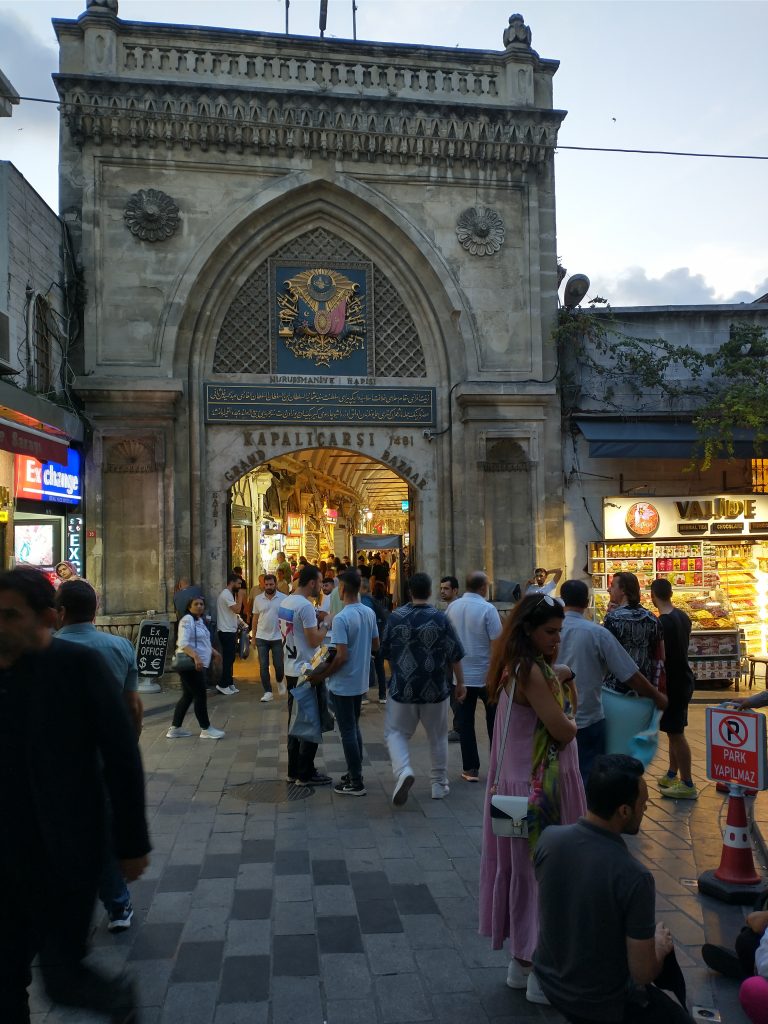
The Grand Bazaar established during the reign of Sultan Mehmed II between 1451 and 1481, is one of the largest and oldest covered markets still in existence, with about four thousand shops.

One of the Entrances to the Grand Bazaar

What I could never have captured from research alone was the sheer noise of the place as voices of traders haggling with customers echoed off its high arched roofs – and we were there in the evening shortly before it closed. I can’t begin to imagine how loud it must be in the middle of the day.

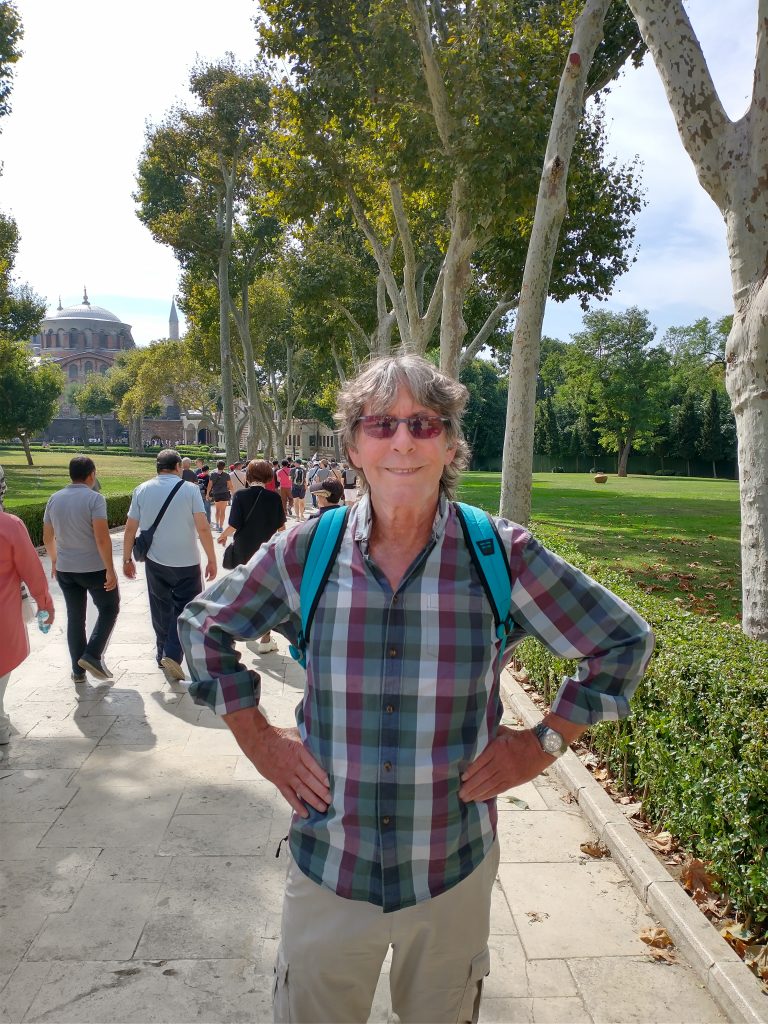
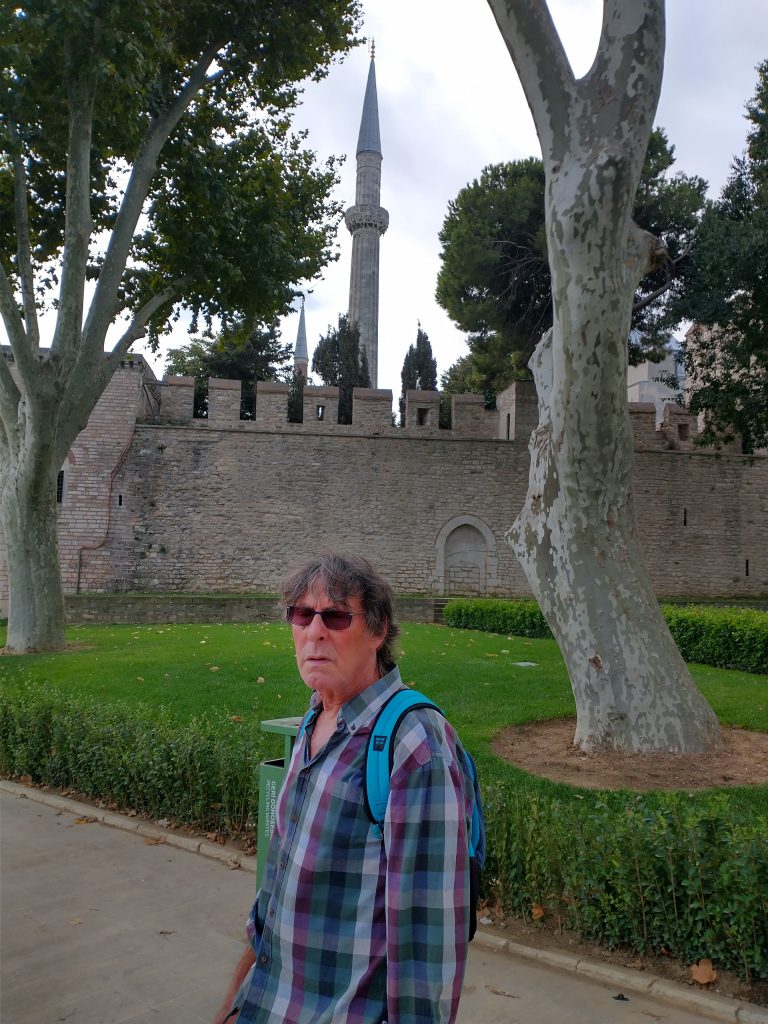
I am a lover of castles as those who read my newsletter will know from its regular slot covering ‘Great Castles to Visit in Scotland’ but the Topkapi Palace is beyond any castle I’ve ever visited. We were there for five hours and I barely touched the sides. Above is husband pictured at the beginning of our visit …and below after five hours. In my defence he did spend the last hour sitting reading the book on his phone.

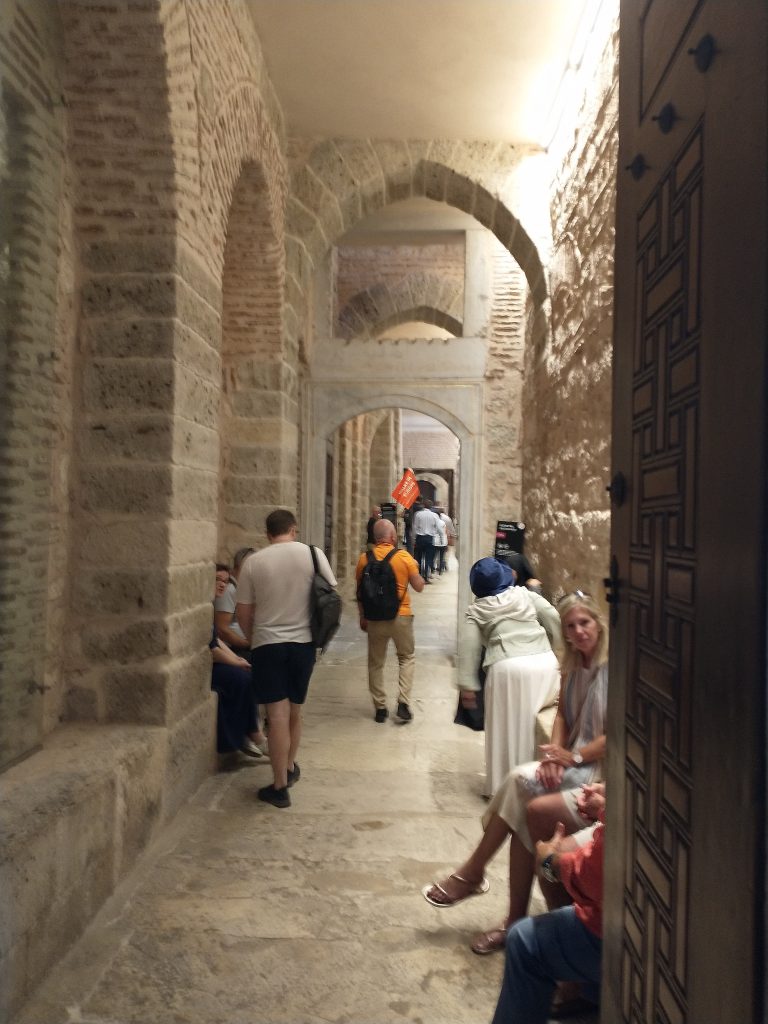
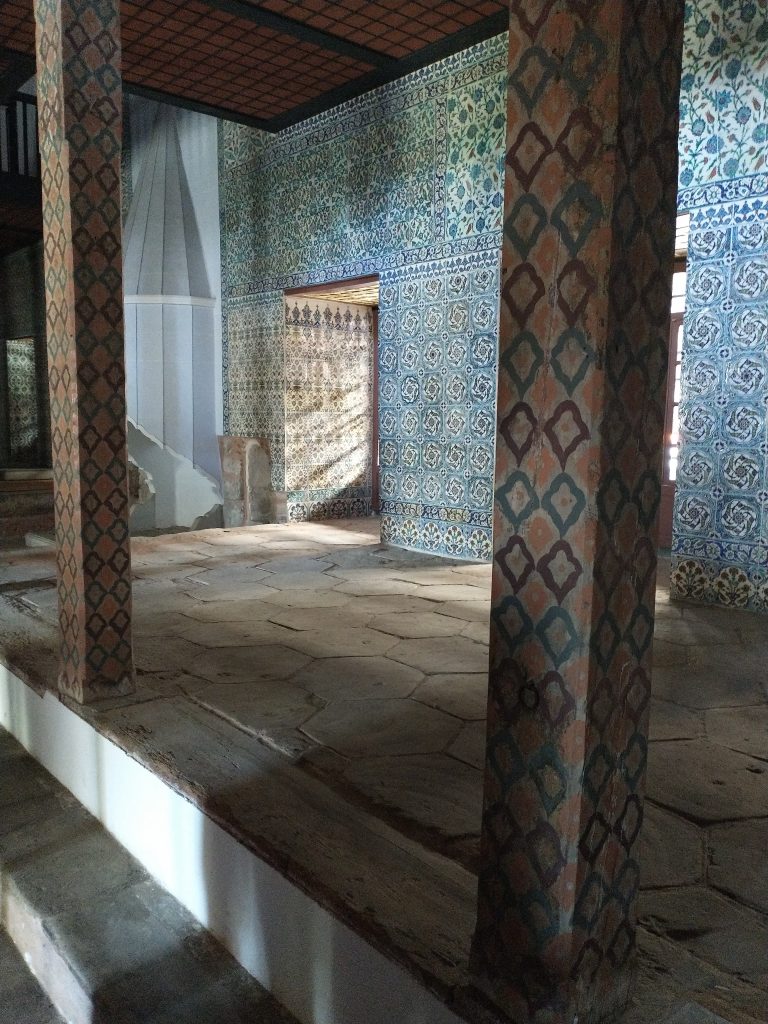
Most fascinating of all was the tour of the harem. My character Bethia ends up running a business selling goods to the concubines who, of course, could not leave its confines. The mostly Jewish women who provided this service, were known as kiras. The harem is inevitably a more confined area than the rest of the spacious palace, with a view only of the sky from its narrow courtyards.

Within the Harem

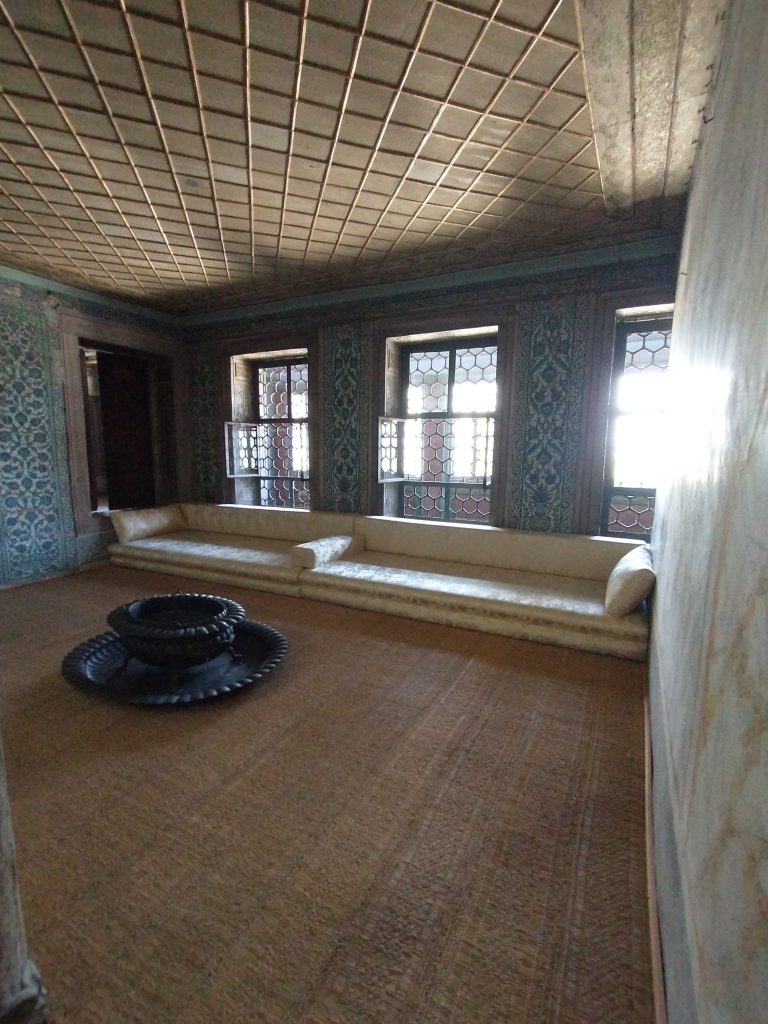
Even the Valide Sultan (the sultan’s mother) reception room was surprisingly small.

Valide Sultan’s Audience Room

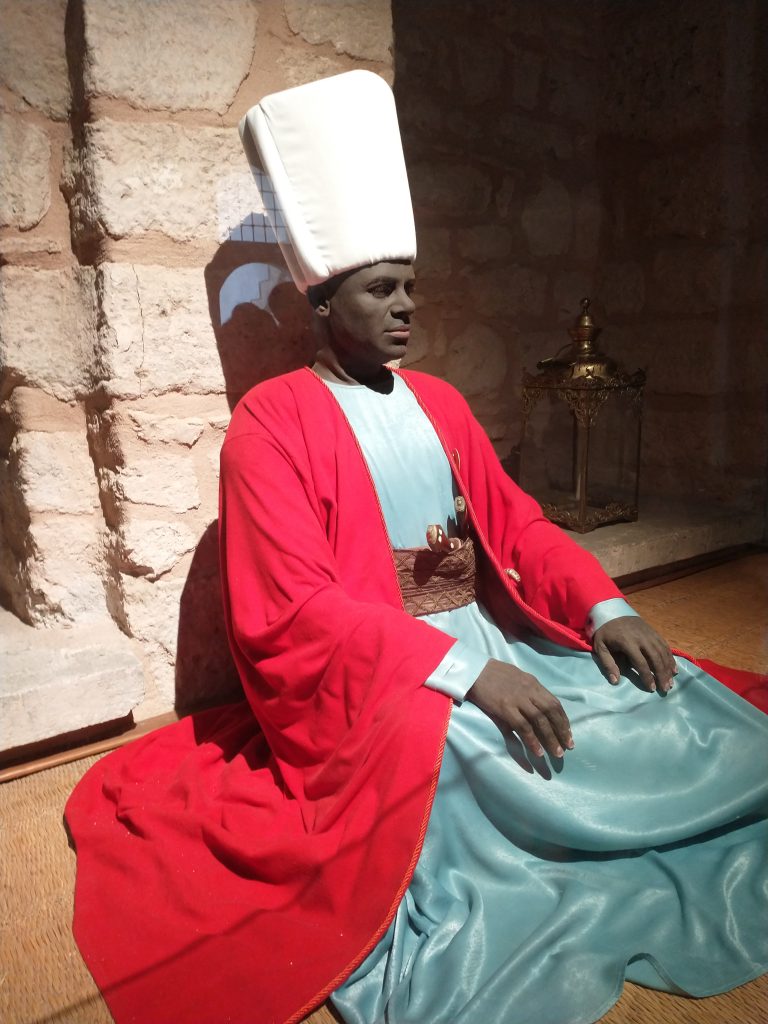
The eunuchs quarters are attached to the harem and also a dormitory. Indeed there were lots of dormitories within the palace for both janissaries and all the administrators who worked and lived there – around three thousand people in all during the time of Suleiman.

Dormitory with sleeping patforms – one of the many

There were men who brought the women of the harem their food from the palace kitchens and went out onto the hillsides to chop wood for the fires – making them a strange combination of servers and loggers. These young men wore their fringes very long so their hair covered their eyes. They were never permitted in the harem proper and any young woman who found herself in the area where they left the trays of food would be in trouble, along with the server. The Chief Eunnuch held great power and controlled the finances of the harem, so the kira were paid by them.

Eunuch guarding the entrance to the Harem

There were lots of museums within the walls of the palace, including those displaying jewels (too long a queue to wait in), armoury, kitchen equipment as well as the courtyard where Suleiman liked to watch his menagerie of lions in action. The museum I found most fascinating was that displaying the clothes the sultans wore.

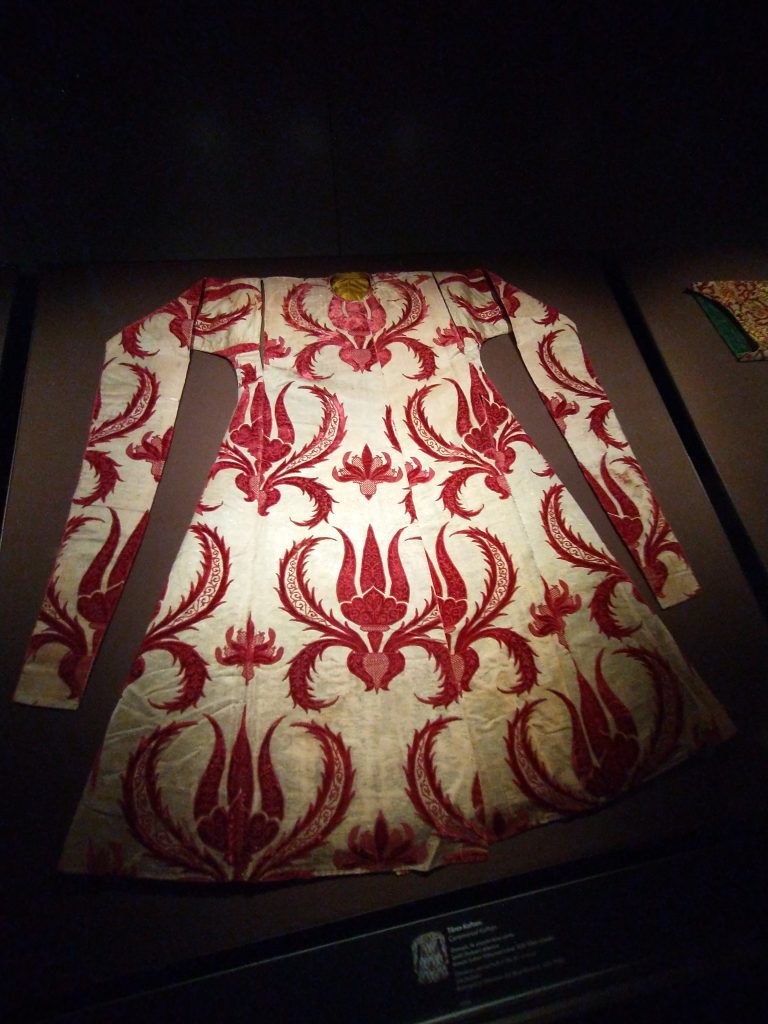
Kaftan worn by Suleiman circa 1550

The garments were found when the palace was restored in 1924 and remarkably both Mehmet II and Suleiman’s clothes had survived for over five hundred years because of the way they’d been stored. The undershirts were especially intricate with the text from the Koran painted on in the most tiny handwriting.

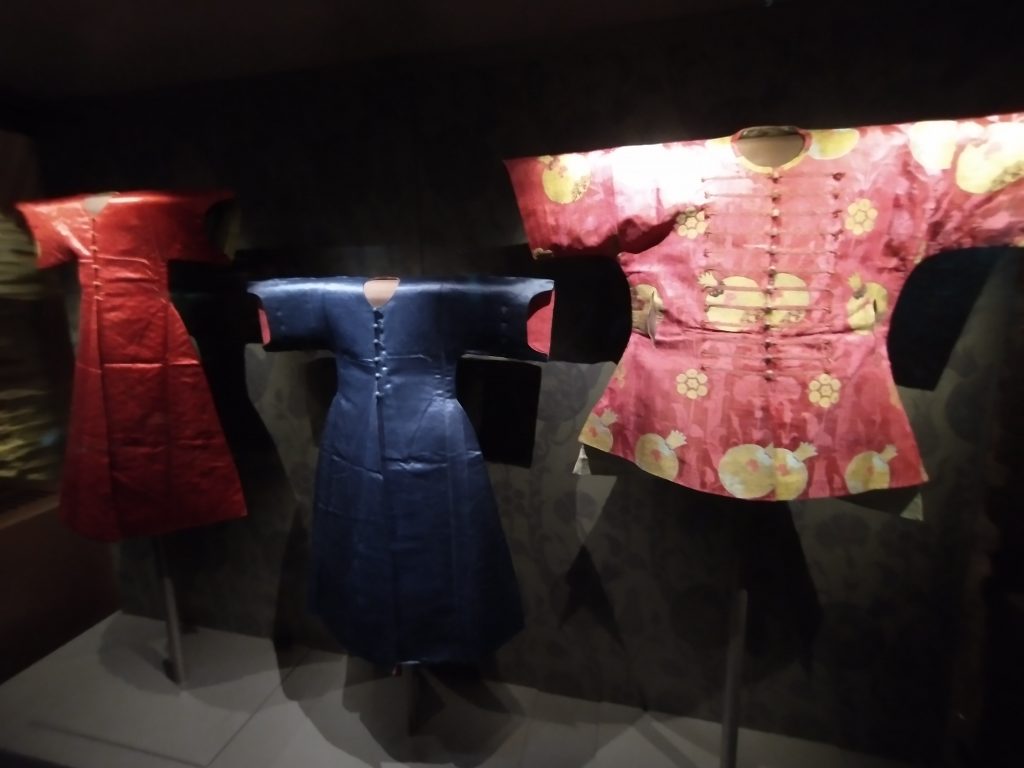
Clothes worn by the Princes circa 1500s

It was upsetting to look at the clothes on display once worn by the sultan’s children and know that only the son who succeeded would survive after the sultan’s death – virtually the first action taken by a new sultan on succession was to order his siblings strangled.

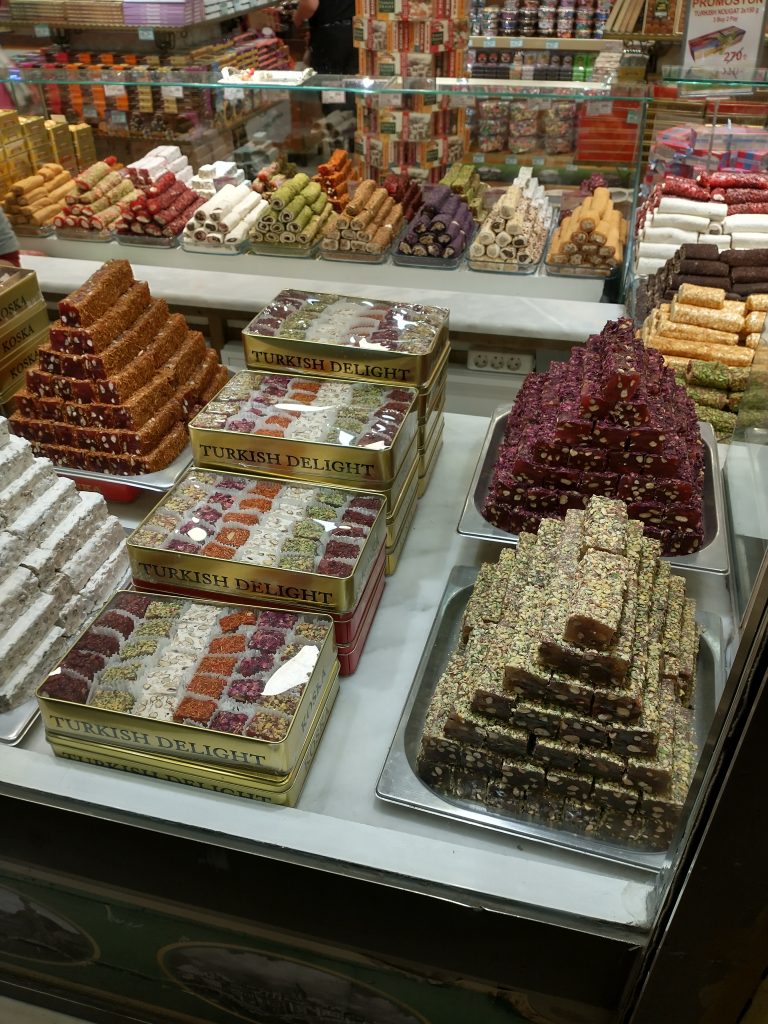
Delightful display ofTurkish Delight

A grim note to end upon, so I shall leave you with a picture of the amazing Turkish Delight to be found in Istanbul’s many, many confectionary shops.

Click here to buy in Canada.

Click here to buy in USA

Click here to buy in Australia

Click here to buy in UK

My monthly newsletter offers subscribers updates on research and my writing as well as a couple of free short stories (available to subscribers only) and tales of my latest castle visit.

Subscribe here – you can unsubscribe with ease at any time.

Venice: Secrets of the Doge’s Palace and Other Tales

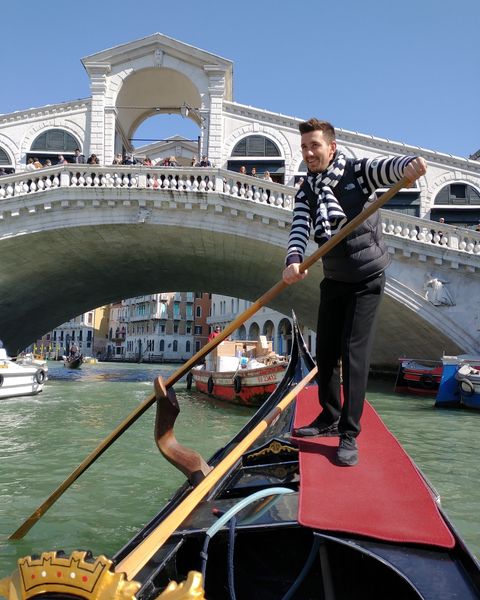
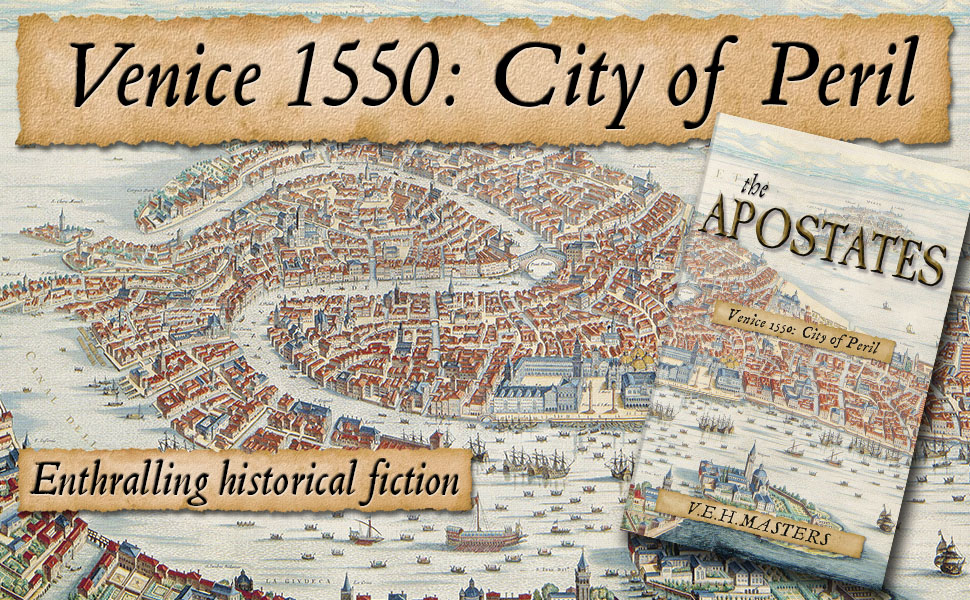
Visiting Venice last year I had the opportunity to delve into aspects of city life in the 1550s, all helpful research for the then work in progress, The Apostates. For instance, the current Rialto bridge wasn’t in existence when my characters were living there, in fact there was no bridge at all at the time since it had collapsed under the weight of a crowd rushing to watch a wedding.

Rialto Bridge designed by Antonio da Ponte, construction began in 1588 and was completed in 1591

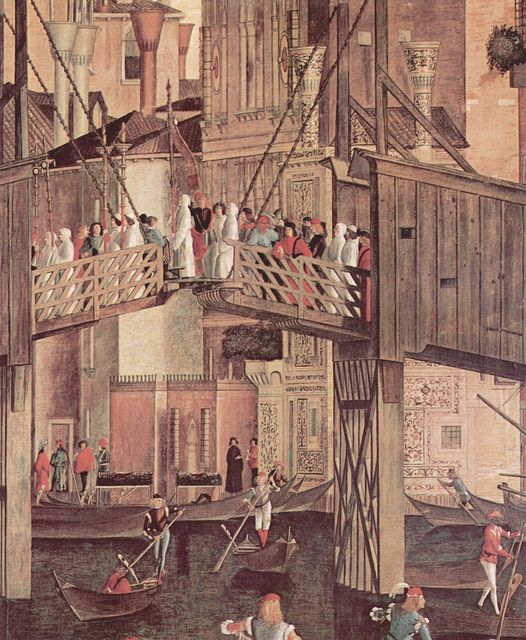
The city fathers were determined to replace previous wooden bridges with a stone built one that would last (see the painting below by Carpaccio of an earlier bridge made of wood) and asked Michelangelo, amongst others, to submit a design. When the Rialto Bridge was finally erected, many assumed it too would collapse from the weight of the marble, especially since it had no central supporting pillar. The gondoliers no doubt were very happy that it took thirty odd years before the new bridge was constructed since they provided the only means of crossing the Grand Canal.

Segment from Carpaccio’s Miracle of the Relic of the True Cross at the Rialto Bridge, 1496.

In writing The Apostates it would’ve been all too easy to assume the current Rialto Bridge, finished in 1591, would’ve been in existence. It’s those small details which can really catch a writer of historical fiction out – or this one anyway.

My research is never particularly well planned, more a stumbling on curious facts and following my curiosity. For example, cities in Europe during the era were invariably bounded by high city walls, very necessary for their defence, and yet Venice has no such defences, apart from the Fort of San’Andrea. However the canals themselves formed a line of defence. There were markers in the very shallow water within the lagoon to guide ships and boats, which could, at need, be removed making any attacker likely to run aground.

Nevertheless I found it curious that the Ottomans had never attacked – if they could take Constantinople then Venice wouldn’t have posed much of a problem. Although at times they were at loggerheads, the two regimes kept ambassadors permanently in one another courts. Cyprus for instance, was under Venetian rule and in 1570 Famagusta was besieged by the Turks yet it never erupted into open warfare between the two states. The Venetians eventually surrendered Famagusta in 1571 but the Turkish commander, furious that he’d lost over 50,000 men, breached the terms of the surrender and murdered all the Christians left in the city then flayed alive the Venetian commander.

In response the Venetians, in an unusual alliance with Spain and the Pope, won the sea battle of Lepanto and displayed the heads of the Ottoman commanders on their ships (which I cover in the most recent in series, The Familists). But these territorial skirmishes never resulted in an open declaration of war between the Doge and the Sultan. The smooth flow of trade, it seems, was more important than territory.

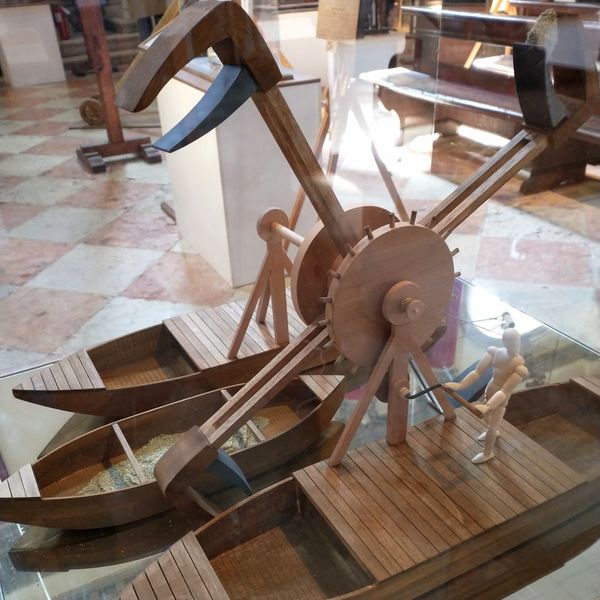
Da Vinci’s design for a canal dredger

The islands of Venice sit within a tidal lagoon and the waters rise and fall by several feet each day. Even in the 1400s there was a concern about how to maintain the depth of the canals, which were the receptacles for all the sewage, detritus and general rubbish of the day. Leonardo’s design for a dredger was never actually built but it shows the pre-occupation with depth.

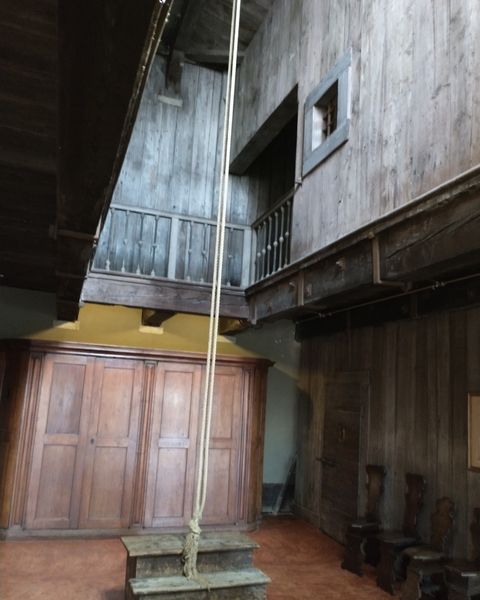
We booked a tour of the secret rooms and hidden passageways of the Doge’s Palace. Here’s the torture chamber where a prisoner could watch, from the small square window high on the right, his fellow inmate being tortured knowing it would be his turn next.

Torture chamber within the Doge’s Palace

The cells in the basement of the Doge’s Palace flooded when the tide came in so prisoners would find themselves waist deep in water every twelve hours. The wealthier prisoners were held in the attics, which had the benefit of being dry but they either baked in the summer or froze in the winter beneath the lead roof.

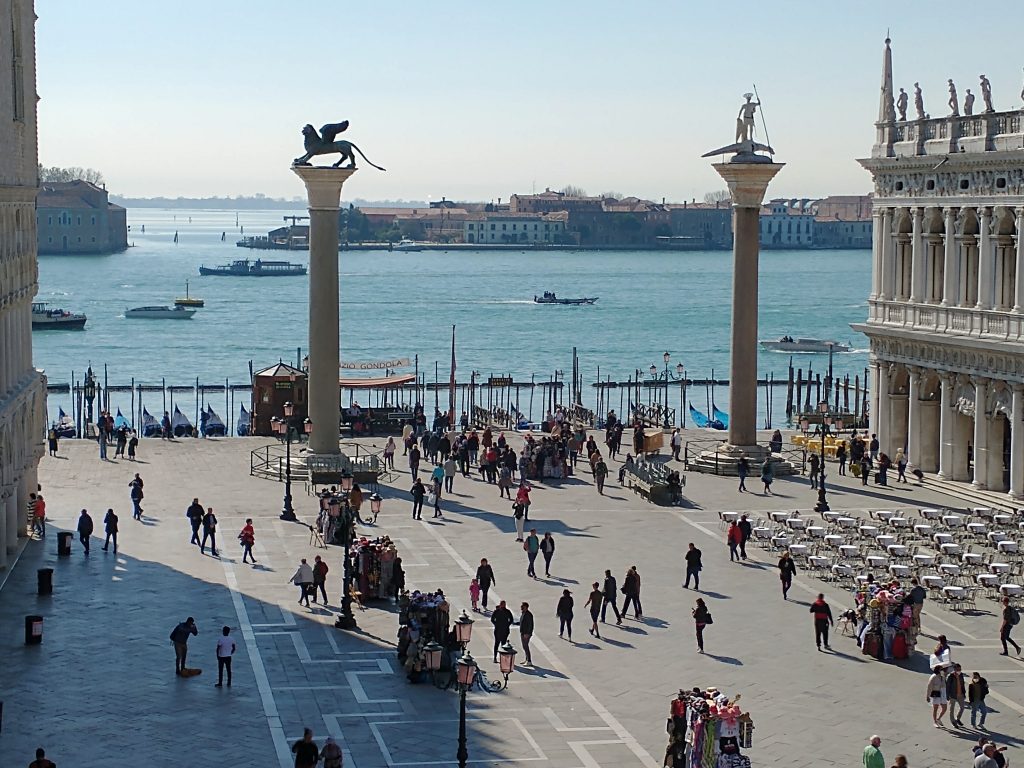
Columns of San Marco and San Teodoro in Piazza San Marco

The two pillars in St Mark’s Square, one with a winged lion and the other with the figure of St Theodore patron saint of Venice atop, were a gift from the Byzantine Emperor in the 12th century. Brought from Constantinople, there was a third column but it fell off the ship into the sea. In the era in which my books are set any member of the aristocracy sentenced to death would be hung between the two pillars and his body left swinging there for several days as a warning to others.

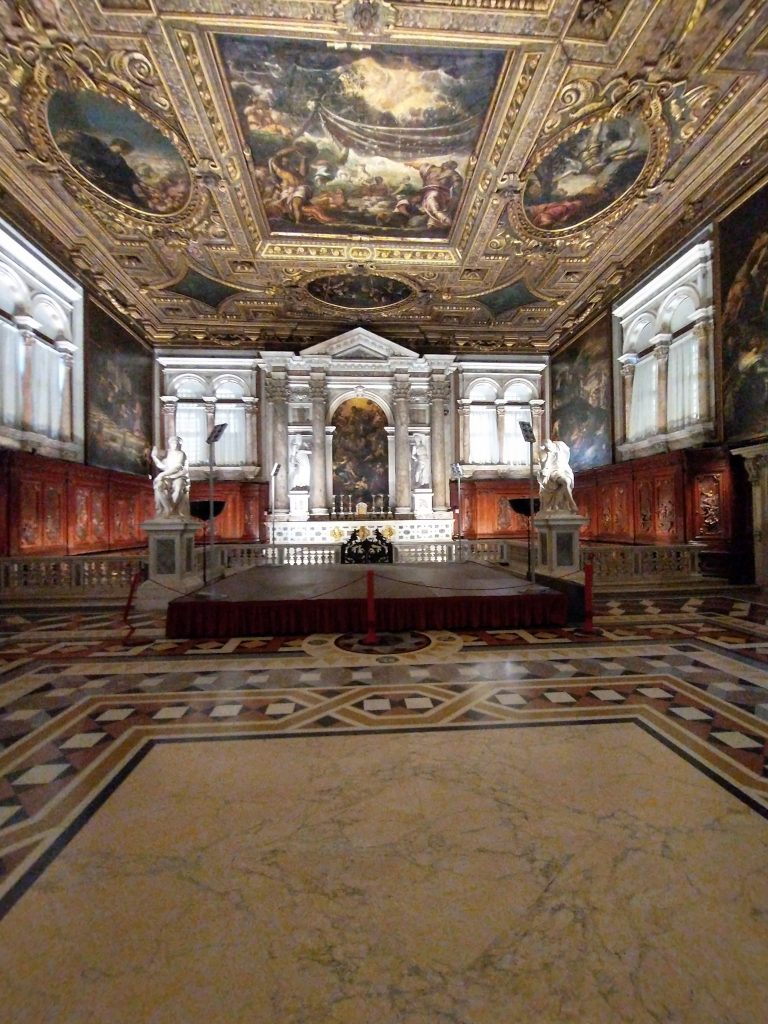
Scuola Grande di San Rocco, Venice

Visiting Venice was incredibly helpful to get a sense of the sheer scale of the buildings and the opulence my character Bethia, a wee lassie from St Andrews in Scotland, would have been exposed to. In the first in series The Castilians, Bethia’s mother is obsessed with having a painted ceiling but it would’ve been much diminished next to the grandeur of Venetian painted ceilings such as the one pictured above.

The Scuola Grande was an organisation of merchants and others who did charitable works – a precursor of the Rotary Club perhaps – but they clearly needed a grand setting in which to meet and chat about those good works.

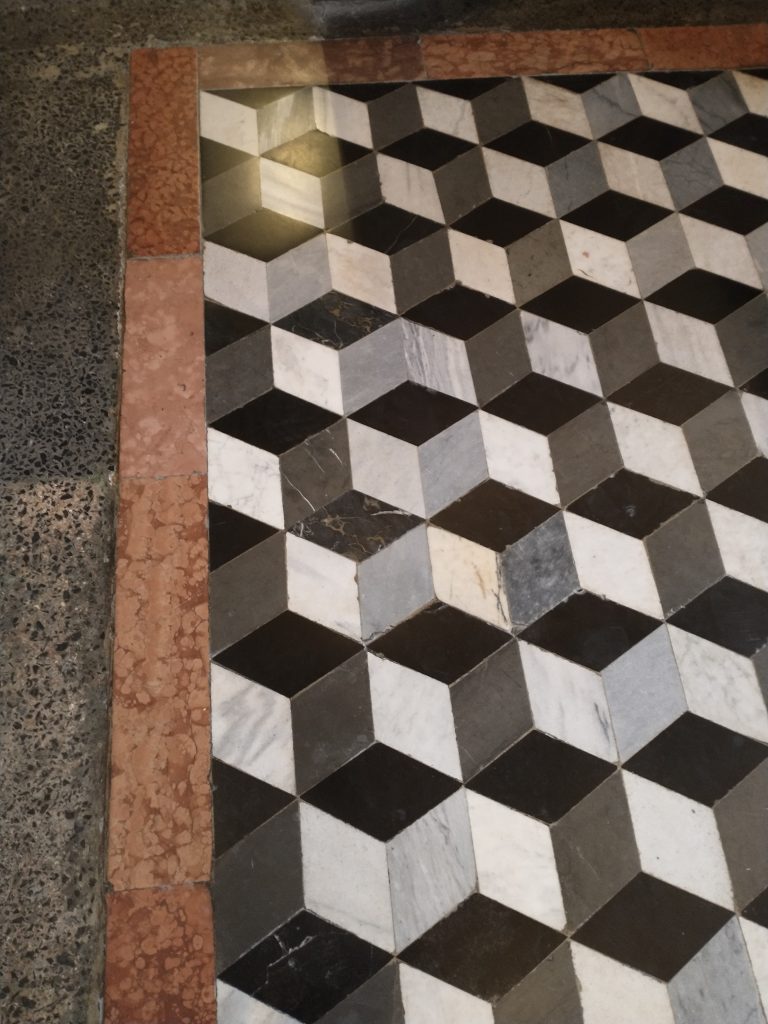
The mosaic marble floors too would have been stunning, and so smooth underfoot for a Scottish lass.

15th century Venetian floor reminiscent of the Dutch artist Escher

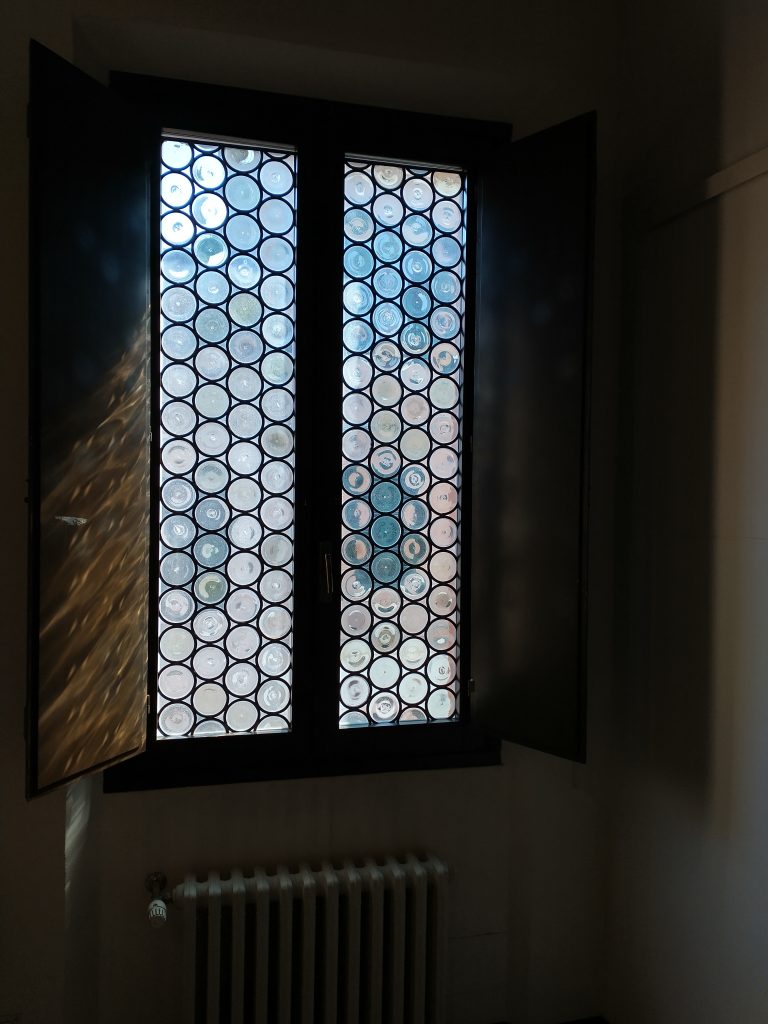
Venice is a city of light and water and flowers. But windows then still had opaque glass. Here’s one from Ferrara that has survived for five hundred years – not great for letting in the light but very beautiful to look upon.

Window of House in Ferrara dating from 1500s

My third in series, The Apostates, is set partly in Venice.

The Apostates by VEH Masters

How do you dig a Siege Tunnel?

If you’ve ever been to St Andrews you’ll know it’s not only the home of golf and site of Scotland’s oldest university but the town itself is steeped in history. Once a great centre of pilgrimage, the cathedral was left in ruins after the Scottish Reformation in 1560. Although I grew up in St Andrews the ruins were simply part of the backdrop of daily life. I was twelve years old before our history teacher, Miss Grubb, took us to visit what was left of the cathedral. 

Ruins of St Andrews Cathedral


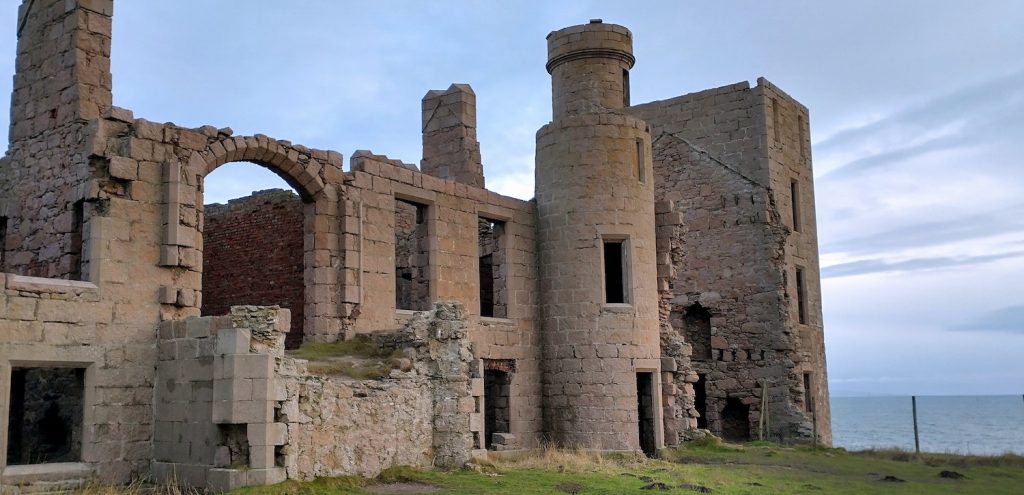
We also visited the castle where there is there is the most remarkable siege tunnel, dug in 1546 and the best surviving example of siege tunnelling in Europe from the era.

St Andrews Castle


You enter it from the side of the dry moat via a steep and uneven few steps. Almost immediately you’re bent double and for anyone who is at all claustrophobic a quick retreat is in order. 

Entrance to Siege Tunnel

Creeping down the central trench, at constant risk of scraping your back on the rough stone above, you come to a fork which leads to a dead end. You retreat and continue along the main tunnel, the sense of being squeezed growing ever greater until you can barely draw breath. Then suddenly the narrow passage ends. There’s a wall of rock before you and nowhere to go. Yet looking down you spy a narrow entrance. 

Dare you squash yourself throughand descend the metal ladder to find out what’s below? Down you tentatively go and the space opens out. 
The tunnel is a tale of two halves and this part is broad and high with steps leading to the sealed off entrance beneath a house in North Street. There’s also a grating visible, which my brother and his friends entertained themselves during school lunchbreaks by howling down from the street above, to terrify (or perhaps create atmosphere for) the tourists beneath. 

From the moment I first went down the siege tunnel at St Andrews Castle I was utterly entranced. And when I learned the men who had taken the castle early one morning by stealth, murdered its cardinal in revenge for the burning of a Protestant preacher, and held it against all comers for the next fourteen months called themselves ‘the castilians’ I felt a shiver of foreknowledge. What a perfect title for a book, I thought… I didn’t know then how very long it would take me to write it!

I did however always wonder what the point of tunnelling in was. Surely as soon as the besiegers popped their head up out of the tunnel it would likely be knocked off? When I came to do the research for The Castilians I finally understood.

The information is in the name – I have so far referred to this long underground passage as a siege tunnel and was confused as a schoolgirl why it was called the mine and counter mine.

It was never the intention of Mary Queen of Scots forces (we are in the period of regency and Mary is only 3 years old) to tunnel into the castle, capture the Protestants holding it and thus break the siege. The purpose of digging was to undermine the curtain wall, set explosives beneath it, bring it down and then storm the castle.

This is why, when you go down the tunnel/mine it’s a tale of two halves. The first part is low and narrow and clearly dug at great speed. Once you climb down the iron ladder into the second part it’s wide and high.

The besiegers began to dig in what was then known as Northgait, now North Street, at the back of a house, and hidden from those patrolling the castle walls. The aim was to dig secretly and deep until they gauged they were beneath the curtain wall. They’d then support the roof of the mine with wooden props, set explosives around the props, light fires and run fast as they could out the tunnel before it blew. The explosion would bring down part of the wall, the troops would charge and the castle would be re-taken. 

But…this is the great era of siege warfare and those who are holding the castle are well aware their besiegers will likely try to get them out by undermining the walls. One of the ways those inside the castle could ascertain if mining was happening was to set up bowls of water around the courtyard and see if the water was rippling – a sign of underground activity.

False Start


In the case of the siege of St Andrews Castle those within were fairly certain the besiegers were tunnelling in. The aim then was to counter mine out as fast as they could and intercept the mine before the besiegers got beneath the curtain wall. 

The challenge was to work out where the besiegers were actually digging if they were to intercept them and inside the castle there are a couple of very deep holes to be found – false starts. Eventually they found the right spot… here’s an exert from The Castilians

They hear sounds of alarm; it seems they are discovered. Any attempt to stay quiet is given up and they excavate as hard and fast as they can. Someone has fetched Richard Lee and he pushes past Will, directing them to attack the ground beneath, and not before them.

‘We must be quick,’ he hisses, ‘else they’ll have time to set explosives and blow us into eternity.’

Will shovels the rubble behind him to keep the area clear for the miners to work – there’s no time to scuttle back up the passageway with it now. A hole has appeared in the floor of the tunnel. Lee has a man shield the candles, whispering that he needs it dark to see if there’s torchlight shining through from below.

Will, Lee and the two miners huddled together in the cramped space nudge one another, there is a light. They enlarge the hole, cries from below growing loud, then fading. Lee kneels at the edge, and sticks his head through. Will can feel Lee’s body tense, ready to pull his head back. He is a brave man. They wait.

Lee lifts his head out and smiles. ‘It could not be more perfect.’

I still wonder at the amazing feat to dig, and dig so fast. There’s little reference to it in the papers of the time. The French ambassador to the English Court mentions the mine and counter-mine in his letters of November 1546, but by December it’s over and the attempt to break the siege has failed again…

St Andrews Castle


If you’re ever in St Andrews Castle, don’t forget to go down the mine and counter-mine. The entrance is not obvious to find, sited as it in the side of the dry moat. It’s one of the most atmospheric places you’ll ever visit. 

And in answer to the question, how do you dig a siege tunnel…by cunning, subterfuge, courage, determination and punishingly hard work.

The Castilians, the first in series of The Seton Chronicles is available as an ebook, print and audio book.

To purchase in UK click here

To purchase in USA click here

To purchase in Canada click here

To purchase in Australia click here


Venice: A Sense of Place

My second book came out during the second year of lockdown. The Conversos is mainly set in Antwerp and there was no possibility of visiting the city in 2021 when all travel was forbidden. Several reviewers asked if I’d been to Antwerp for research, to the point I felt quite defensive. As it happened I had been there in 2018 but had no notion then of writing a book set in what was, albeit briefly in the 1500s, the most powerful city in the Western World. So I did have a general sense of the place, but not much more.

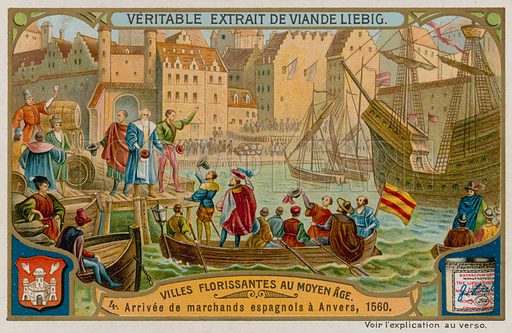
Arrival of the Spanish Merchants to Antwerp in 1560. Look and Learn

Most cities have, of course, changed dramatically since the sixteenth century and much of what a visitor or researcher can explore are museums, ruins and the occasional castle or house which is still habitable. The traffic, the clean streets, the smells, the sheer number of people, the building restrictions – for instance we’re no longer permitted to keep adding more stories to the top of our houses so they lean out over the street until they’re nearly touching the houses opposite – mean often a more accurate picture of life in the period can be culled from books, paintings and maps of the era than I would ever get visiting the place in the current day.

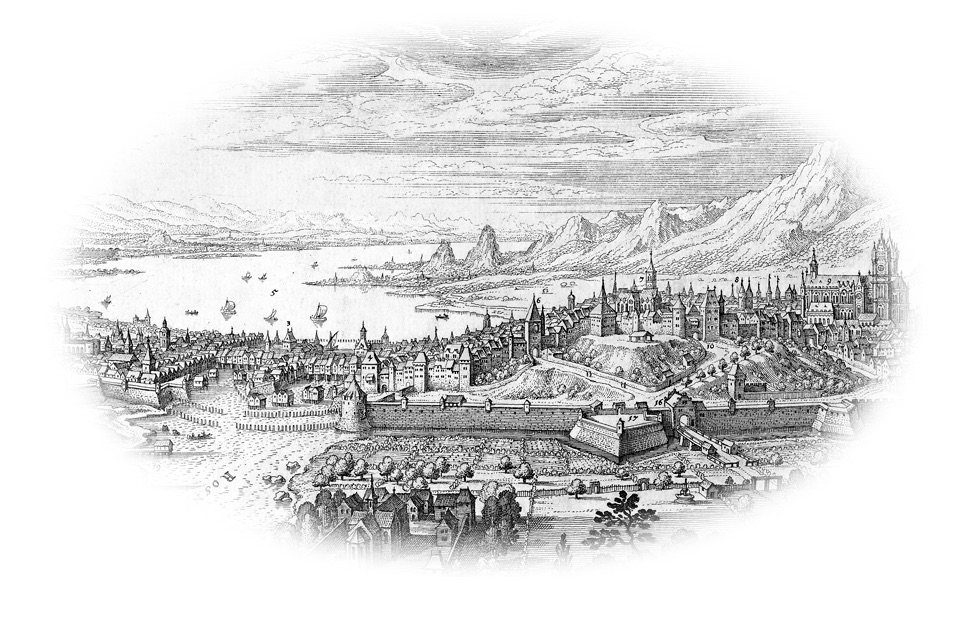
Here’s a drawing of Geneva from 1559, which I referred to constantly when writing the third in series The Apostates which is set in 1549-53. Calvinist Geneva was an austere place: dancing and plays were forbidden; murals whitewashed over; the manufacture of playing cards forbidden; brothels shut down. Yet before Calvin it was also known as the dirtiest city in Europe and he insisted girls should have the opportunity to attend school too. All this I learned from research and, having been in Switzerland although not Geneva, considered it sufficient to achieve a sense of place.

View of Geneva from an original drawing by Claude Chastillon (1559-1616) reproduced by kind permission of the Bibliotheque de Geneve

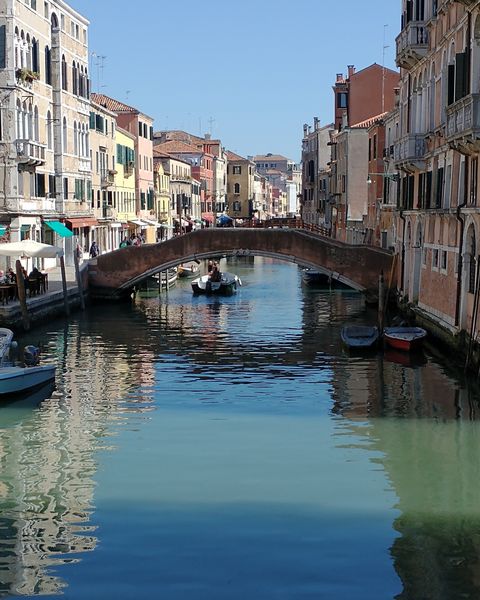
The Apostates is set mostly in Venice so I had the perfect excuse to go there, just as the world was opening up again, masks on and vaccination certificates in hand, and it wasn’t as crazy busy as usual..

Canal in Venice

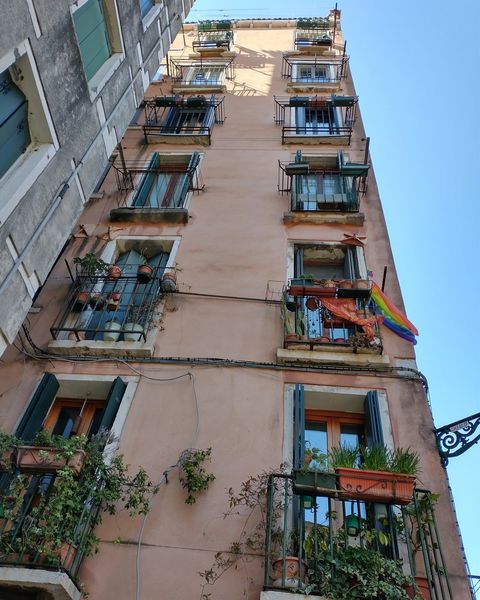
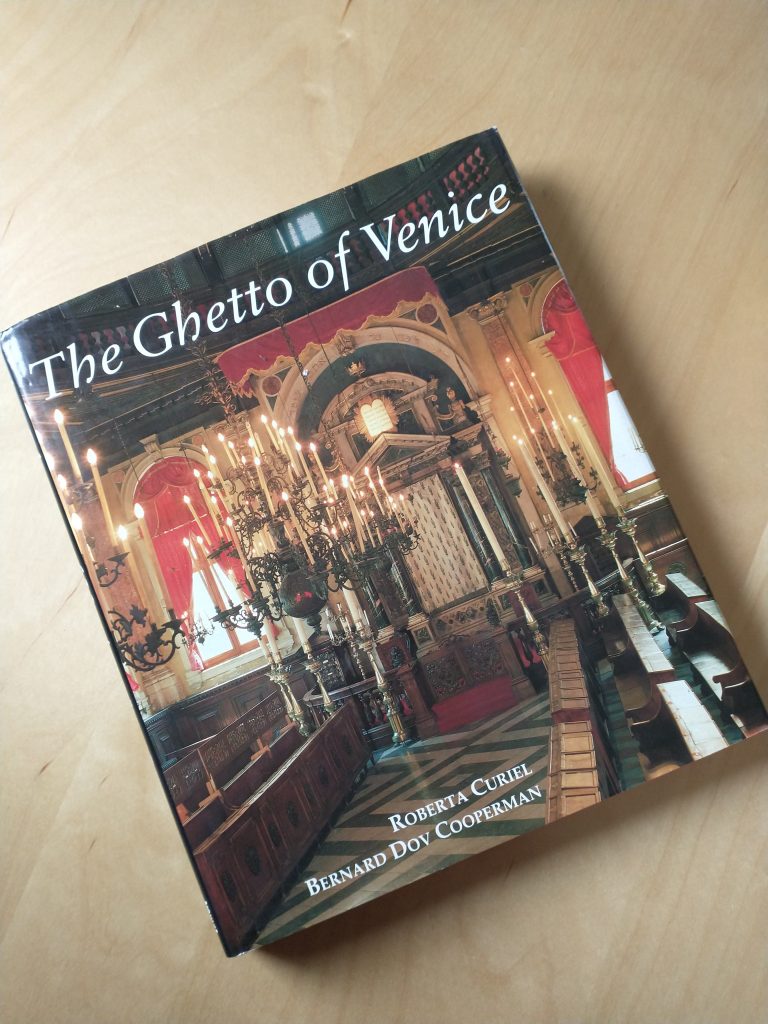
Visiting the ghetto (the word originated in Venice and referred to the area where Jews were required to live) and especially walking through the same gateway which was locked each night to keep them in, was atmospheric. Seeing the tall houses with windows facing inwards and peering in to see where rooms had been spilt horizontally to cram in another family was fascinating.

The Ghetto in Venice where the houses were built high and crammed together

But I’d already researched this before I ever set foot in Venice.

Canal in Venice

So, did I really need to go there?

Venice, a city without cars, has not changed as dramatically as most places have in the past five hundred years and wouldn’t have looked so very different to my characters.

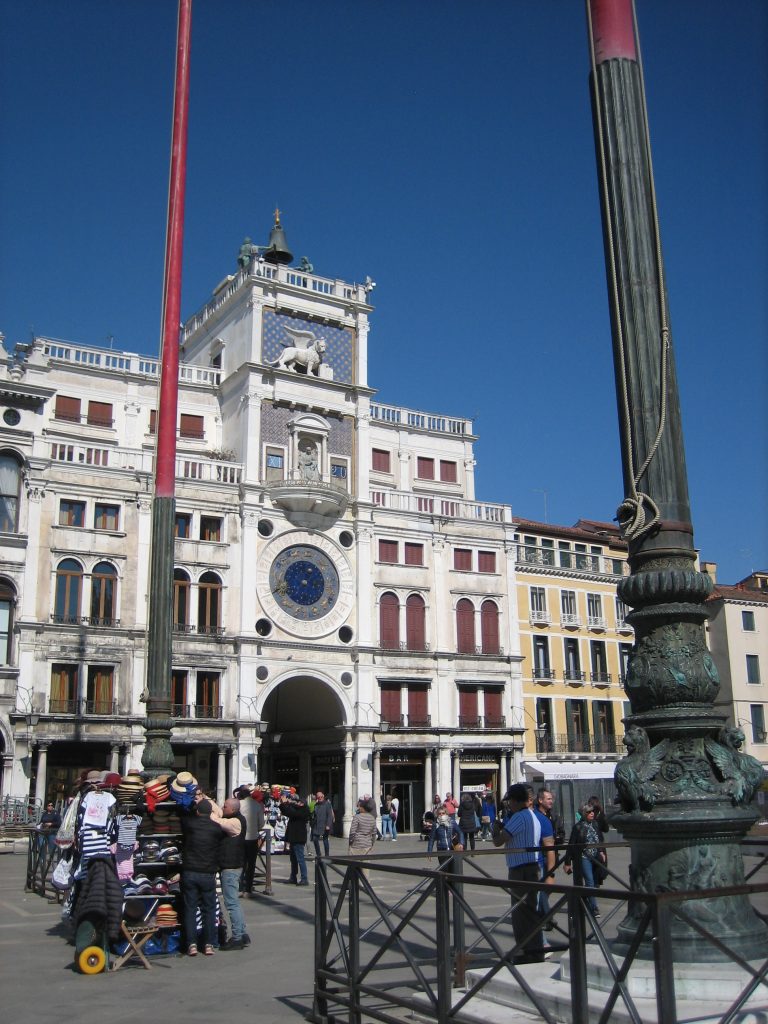
Torre dell’Orologio, St Mark’s Square Venice

Seeing the Torre dell’Orologio, the amazing clock tower in St Mark’s Square gave me an idea for a plot point – I hadn’t really registered up until then that astrology and the movement of the stars was found on clock faces of the era and much studied in the Renaissance. So yes, it was useful to visit.

But sometimes too much familiarity with a place can get in the way. For instance my first book, The Castilians, is the story of the siege of St Andrews Castle, Scotland, in 1546. There are a number of buildings in St Andrews still standing from that era, albeit many in ruins.

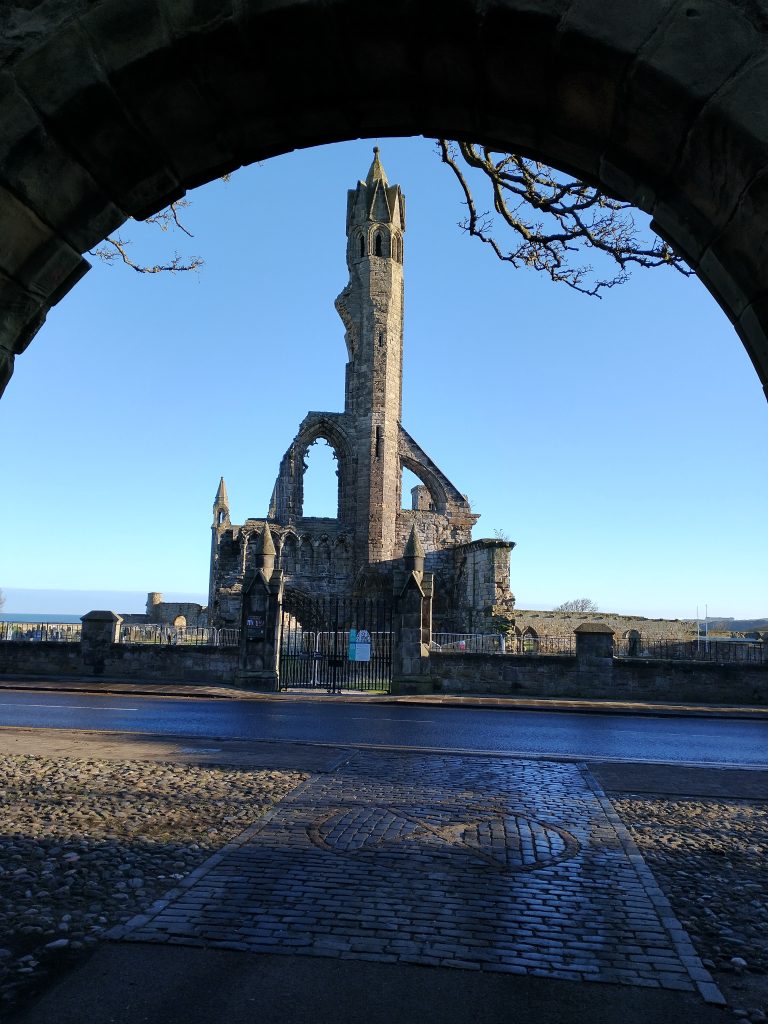
St Andrews Cathedral, destroyed during the Scottish Reformation 1559

I grew up in St Andrews and feel a visceral connection to its streets and of course I knew all about its weather – the haars that blanket the town in chill mists; the times when the east wind blows straight from Siberia; waves breaking onto the long stretch of the West Sands on a sparkling day.

It was easy to portray the setting, almost too easy with a place I was so familiar with for of course it had changed significantly in nearly five hundred years. For instance the harbour in 1546 had quays built from wood, which were actually longer than the current piers – and these were built from the stone pillaged from the cathedral and castle, destroyed during the Scottish Reformation. Doing the research was important!

Stone Pier at St Andrews, Scotland, the old wooden ones were longer

Some settings are impossible to experience, thankfully. I found a heart wrenching memoir about life as a galley slave by a French Protestant, written in 1713 but somehow I doubted things would have changed much from 1547 when my character is enslaved on one. As one lovely Goodreads reviewer wrote of The Conversos, ‘Grand characters and thrilling story. The place descriptions are unforgettable, and I will never forget the horrors of being a galley slave.’

Each place I’m writing about is very different and conveying the richness of setting and the world inhabited then certainly has me stretched. Three of my main characters are Scots and I could sense how stunned they’d be to come from the relatively small confines of St Andrews, albeit one of the richest cities in Scotland of the time to Antwerp, which had a population of around eighty thousand, then on to austere Protestant Geneva and from there to the opulence of Venice.

The Familists by V E H Masters

My current work in progress The Familists is primarily set in Constantinople and a trip to Istanbul is already planned. I’ve done loads of research but it’s not enough. This setting is just too unfamiliar to write about without a visit!

A series which never fails to get better and always leaves me wanting more.’ Esther Mendelssohn

To purchase in UK click here

To purchase in USA click here

To purchase in Canada click here

To purchase in Australia click here

Magnificent Pageant

A coronation is one way of royals putting on great pageant to keep their subjects entertained and conscious of their king or queen’s magnificence, as we are fully aware of in the UK currently. Yet during their reign monarchs needed to remind their subjects periodically of the king’s overarching importance and power. In the 1500s, the period in which my books are set, the kings of France and Charles of Hapsburg regularly went on royal tours, officially known as ‘A Joyous Entry’.

Joyous Entry of the Duke of Anjou in Antwerp on 19 February 1582

These were pageants beyond what we could even begin to imagine where towns endeavoured to host the most remarkable royal entry the king had ever experienced and also subtly sent reminders to their monarch of why the town’s burghers, merchants and dignitaries needed to be kept onside.

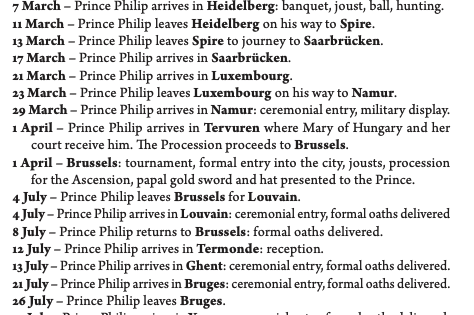
In 1549 the Holy Roman Emperor, Charles of Hapsburg went on tour with his son Philip of Spain. This extract below from their itinerary shows just how busy the programme was. They spent 20 months travelling across their territories in Italy, the Low Countries and Germany.

Extract from the itinerary of Charles and Philip Oct 1548 to June 1550

Philip was born in Castile and knew little about the lands he was to inherit, nor any of their languages, so the good burghers were at pains to ingratiate themselves, with each town determined to outdo their neighbour.

City Stage, Joyous Entry Antwerp: Pieter Coecke van Aelst, 1550

They reached Antwerp in September 1549 and I used their Joyous Entry to that city as a plot point in my second in series The Conversos . It was a rich seam to research the preparations and symbolism for the royal visit, with some wonderful titbits of detail. For instance the merchants of Florence got into a fight with the Genoese over which group should get precedence in the parade as Papa tells…

‘The Genoese claim they had precedence in both Granada in 1526 and then at Charles’s coronation in Bologna in 1530. The Florentines counterclaim that Florence was not present at either Granada nor Bologna and therefore the Genoese claims are an irrelevance – and refer to events nigh on a quarter of a century ago. The world has changed much since then.’

And how was it to be resolved?

‘We have reached an impasse. All that can be done is for the two delegations to lay their case before the emperor and let him decide. My advice to both would be not to do such a thing. It will only incur his displeasure, and this is a time to seek favour.’

Wise advice from Papa which unfortunately wasn’t followed for, when presented with the case, Charles of Hapsburg, who was nobody’s fool, declined to make the decision and ordered both parties to withdraw from the event. It’s interesting to note there are rumours at the moment of our current king in the UK having to resolve disputes – almost inevitable, I suppose.

Here’s a little more from The Conversos on the preparations…

There are men working even though the sun is long set. The curfew has been relaxed, for the city must work night and day to complete the preparations in time. Many have stripped to the waist, and the torchlight plays across their skin. There’s something otherworldly about watching them swarming over the structures like large fiery devils. The designer, moves anxiously among them, regularly calling out for them to take care.
‘And this is only one of many that van Aelst is overseeing,’ Mainard says. ‘Come, I would take you to the gate through which Charles and Philip will enter.’

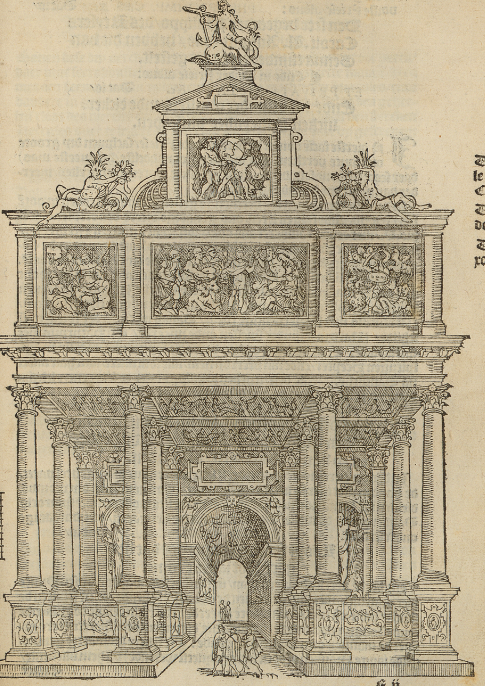
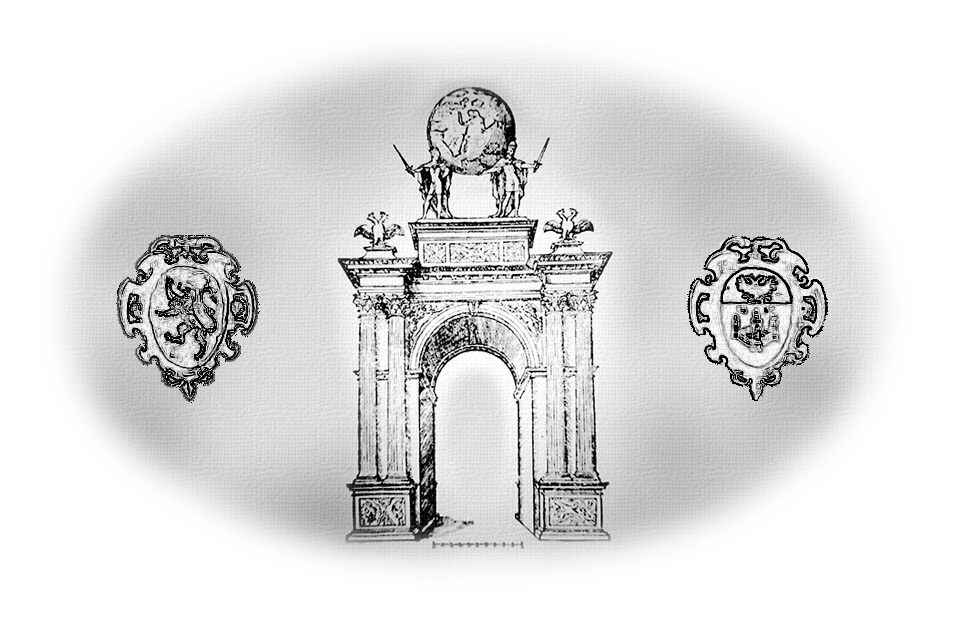
They pass beneath a triumphal arch and Bethia stands in its centre looking up. ‘It’s like a temple.’

Mainard nods enthusiastically. ‘Good, it is indeed – the design is inspired by the Temple of Janus. And see how they have used the colossi to look as though they are supporting the whole structure. It’s the story of Antwerp; our wealth and industry is a foundation for the emperor’s greatness. But I want to show you the German arch.’

Bethia stands before it, amazed. The white marble of the double arch glows ghostly in the night. Beneath the arch, tall niches have been carved. She points. ‘What is to go here?’

‘Golden statutes, one of Charles and one of Philip, will be lowered into place closer to the day, for they will need guarding.

Bethia stares up at the inscriptions already carved above the niches. Mainard borrows a torch from a sconce, ignoring the men at work who grumble at the withdrawal of their light.

‘Immortalis fama,’ she reads. ‘I suppose that refers to the emperor and his son. Their fame will never die.’

‘And Disciplina,’ says Mainard, waving his hand to the other inscription. ‘Learning and Immortal Fame – the perfect combination.’

Triumphal Arch depicting Charles of Hapsburg and Philip of Spain carrying the world – Antwerp Joyous Entry 1549

But not everyone is happy and there is much grumbling about the money being spent. When the event is disrupted by a thunderstorm it’s seen as an ill omen and a sign that God also disapproved of the excessive nature of the celebrations.

Henri II of France’s Grand Entry to Rouen 1550

In the current work-in-progress my character Will gets caught up in the siege of Rouen. Doing some research I came across a wonderful description of King Henri II’s royal entry to Rouen as part of his Grand Tour in 1550. ‘Its citizens were determined that in case mythology and symbolism had lost their pristine charms, an absolutely novel entertainment should be given to the King on this occasion. So on the fields between the Couvent des Emmurées and the left bank of the Seine a great sham fight was arranged between a number of Norman sailors and fifty of the newly discovered tribe of Tupinambas from Brazil (where the sailors had been trading) , clad only in their own skins and a few stripes of paint.’

Apparently the novel entertainment was well received by the ladies of the party which included Henri II’s wife, Catherine de Médici and his mistress Diane de Poitiers. The king displayed Diane’s crescent throughout and one cannot but sympathise with Catherine de Medici for the endless public humiliations she had to impassively endure.

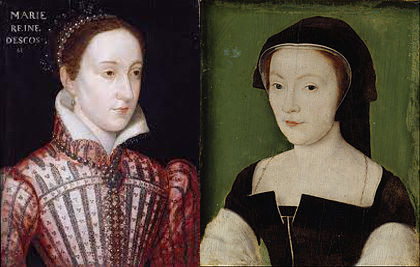
Mary Queen of Scots and her mother Mary of Guise, Dowager Queen of Scotland

The king was also accompanied at Rouen by Marie of Guise, Queen-Dowager of Scotland, who was on a short visit to France to be with her daughter the future Mary, Queen of Scots. Mary was only eight years old and hadn’t seen her mother since she was sent to France aged five (the treacherous journey is described in The Conversos) to escape from England’s Rough Wooing. This visit was the last time she would ever see her mother, who died shortly before Mary returned to Scotland ten years later.

References:

Mark A. Meadow, “Met geschickter ordenen”: The Rhetoric of Place in Philip II’s 1549 Antwerp “Blijde Incompst”

Christophe Schellekens, The Antwerp Joyous Entry of 1549 The Florentine-Genoese conflict as a window on the role of a trading nation in political cultural transfers

USA: here

Canada: here

UK: here

Hidden Christians and Japan

My sister, who is the family genealogist, tells we have an ancestor who came to Kobe, Japan as a missionary from 1907 to 1920. Mostly our ancestors have been a rather dull lot – no marriage to a duke or duchess, Highland robber nor great inventor; only the odd child born the wrong side of the blanket (such a horrible expression, note to self not to use again) to add a frisson of interest.

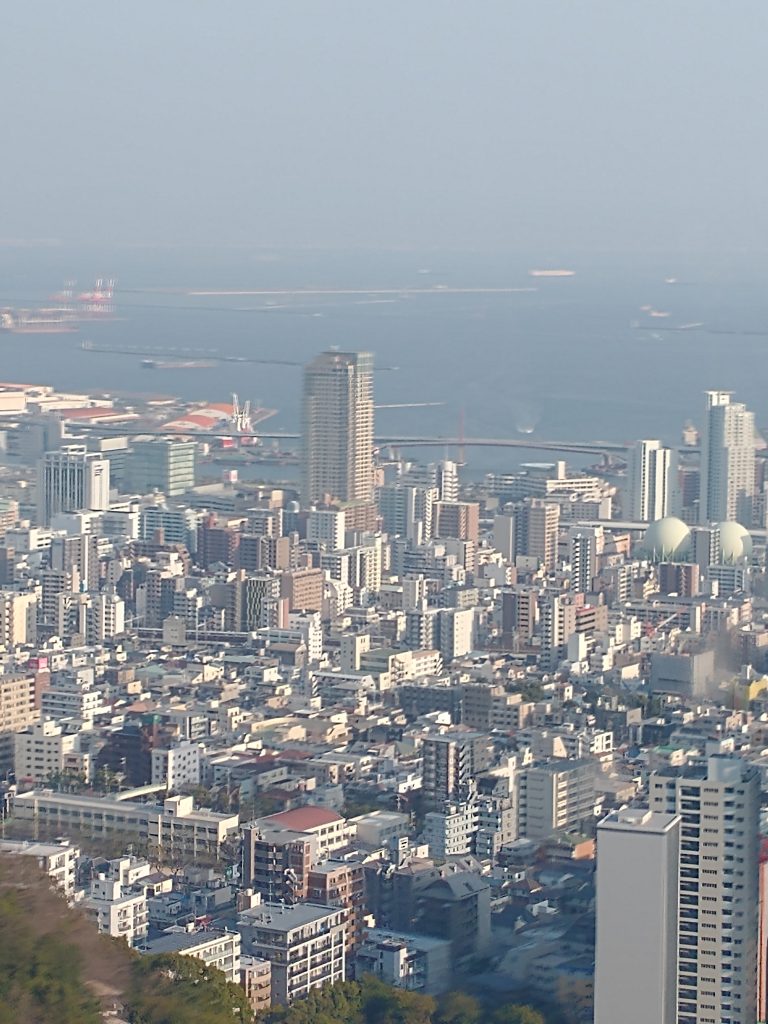
Vista of Kobe from the Herb Garden Ropeway

But a missionary in Kobe is of particular note because our eldest has lived there for the past eighteen years. And, as an inveterate reader of all the Anne of Green Gables books, it reminds me of something which puzzled me greatly aged eleven. In Anne of the Island, I think, Aunt Jamesina goes off to visit her daughter who is a missionary in Japan, despite her fear of snakes. Why, I wondered, would missionaries go to Japan?

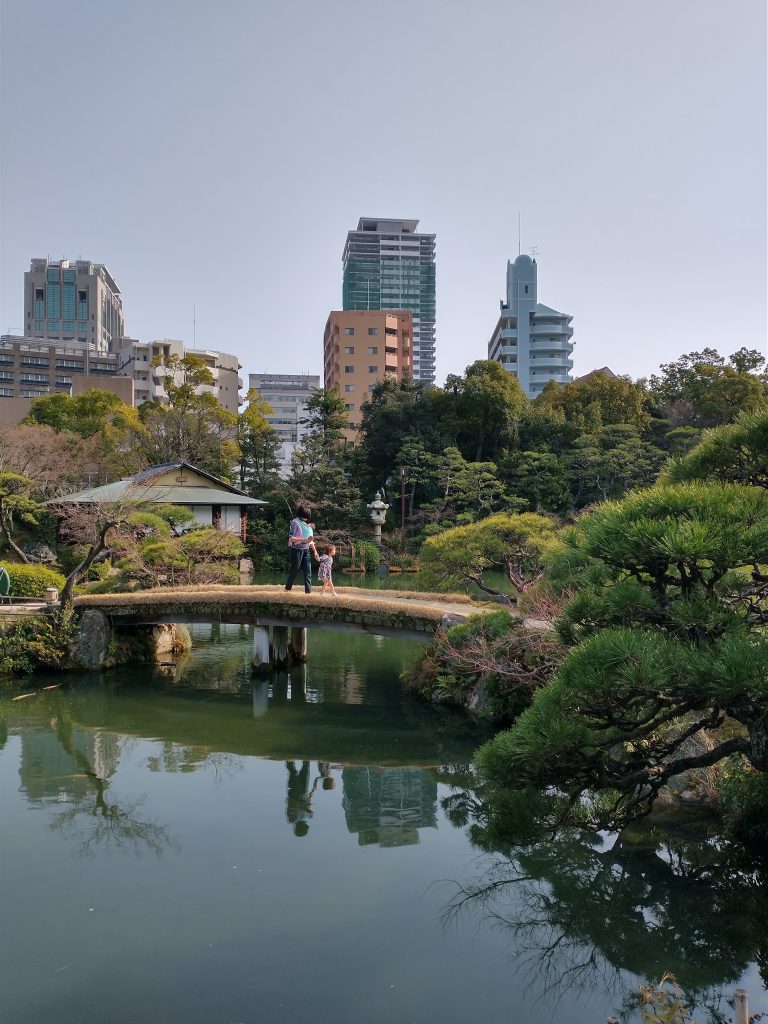
Sorakuen Garden in the centre of Kobe

Why indeed. Yuval Noah Harari writes in Sapiens that Buddhism, Islam and Christianity are all examples of religions which actively seek new members – whereas Judaism and Hinduism, for instance, do not.

Mary Taylor, my great grandfather’s cousin, was not part of the first wave of missionaries to Japan, which happened much earlier. In 1549, which is the point at which the Reformation is gathering speed in Europe, Francis Xavier, a Portuguese missionary, steps foot on Japanese soil.

Francis Xavier, first missionary to Japan 1549

The Shogun tolerated the mission hoping it would improve trade but soon grew suspicious of this foreign influence especially when rumours spread this was how these foreigners infiltrated a country; first by sending missionaries who scoped the land and then following it up by military conquest. And indeed the Jesuits were involved in the trade and the supply of guns in Japan – which is why the Shoguns withdrew their permission to proselytising missions.

Many foreign missionaries were killed along with their converts. Most well known are the twenty six martyrs of Japan –  four Franciscan missionaries from Spain, one from Portugal and Mexico, respectively, three Japanese Jesuits and seventeen Japanese members of the Third Order of St Francis  including three young altar boys. In 1597 they were tortured, mutilated, and paraded through villages across Japan, before being crucified where they were impaled with lances while tied to crosses… shades of Vlad the Impaler a hundred years earlier in Europe (see my post here for more info)

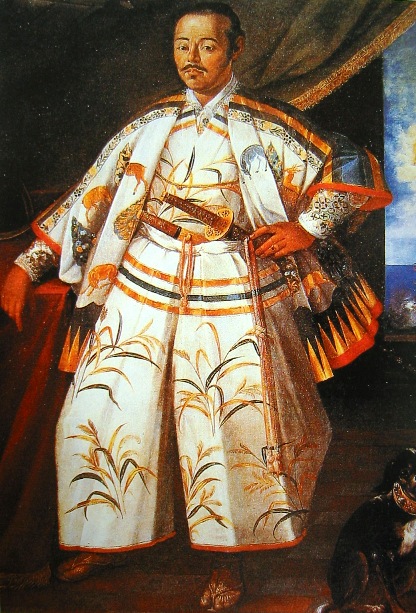
Still in 1614 a samurai, Hasekura Tsunenaga, along with over a hundred Japanese and twenty other sumurai travelled, via Mexico which was then known as New Spain, stopped off in old Spain where he was baptised and given a Christian name, to Rome where he met the Pope. The purpose of the journey was however more about brokering trade deals than embracing a new religion.

Samurai Hasekura Tsunenaga who travelled from Japan to Rome in 1619

By the time he returned to Japan in 1620, Christianity was officially outlawed and he had to renounce his new religion. All Japanese Christians were forced to convert much as Jews were in Spain and Portugal – the impact of which is a theme in my novel The Conversos.

From then on Christianity was hidden and the numbers dwindled. Still it was secretly practised and concealed much as the Jewish Conversos did, as well as French Huguenots, during the Reformation.

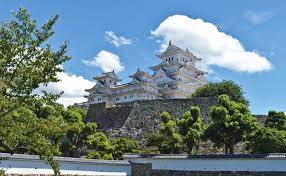
These groups in Japan were known as Hidden Christians and secreted christian symbols in shrines, lanterns and within buildings. In Himeji Castle a christian cross was found carved in one of its seventeenth century roof tiles.

Himeji Castle where a Christian Cross was found on one of its roof tiles

Martin Scorsese’s film Silence, based on the novel by Shusako Endo, is a powerful telling of the story of Hidden Christians and determined missionaries. But of course christian missionaries, certainly by the time my ancestor popped up in Japan, didn’t only bring faith they also thought it vital to ‘civilise’ which included having a ‘christian’ name, dressing ‘appropriately’ and following christian rituals.

The first Protestant mission to Japan came in 1859, soon after the United States negotiated a trade deal in 1853, and a Japanese translation of the bible was quickly made available.

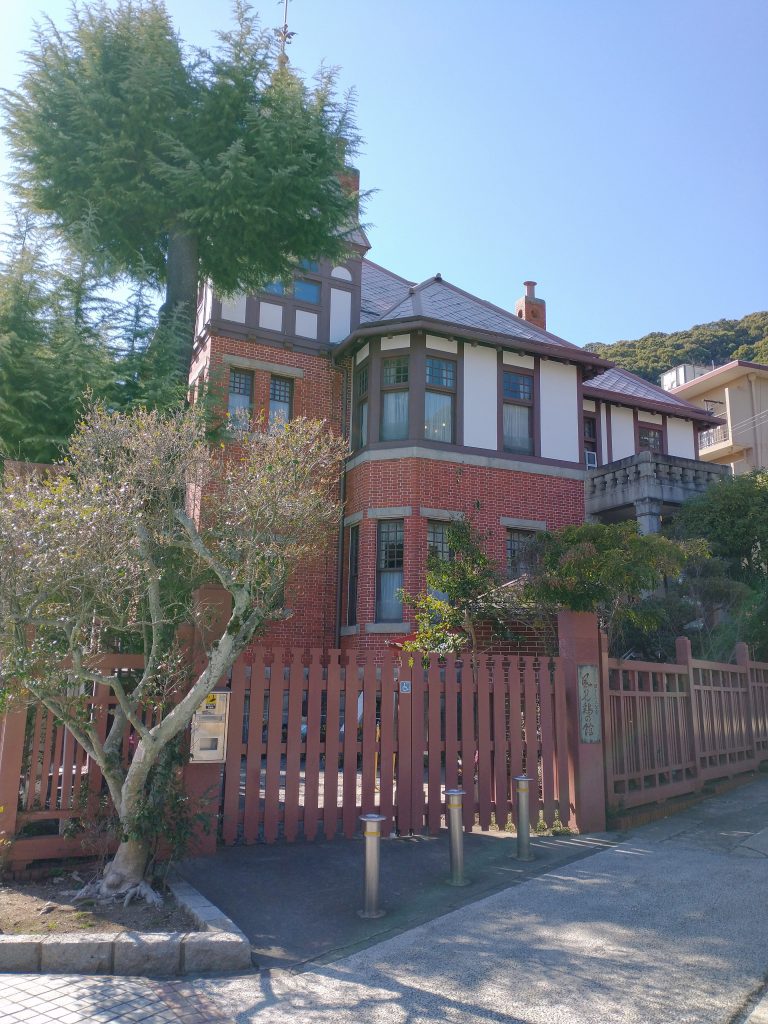
On a recent visit to Kobe we walked daily through the Kitano area, now a much visited cultural curiosity, but once the part of Kobe where the foreign merchants and diplomats lived in large Western style homes. Many were built around 1907, and no doubt my ancestor strolled past them too.

German House in Kitano, Kobe

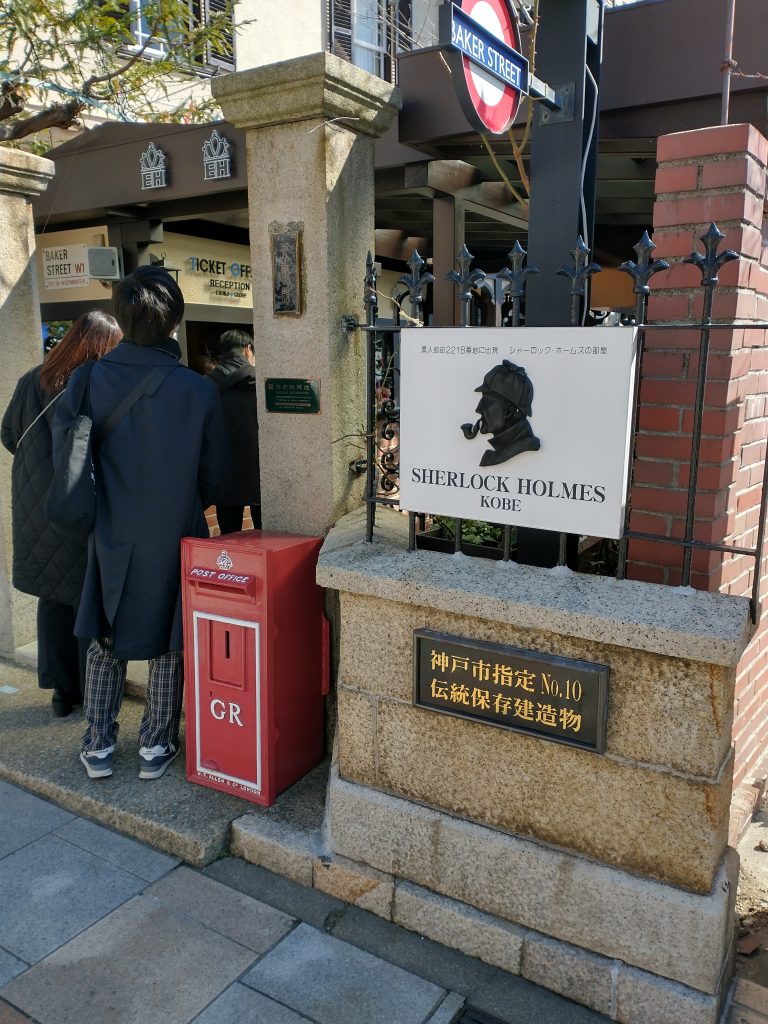
There’s even an English house with a Sherlock Holmes room, and the opportunity to dress up as the great detective which, judging by the queues, is popular.

Queuing for the English House with its Sherlock Holmes experience

Another place of curiosity on our daily walk between our apartment and our son and daughter-in-law’s home was the Center for Overseas Migration and Cultural Integration.

Center for Overseas and Cultural Migration, Kobe

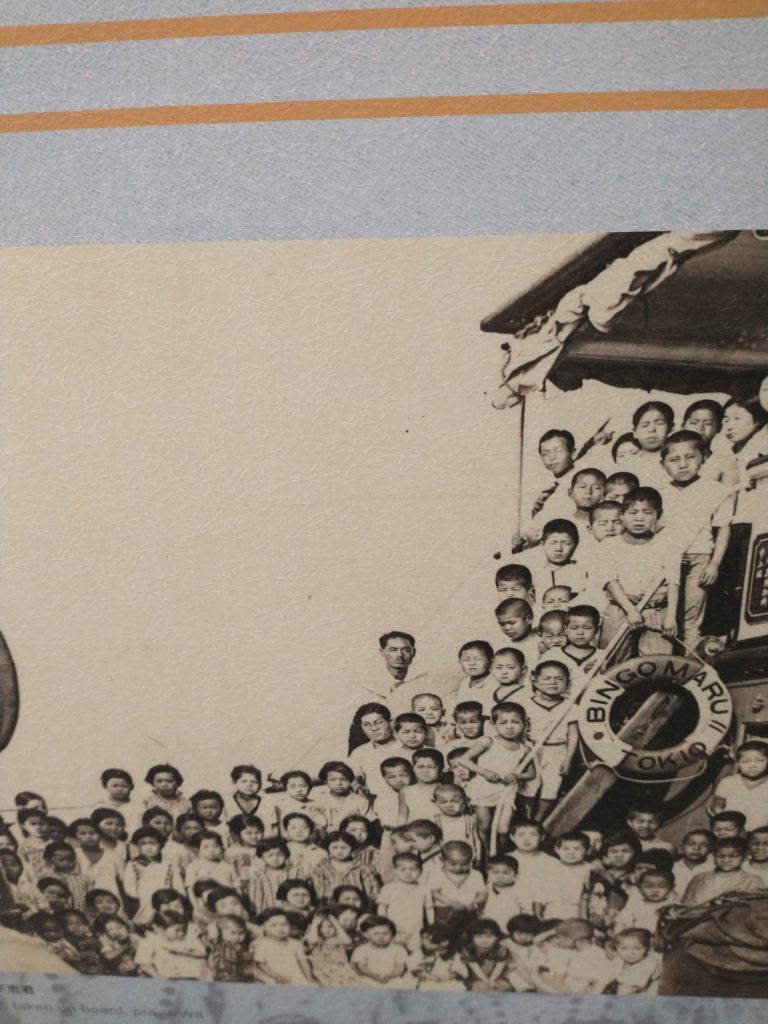
Wandering inside I discovered an exhibition about emigration, mainly to Brazil – over a quarter of a million people went there from Kobe alone. Kobe was the port of embarkation for Japan and the exhibition focuses on shipboard life but says little of the hardships immigrants endured once they arrived.

Journey to Brazil

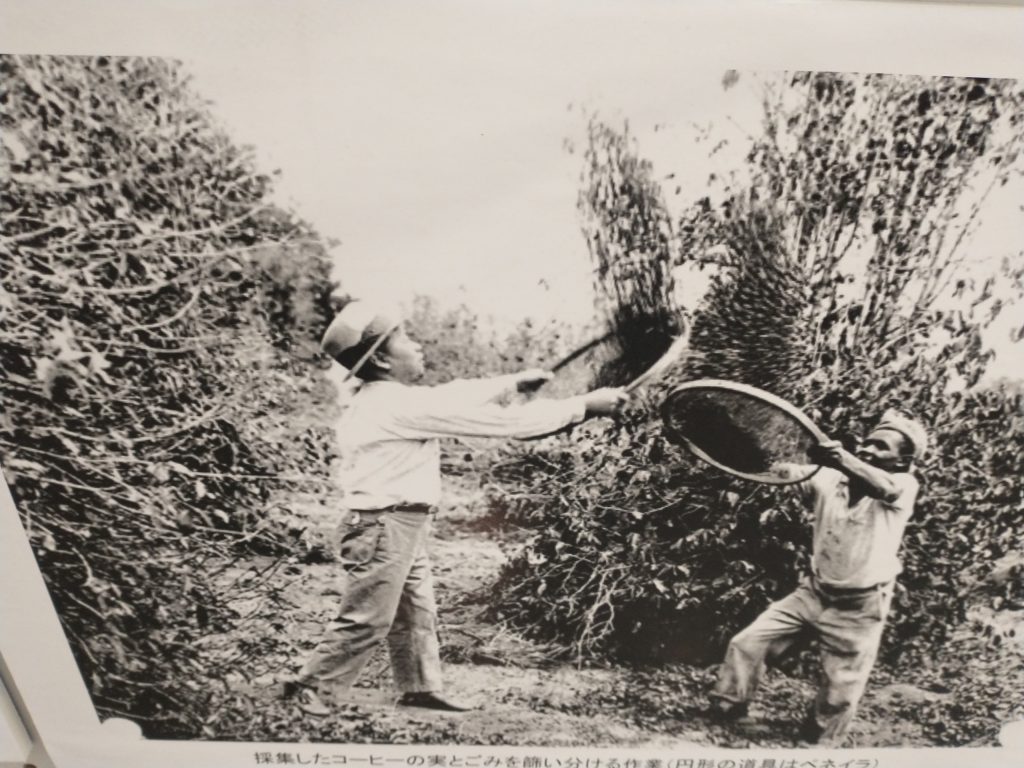
In a period of famines Japanese people looked to go overseas, make some money and bring it home. The United States and Australia had policies limiting ‘non European’ immigration but other countries needed cheap labour especially Brazil. The coffee plantation owners wanted to ensure immigrants would stay so they only took families, and once there they were trapped as it was almost impossible for the family to save enough money for them all to return.

Japanese people in Brazil remained apart, schooled their children separately and inter-married.

Work on the coffee plantations

As for my missionary ancestor, who left Japan finally in 1920, it seems she did not resettle in Scotland for she died in Canada in the 1940s. I wonder what she made of her time in Japan and if she felt her attempt to bring Protestantism to it worthwhile. There are Evangelical Missions here still, mainly from North America and having a white wedding is popular – but without the christian ceremony.

We were visiting Kobe soon after the birth of our youngest grandchild and were fortunate to attend his naming ceremony in a Buddhist Temple. Wonder what Cousin Mary would’ve had to say to that…

Naming Ceremony at Buddhist Temple

My books are available on Amazon, Kindle Unlimited and can be ordered from any good bookshop.

as well as in bookshops and all Amazon online stores. None set in Japan yet, but who knows!

The Seton Chronicles by V E H Masters

References:

Yuval Noah Harari, Sapiens
Isikawa Akito, A Little Faith: Christianity and the Japanese
A. C. Palfreeman, Non-White Immigration to Australia
Wikipedia – inevitably

Streets of St Andrews #scottish historical fiction #siege #pilgrimage

A lovely reader writes asking if I can give more detail of the locations in my books. St Andrews, where my historical fiction novel based on real events, The Castilians, is set, is my home town so I had a very clear picture of the streets my characters would walk and even the destruction wrought by the siege, and after, for much of it is still visible. For instance here’s the remains of Blackfriars Chapel, damaged by the Castilians, along with Greyfriars, in April 1547.
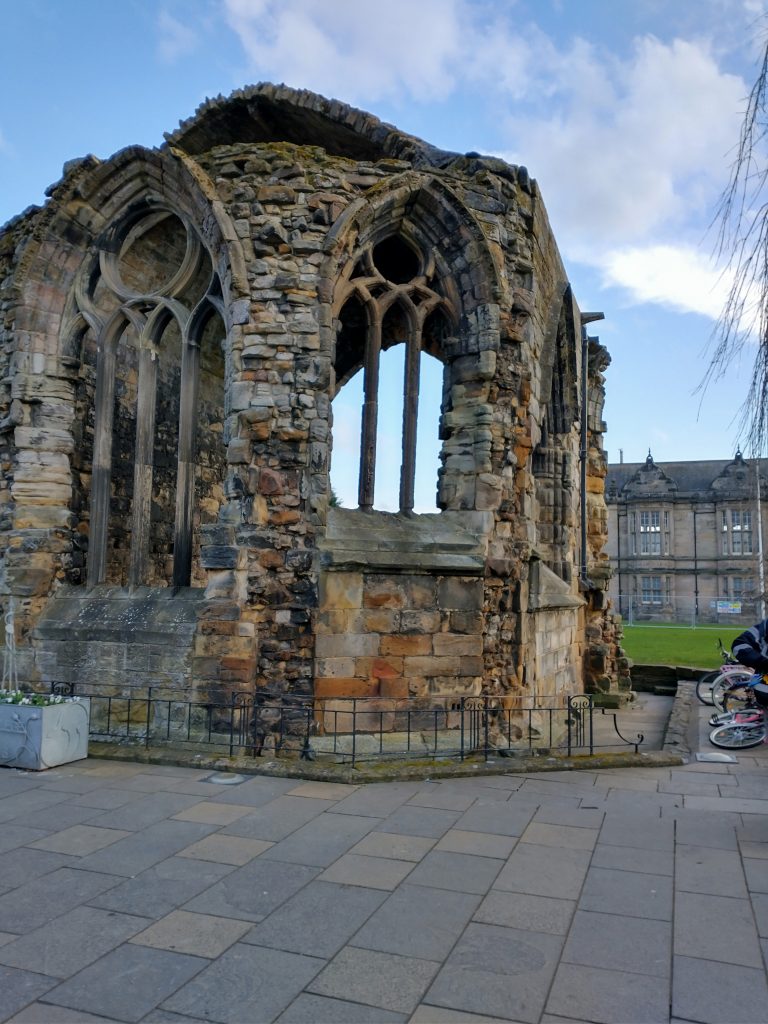
Blackfriars Chapel with the old Madras College in the background

My old school sits behind it and I walked passed this ruin every morning without a second glance. There nothing left of Greyfriars except a street name and a row of gardens. No doubt, if the gardens were excavated, some remnants of the grey friars lives might be unearthed.

However it’s unlikely a great deal of the stones used to build Greyfriars would be left for it, along with the castle and cathedral, were systematically quarried for several hundred years, which explains why these ruins are really so very tidy, with no heaps of rubble in evidence.

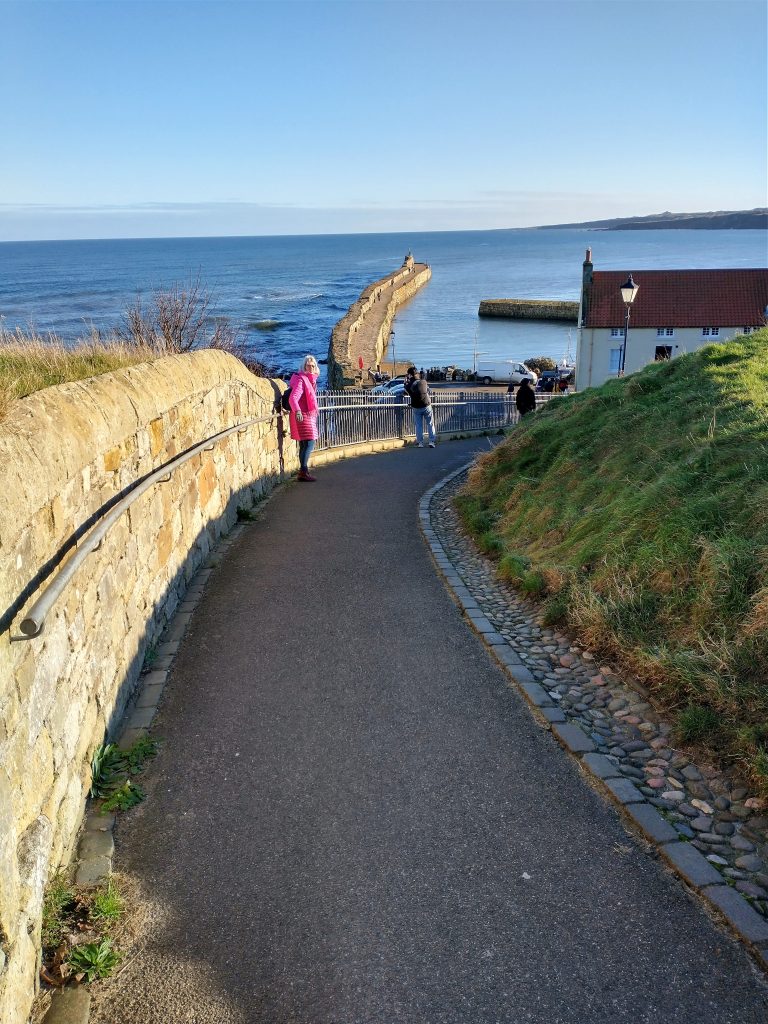
The good citizens of the town used the stone to build and repair houses and to build the piers at the harbour, which were made from wood – and considerably longer – in the time of the Castilians. Below is the pier today and the hill Bethia would have toiled up when she came across the grim sight of George Wishart being burned at the stake.
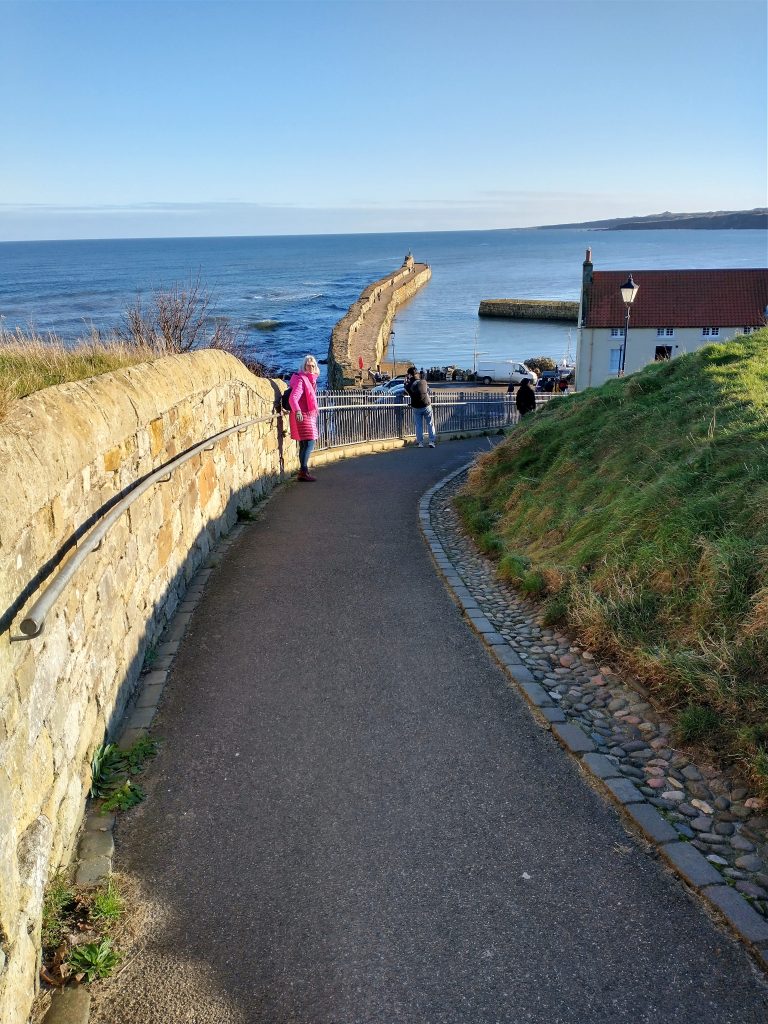
Harbour Hill, which would not have had the high protective wall in 1546, nor the smooth path,

St Andrews is so named because some of the bones of the apostle Saint Andrew once rested here. It was a place of pilgrimage to rival Compostela from the 1100s, with pilgrims coming from as far away as Russia. A Certificate of Pilgrimage given to a pilgrim who was undertaking the journey as part of a penance because he had murdered a man (as well as making recompense to the man’s family), was found in France a few years ago and I used this as the background for Mainard being there, although for some reason decided I wanted my character to come from Flanders and not France. A fortuitous choice since research later uncovered Antwerp was the wealthiest city in Europe at the time.
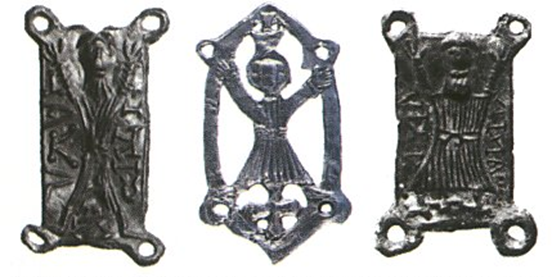
Badges worn by pilgrims to St Andrews

Pilgrims travelled in groups for safety. They arrived by sea, often at Earlsferry and would walk the last twenty or so miles to St Andrews. The townsfolk were understandably fearful of pilgrims bringing the plague to their doors and they were held in quarantine, outwith the city boundaries, until they were pronounced safe to enter its gates
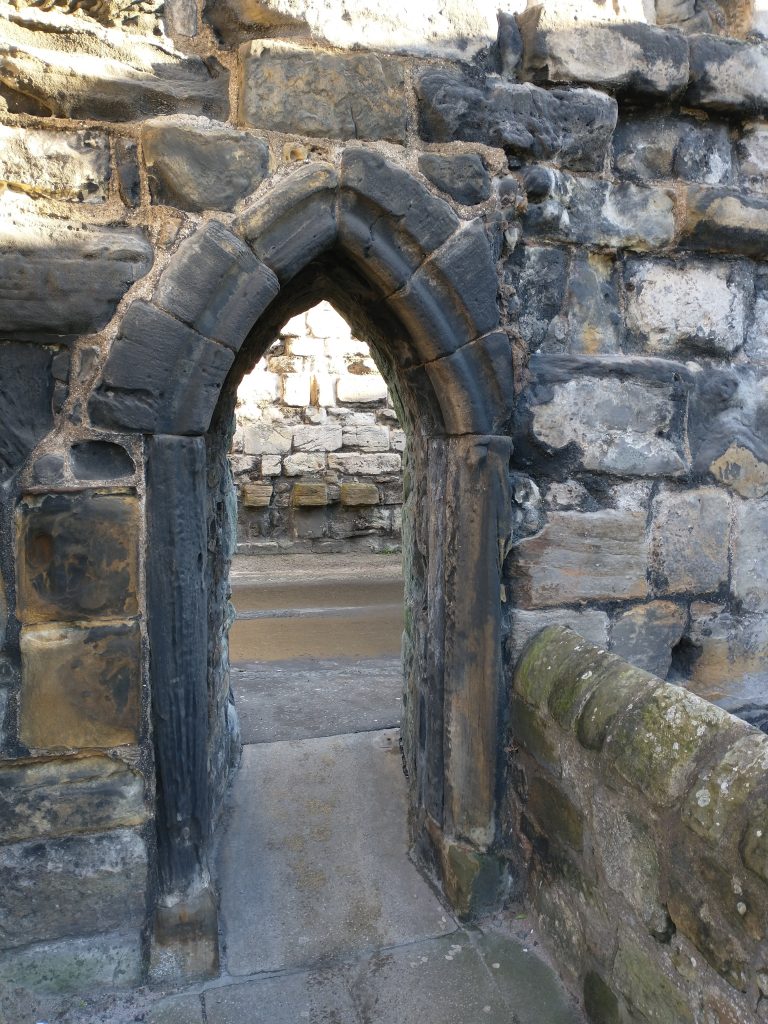
Pilgrim’s gate

Although the cathedral begun in 1160 and which took 120 years to finish, was surrounded by a high wall, the town itself never was. It did however have entry gates, one of which I used to pass under every day to go to school, again without paying it the slightest of attention
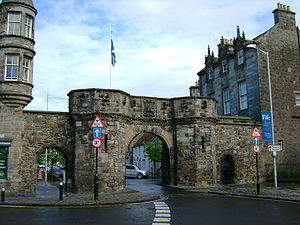
West Port

These ports or gates were all about controlling trade for the guilds; the good burghers of St Andrews wanted to make sure no one could make inroads into their living. You can see the gates on the map before which I’ve also annotated to show some of the streets and locations mentioned in The Castilians.
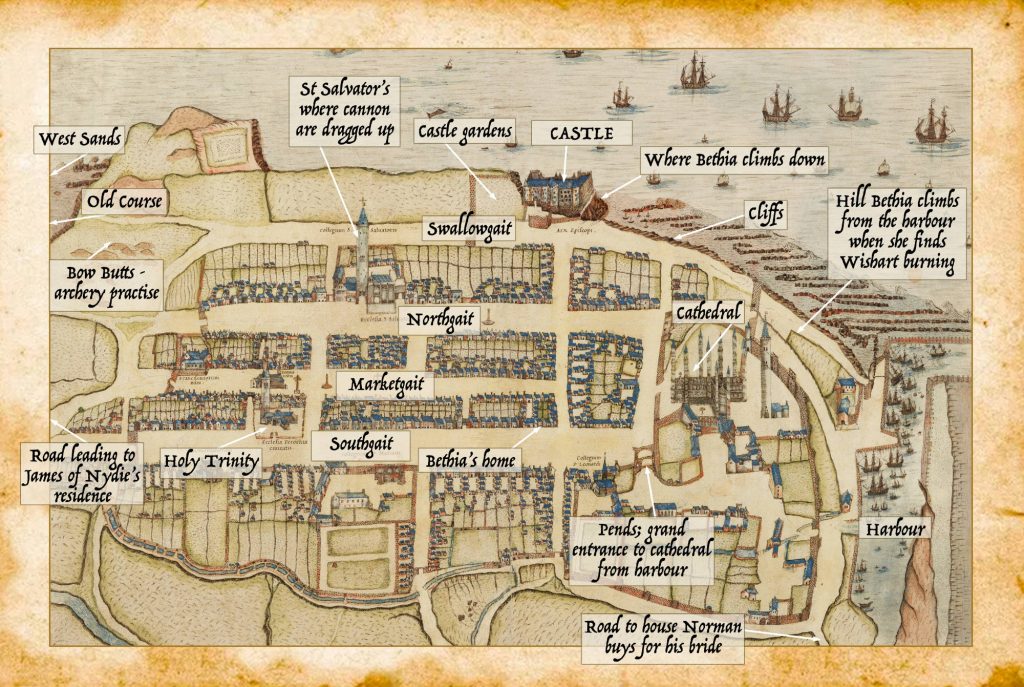
1580 Geddy Mp of St Andrews showing sites mentioned in The Castilians, reproduced by kind permission of the National Library of Scotland

The town was extended and planned as the cathedral was built and the three streets fanning out from the cathedral, then known as Southgait, Mercatgait and Northgait were deliberately broad and straight for the many religious processions, including carrying the reliquary containing Saint Andrews bones along them presumably on 30th November each year (St Andrew’s day), and the performances of the mystery plays. When Mary of Guise arrived in Scotland she was met at St Andrews by her new husband, James V, and forty days of jousts, plays and street pageant followed, which must have caused huge excitement amongst the town’s inhabitants.
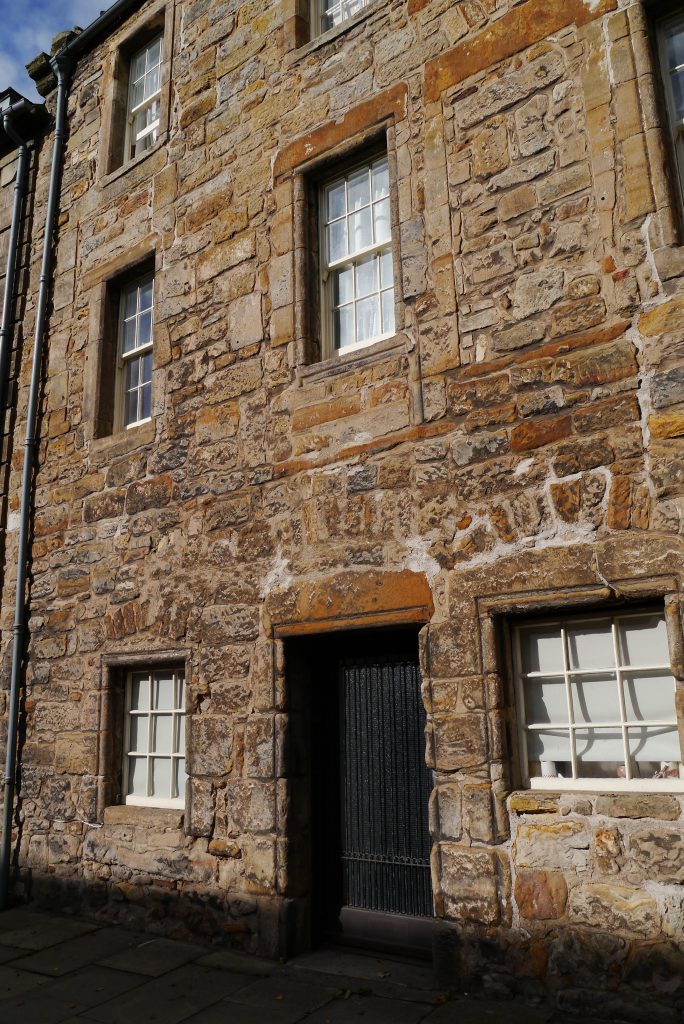
A house similar to Bethia’s home on Southgait

The end of Southgait closest to the cathedral was where the wealthy merchants lived and I chose a house from the era to be Bethia’s. Increasingly wooden houses were being replaced by stone although shopkeepers often had a wooden extension to the front of their house with a hatch that could be raised to create a counter to sell from – like Elspeth’s family.

Many of the town’s poorer folk made their living from fishing. They’d been moved away from the harbour when the cathedral was built and resided in an area known as fishertoun, off Northgait. The outside stone stairs are a familiar sight in St Andrews still.
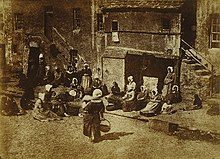
Fishwives baiting the lines, picture courtesy of Wiki commons

In Northgait was St Salvator’s the university chapel, where the then wooden tower atop was knocked down to create a flat base and cannon were hauled up for the bombardment which finally ended the siege. Northgait was also where the the siege tunnel was begun, and the entrance is below a house there still.
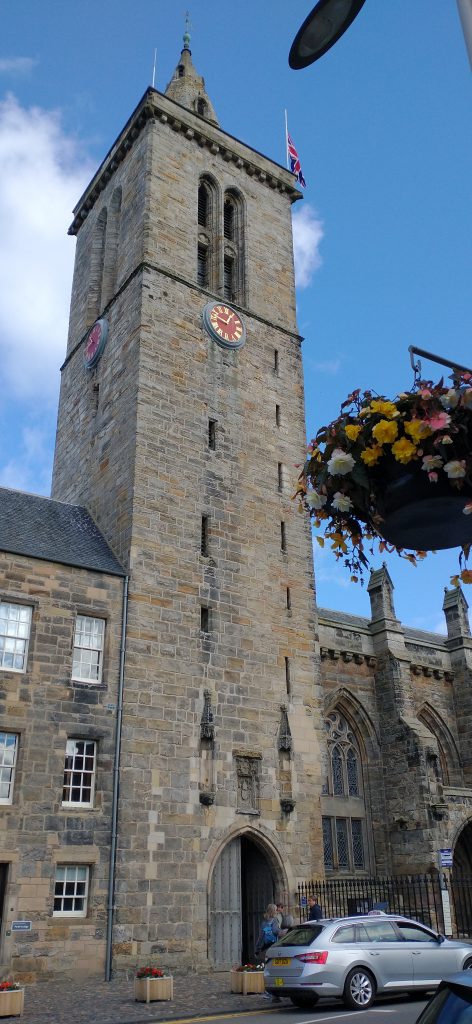
St Salvators, with the stone steeple which replaced the destroyed wooden one

The Smart History team at St Andrews University have created some wonderful and carefully researched video models to show what the town would have looked like in the 1550s.
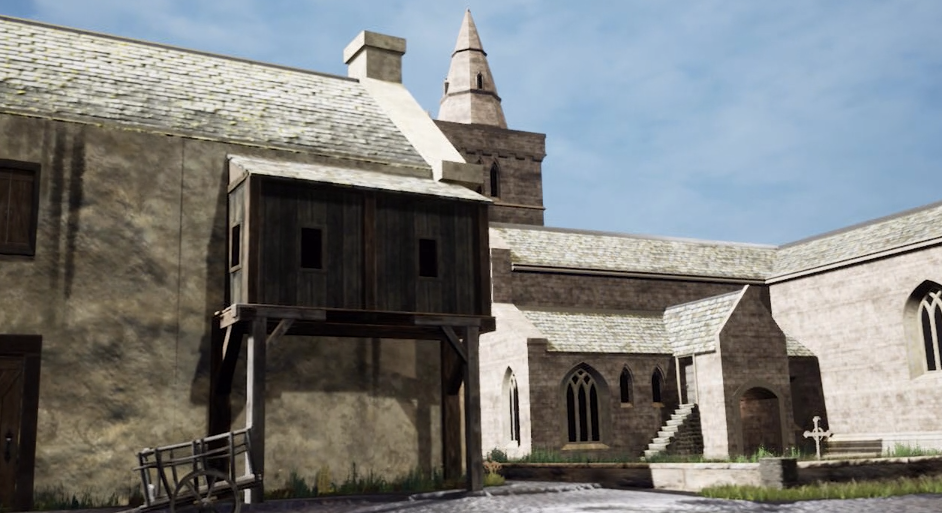
Click here to watch this reconstruction from 1559

This video reconstruction of Holy Trinity as it may have appeared in 1559 is based on research into historical images and written records (including property documents) undertaken by Dr Bess Rhodes, Peryn Westerhof Nyman, and Chelsea Reutcke. The digital reconstruction was created by Sarah Kennedy.visual world.

St Rule’s Tower, built in 1120 is the oldest part of the cathedral complex. Climbing to the top gives a panoramic view of St Andrews, which I used to do regularly at school lunch time. Unfortunately I never savoured the view since I was scared of heights and would crawl around the top rather than look over the, then, very low parapet.
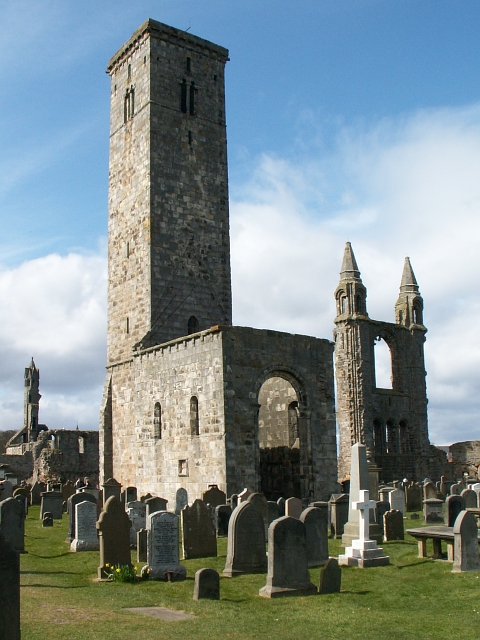
St Rule’s Tower

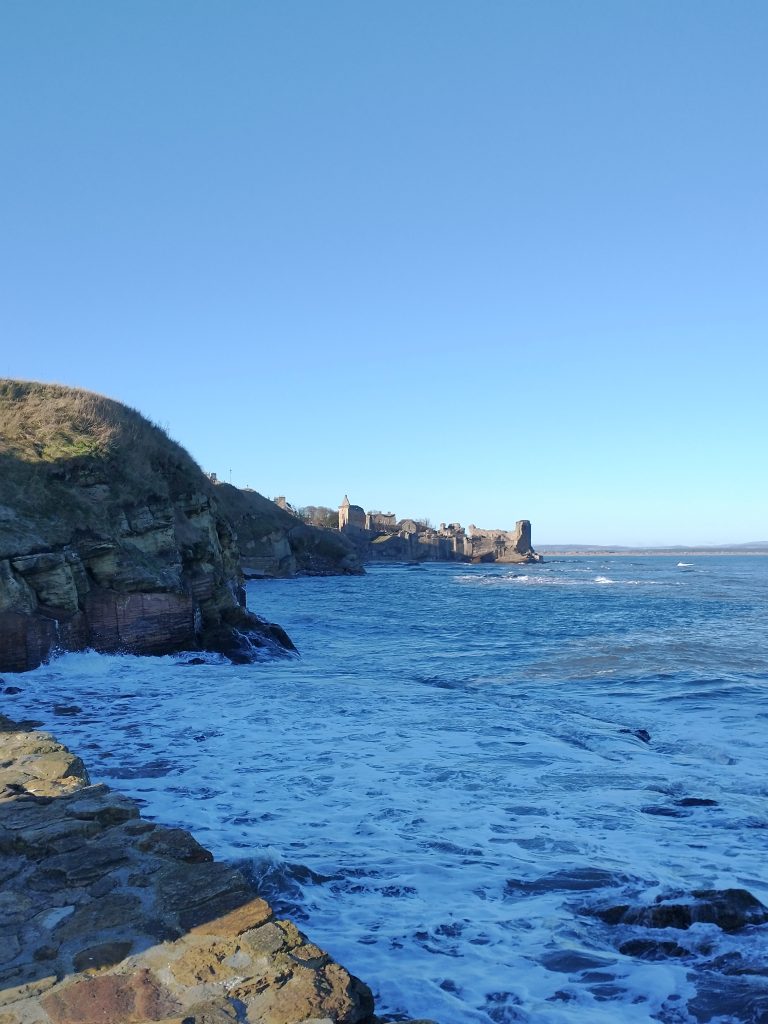
The castle ruins sits tucked away in a corner now, but once would have been as central to the town as the cathedral. To reach the harbour from the castle is a slippery walk over reefs, at low tide only, which both Bethia and Will had to undertake on separate occasions.

Here also are the cliffs Bethia had to climb down to escape from the rubble strewn castle.
The destruction of the cathedral began at the Reformation in 1560 when crowds looted and wreaked havoc. They smashed all the stained glass windows in every church, toppled any saints from their pedestals, melted down gold plate and from then on St Andrews, which had been Scotland’s ecclesiastical centre, as well as home to the country’s first university, fell into decline. Rubbish piled high in the streets and people had to climb over it to access their front doors. The town became so rundown, there was even a proposal the university be re-sited in Perth.
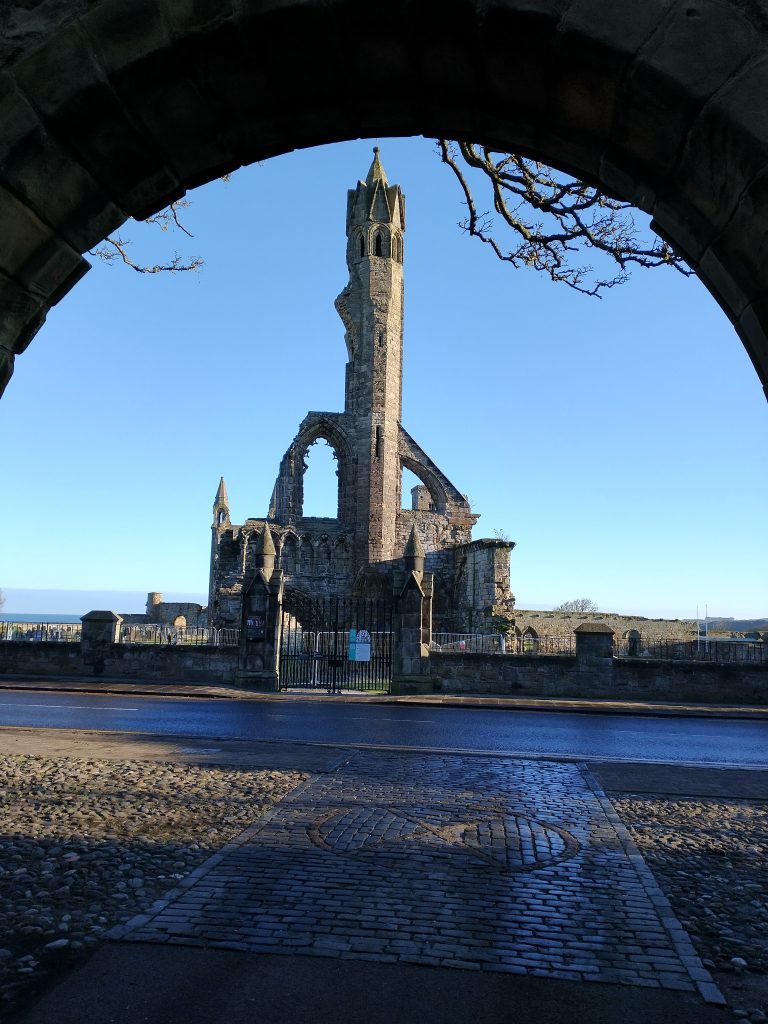
Cathedral Ruins

Eventually St Andrews was re-purposed as the home of golf as well as an ancient university town. Golf was actually banned by James II in 1457 because he felt young men were playing it rather than practising their archery. The Bow Butts, a lane named for the place of archery practice, is found near the West Sands and at the side of the first tee of the Old Course.

James IV however was a keen golfer and re-instated the game fifty years later.

If you haven’t already read The Castilians it gives much more of the story of the town and the siege of 1546.

It can be bought from:

Amazon US here

Amazon UK here
The Castilians by VEH Masters