Slains Castle and Dracula

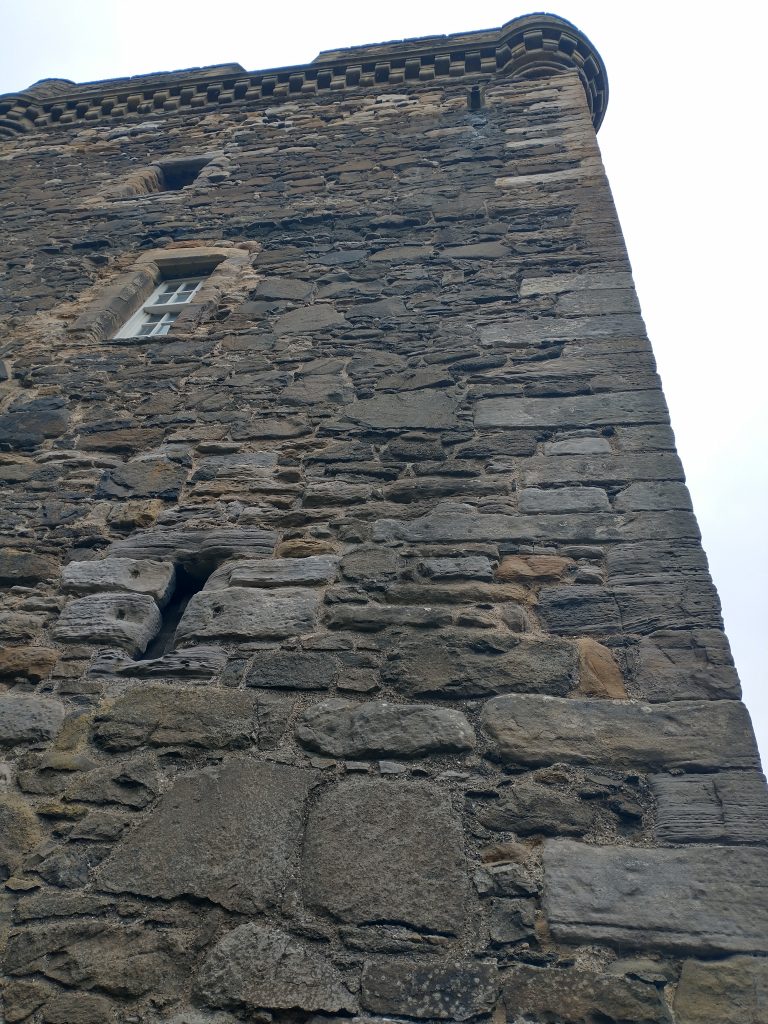
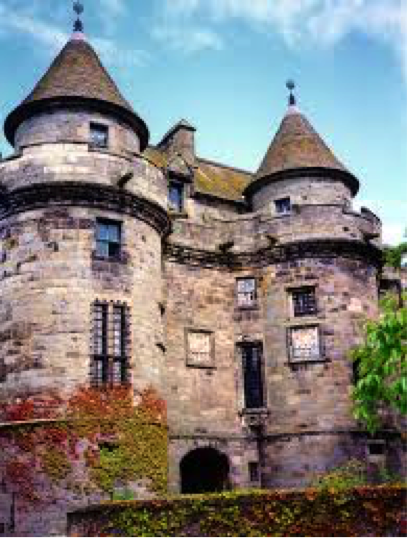
In my never-ending quest to feed my castle-visiting addiction I stumbled across Slains Castle in Aberdeenshire a few weeks ago and discovered Bram Stoker was said to have drawn inspiration from it for Dracula’s castle.

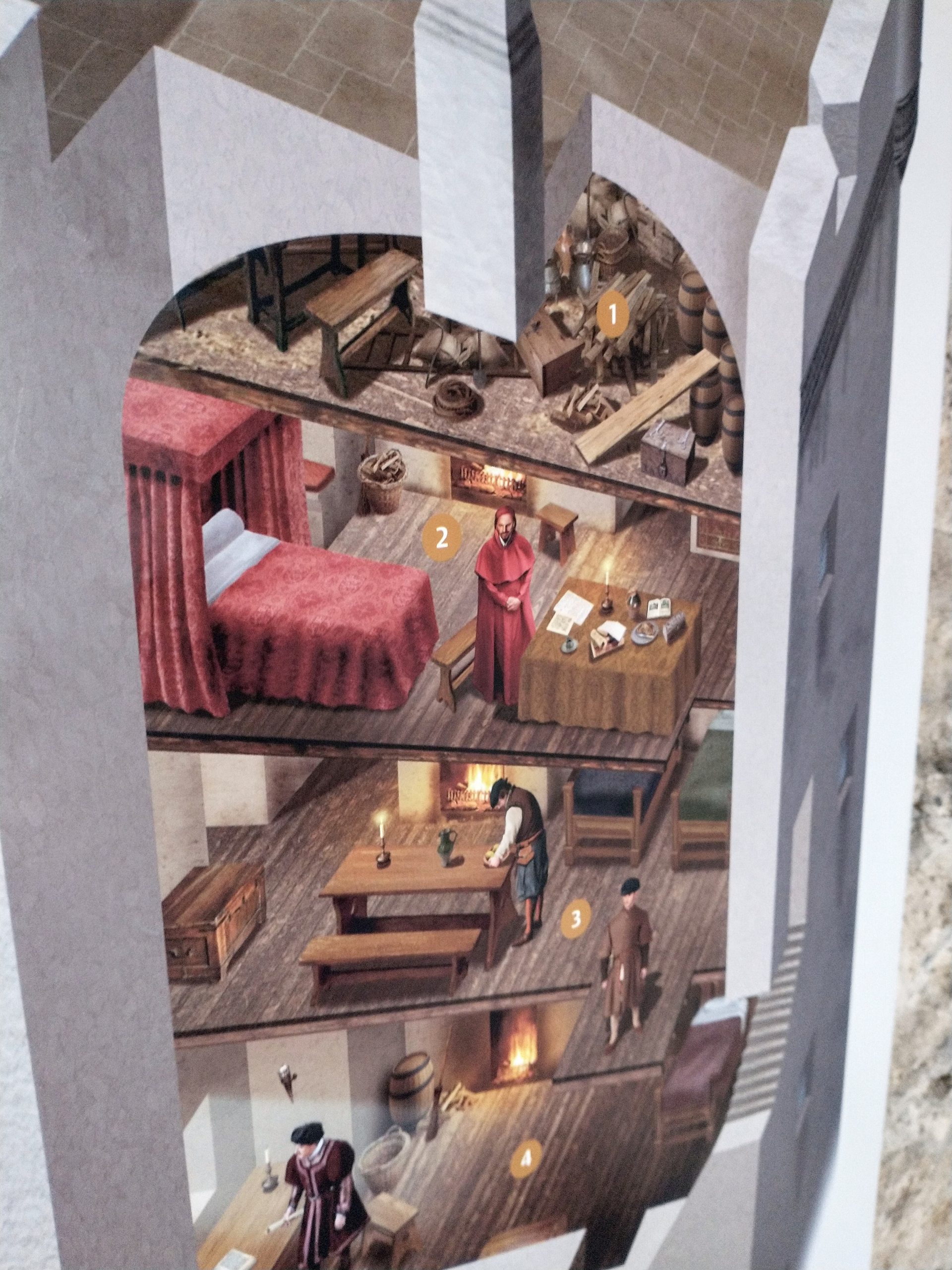
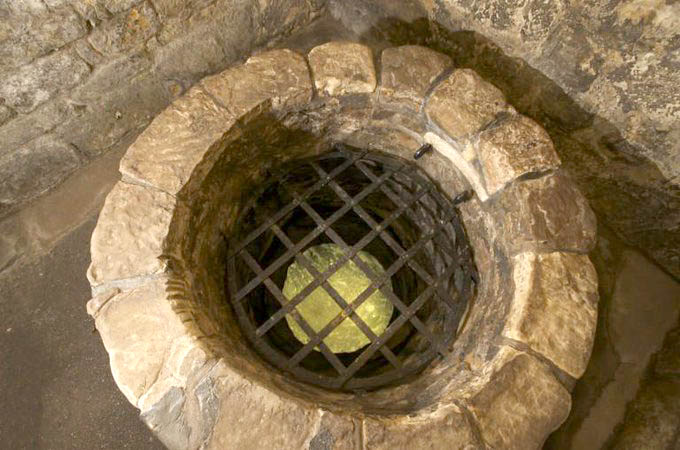
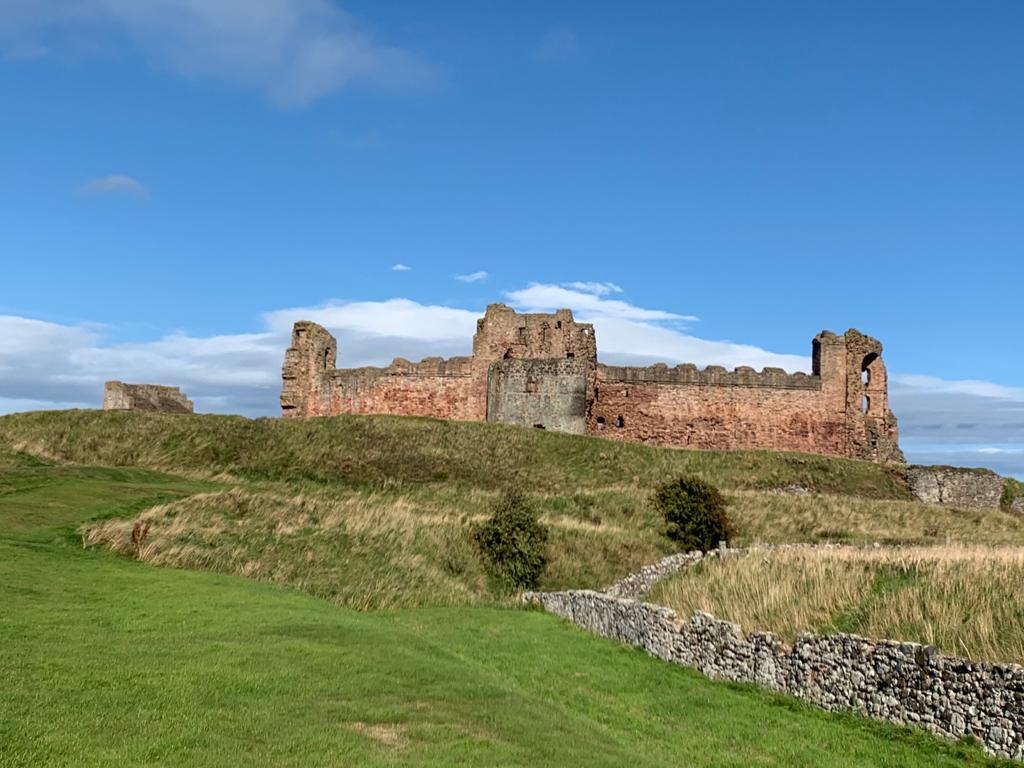
Slains Castle

Dracula, of course, was loosely based on a real prince connected with the Ottoman Empire, one period in whose history I’m currently researching for my next book. It’s always amazing how things tie up!

Inevitably Slains Castle had a long and chequered history prior to one Abraham (Bram) Stoker’s visits. The castle was owned by the Earl of Errol who reverted to Catholicism in 1587, as part of a plot supported by Spain. Not an especially wise decision since Scotland had been Protestant for nearly thirty years by then. Errol fled the country and James VI had Slains Castle destroyed. Yet when Errol returned to Protestantism in 1597, he found favour with the king and came home to rebuild his castle (although the family again shifted allegiance much later to support Bonnie Prince Charlie).

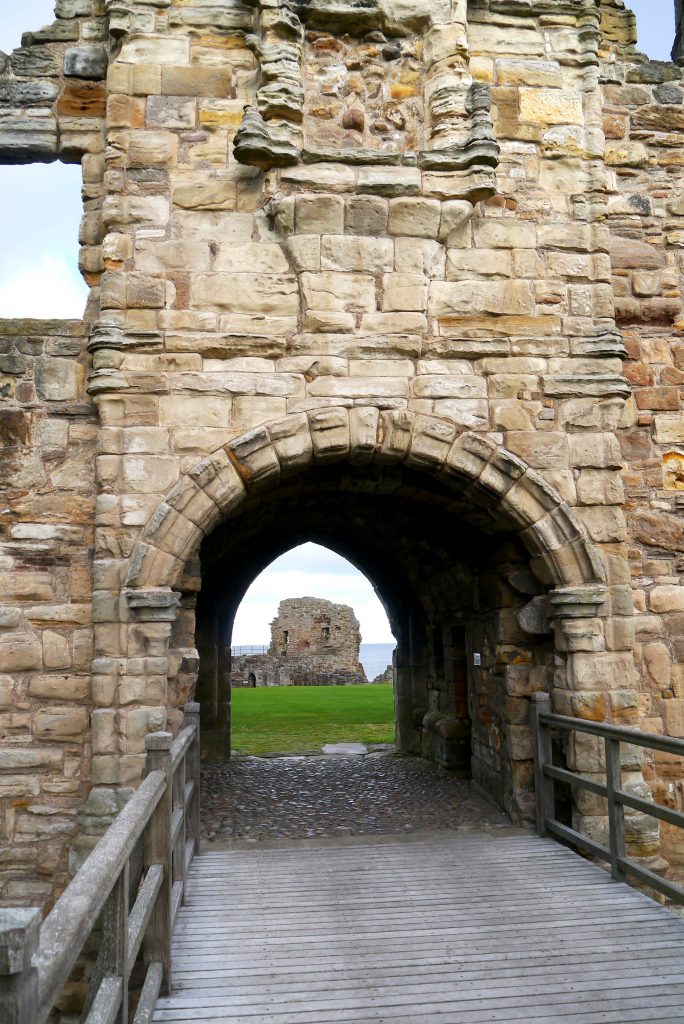
Massive windows into internal courtyard

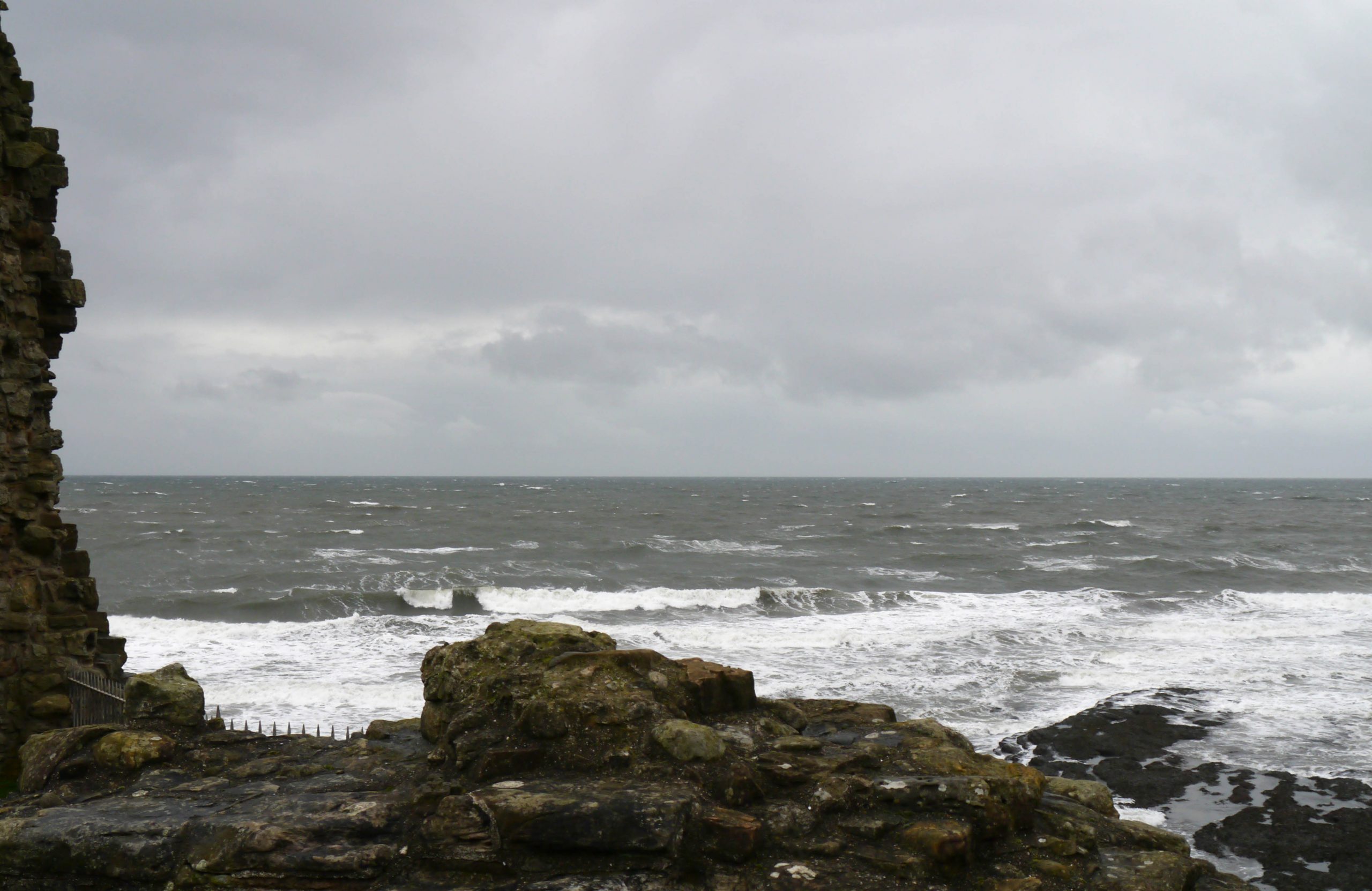
Perched on a cliff top, with some deep gullies and long drops the remaining ruin is an atmospheric hotchpotch of towers and courtyards added at various times by various Errols over the centuries since.

Samuel Johnson and his companion James Boswell spent a night at the castle during their tour of Scotland in 1773, although Boswell had some complaints to make about his night’s sleep…

I had a most elegant room. But there was a fire in it which blazed, and the sea, to which my windows looked, roared, and the pillows were made of some sea-fowl’s feathers which had to me a disagreeable smell. So that by all these causes, I was kept awake a good time.

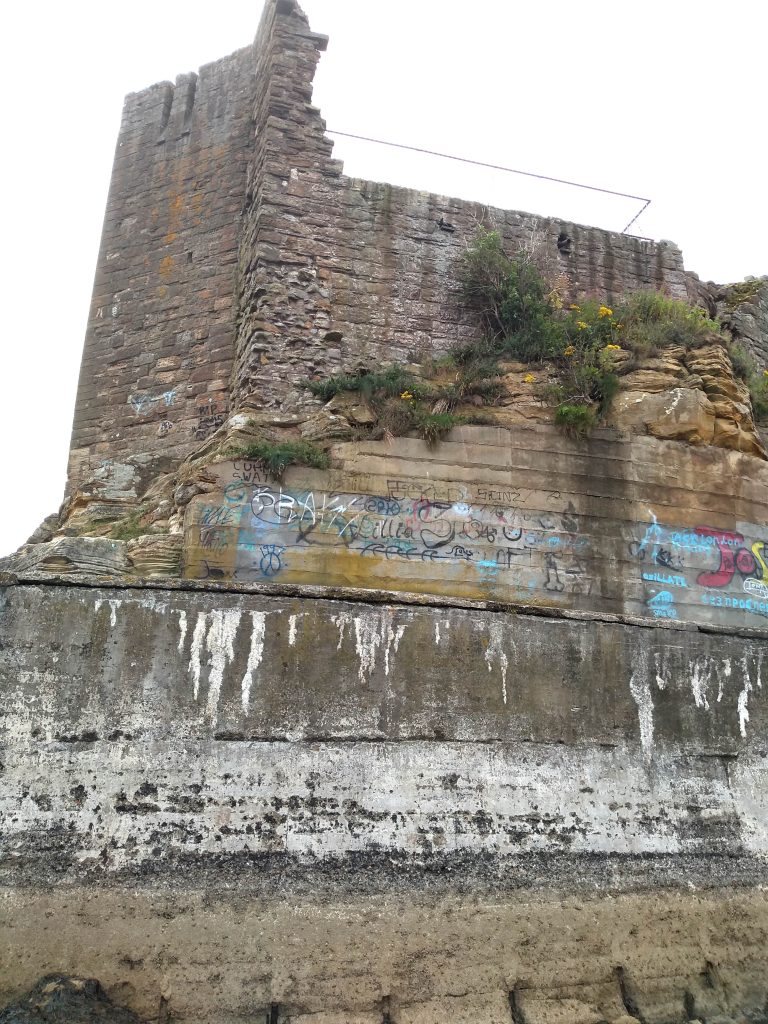
Drop from window to rocks below

The house was let as a summer home in early 1900s and both Lord Asquith, and Winston Churchill visited.  Bram Stoker never did stay in the castle but locally at the Kilmarnock Arms Hotel in nearby Cruden Bay. He came each summer for his annual month long holiday and this was where he started writing Dracula.

Cruden Bay

On my return home, coincidentally, the story of Vlad Dracula pops up on my video feed. It’s part of a Netflix drama documentary series called The Rise of Empires, and this season is focused on the war between the Ottoman Emperor Mehmed II and Vlad Dracula of Wallachia. My own next in series is partly set in Constantinople so I’m enjoying learning as much as I can about it, although 1462 is slightly earlier than my period. I settle down to find out more about the real Dracula.

Mehmed II from Netflix Series

The first thing is the name is not pronounced Dracula with the emphasis on the first syllable but Dracula, emphasis on the second syllable. Wallachia, a Christian country, was part of present day Romania, which was then expected to pay a tribute to the Ottoman Empire, who controlled it as a buffer zone between them and Hungary.

Ottoman Empire and showing Wallachia almost in the centre

As a boy Vlad Dracula and his brother Radu were held as hostages and surety of their father’s loyalty at the Ottoman court. They were educated alongside the future Mehmed II which meant Mehmed and Vlad knew one another’s strengths and weaknesses very well. Vlad and Radu would also have studied the Koran as part of their education, but only Radu converted to Islam.

In 1453 Mehmed took Constantinople bringing an end to the Byzantine Empire. His intention was to advance as far west as Alexander went east, and he adopted the title of Caesar of the Roman Empire. A remarkable tactician and a gifted engineer, Mehmed was a cunning man with a web of spies throughout Europe.

Vlad Dracula from Netflix Series

When Prince Vlad reclaimed the throne of Wallachia he resented paying the tithe Mehmed demanded and nailed Mehmed’s ambassadors’ turbans to their heads leaving Mehmed in no doubt of his intentions. Vlad tried to negotiate the support of his Hungarian neighbour to free him of the Ottoman yoke but Sultana Marija, Mehmed’s wily stepmother who was a former princess of Hungary and an Orthodox Christian, visited the Hungarian Court and used her influence to persuade the Hungarian king to prevaricate.

Sultana Marija from the Netflix Series

Mehmed was not a man to show weakness, and he crossed the Danube with a vast force determined to subdue Vlad. Outnumbered, yet very cunning, Vlad ran a campaign of guerrilla warfare and night attacks leaving a trail of death, destruction and scorched earth behind him. He even infiltrated lepers and sufferers of tuberculosis and the plague into Mehmed’s camp – a kind of germ warfare.

He was trying to free his country from the tyranny of the Turks however, even by medieval standards, Vlad Dracula was exceptionally cruel. The moniker impaler was ascribed for his particular skill, and fondness, for shoving a stake into his enemy and hammering it with a mallet until the point came out the other end. He was especially adept at  avoiding the vital organs which meant death was prolonged – and he had both women and men impaled.

Forest of Death

The terror culminated in The Forest of Death where 24,000 Moslems and Turkish soldiers were impaled and arrayed like a forest: a most gruesome art form.

Vlad came close to murdering Mehmed but in the end Mehmed’s superior numbers prevailed.  Vlad escaped and spent the rest of his life on the run.

Vlad’s younger brother Radu, known variously as Radu the Beautiful and Radu the Coward, remained loyal to Mehmed. There is some evidence he was sexually abused by Mehmed as a boy and ended up as Mehmed’s male concubine, although this isn’t directly referred to in the Netflix series.

Mehmed replaced Vlad with Radu. Those loyal to Vlad soon came over to Radu who was considerably less bloodthirsty and known for his quiet intelligence.

The series is beautifully shot. Although primarily a drama, the action is paused every so often while historians give us detail of the background story, the key players, the clever tactics and an insight into motivation. Well worth the watching.

And as for Slains Castle, it’s a most stunning walk along the old carriageway and then down to gorgeous Cruden Bay. Well worth the visit.

Paddling at Cruden Bay

References: The Historical Dracula: Monster or Machiavellian Prince? by John Akeroyd
Netflix Series: Rise of Empires Season 2
and lots of Wikipedia entries

Cruden Bay

Catholic or Protestant?

The Impact of frequent changes of religion in Tudor England – Guest Post by Jonathan Posner.

As a writer of historical fiction set in Tudor England, I recognise that religion was the key driver of almost every part of life – and therefore every story – set in the period. Belief in God was fundamental to how society operated, which meant that the doctrinal divisions of Protestant versus Catholic were themselves the primary source of conflict. So it has been very important for me to research and understand these divisions as the background to my action adventure stories.

Why? Because setting my stories in the reign of Elizabeth I allowed me to position a Catholic as an easy enemy. But is that simply too one-dimensional? While it is convenient to demonise the Catholics of the period, I believe it is also necessary to understand their background and motives.

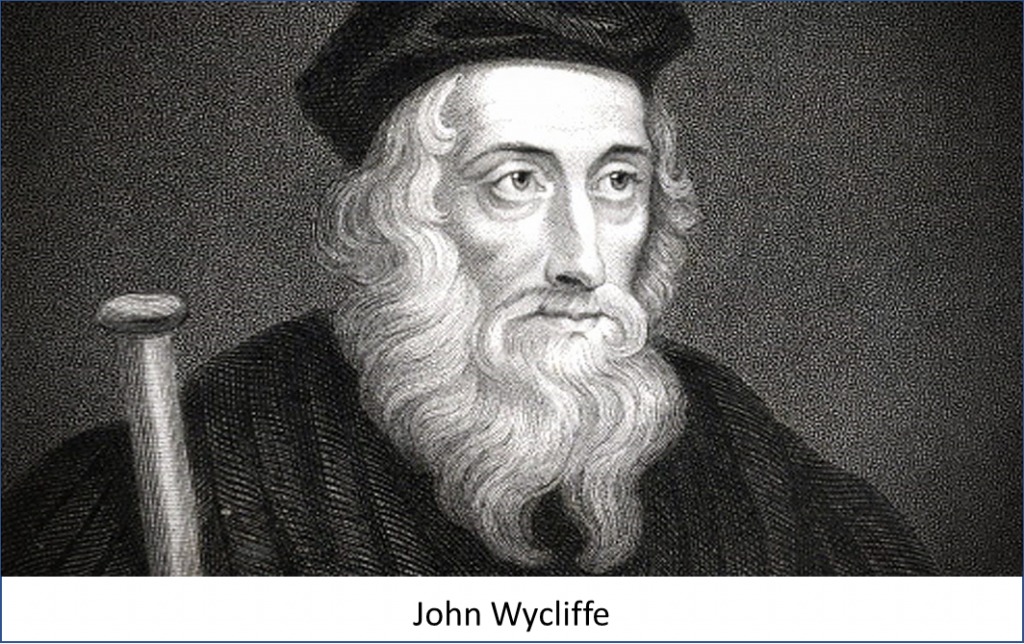
The Tudor era was a period of massive change and upheaval in the religious life of England. Until this time Catholicism had largely been the unchallenged doctrine, with the Pope in Rome as the head of the Church (I say ‘largely’ because the Protestant movement did not start with Martin Luther in 1517 – philosophers like John Wycliffe had challenged the precepts of Catholicism as early as the 14th Century).
But by 1603 everything had changed. The state-sanctioned doctrine was Protestantism, the head of the Church was the monarch, and Catholicism was seen as both heretical and traitorous.

It had not simply been a linear change; there had been a number of reversals along the way – all of which must have been both deeply challenging and destabilising for the majority of men and women of the time.

Let’s take an example. Meet ‘John’. He’s an educated land-owning Englishman, born in 1500 and therefore baptised a Catholic. By the time of his death at the age of 75, he would have seen his faith state-approved, then de-legitimised, then restored, then completely outlawed. So what caused these changes, and what would it have been like for him?

We start with the period leading up to the English Reformation, which was when Henry VIII broke away from Rome in order to marry his second wife, Anne Boleyn. John would, like everyone else, have been secure in his Catholic faith. As a young man he might have heard of the ‘heretical’ teachings of Martin Luther in Germany and John Calvin in Switzerland – but he would have been fairly well insulated from these. His religion came from the priest, who took it from a Latin bible and interpreted it for John and his family in church. The Mass was heard in Latin and the principle was that salvation (from eternal damnation in hell) came from following the Catholic teachings and doing good works. The doctrine of Transubstantiation was also fundamental – that the bread and wine of the Eucharist became the actual body and blood of Christ.
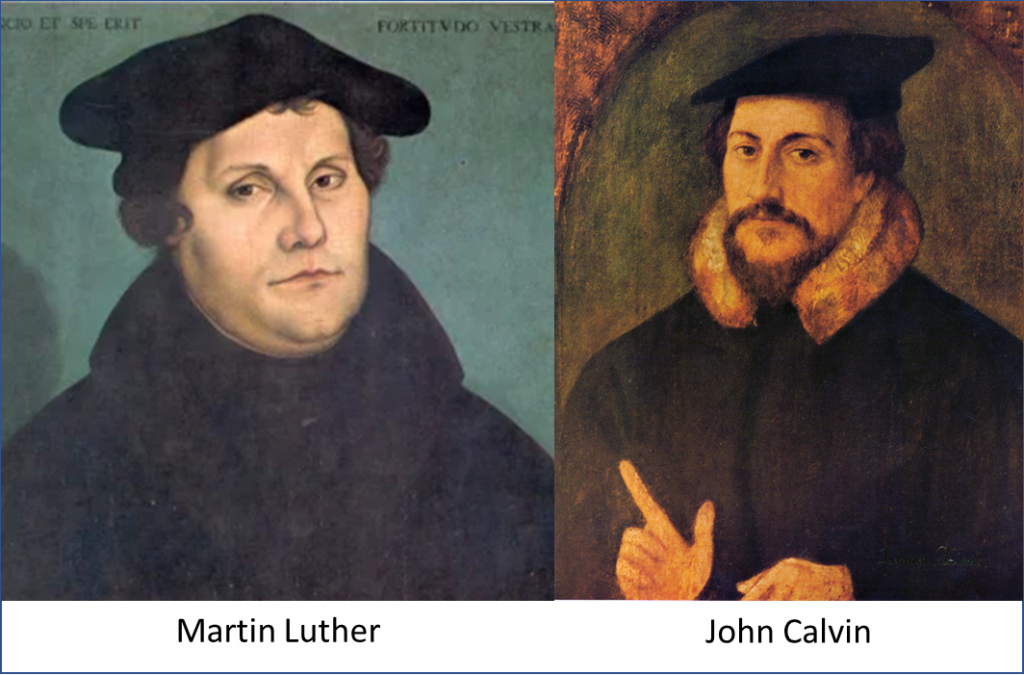
The English Reformation, when viewed through the lens of history and the subsequent rise of Protestantism, could be thought of as changing these services and the practice of faith. But the truth is that very little changed for John and men like him. The Reformation was simply a political and administrative change at the top, replacing the Pope with the King as the head of the Church. England remained Catholic in practice, and Henry ultimately opposed the Bible in English, as he shared the Catholic concern that the common man shouldn’t read it for himself, in case this caused dissent.

But I think it is fair to say that by creating the Church of England, Henry opened the door to the eventual introduction of Protestantism. Luther and Calvin’s teachings were becoming more widely disseminated across Europe. They had also reached England, where they were taken up by many intellectuals, such as leading thinkers like Katherine Parr, Henry’s sixth wife.
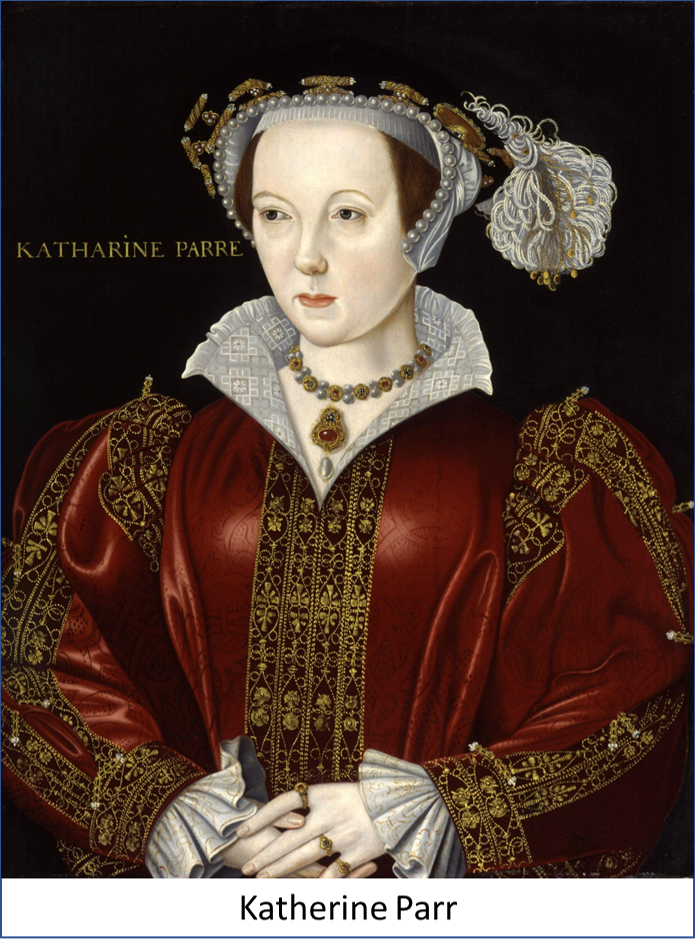
She was instrumental in bringing up Henry’s son and heir Edward according to the new doctrine, and Edward also had a fiercely anti-Catholic tutor called Richard Cox. So when Edward ascended the throne in 1547, even as a boy of nine, he was staunchly Protestant. His regents – first his uncle the Duke of Somerset, then the Duke of Northumberland – both supported his Protestant faith. And when Thomas Cranmer, the Archbishop of Canterbury, mandated the English Bible and introduced a new English Book of Common Prayer, Protestantism was truly established.

So our John – now in his late 40s with a wife and children – found that he was expected to reject all he had known and fully accept the new Protestantism. Not only was he told that simply believing in Jesus was enough to ensure his salvation, but he was also expected to have an English Bible and read it to his family. He now had to hear the Mass in English, and to reject the doctrine of Transubstantiation. The reason? In the Protestant doctrine, the bread and wine were now only ‘metaphorical representations’ of the body and blood of Christ.

Imagine how difficult all this would have been for John. Not only did he have to embrace a whole new way of thinking, but there was also a potentially terrifying question to face: what would rejection of his Catholic beliefs do to his immortal soul after death? Would he have to face eternal damnation in hell?
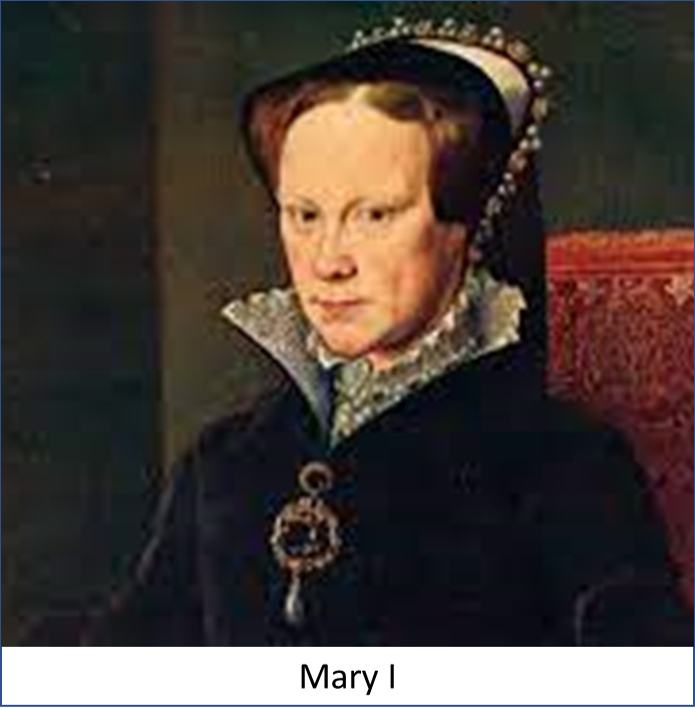
So I am sure that when Edward died in 1553 and his sister Mary I took the throne, John would have been relieved that his Catholicism was to be restored in the Counter Reformation. Mary was determined to reverse the reforms, and had Cranmer and other leading Protestants like Latimer and Ridley burned to death. However, she found many of the changes were harder to undo. The ecclesiastical properties confiscated or sold by Henry were now in the hands of powerful private landowners. These men therefore had a vested interest in preserving the new status quo and opposing any return of their lands, and by association, any return to Catholicism.

Another factor was the appeal of Protestantism to the wider population, with its accessible services and English Bible. While I have assumed our man John remained a Catholic at heart, many of his fellow Englishmen had fully embraced the new faith, and were supported by extensive printed propaganda produced by a strong underground reform movement.

The main problem for Mary was that she only reigned for five years. Even though Protestantism was still new and therefore may have rested on shaky foundations, she didn’t have enough time to turn it around (or even to restore Papal Supremacy).
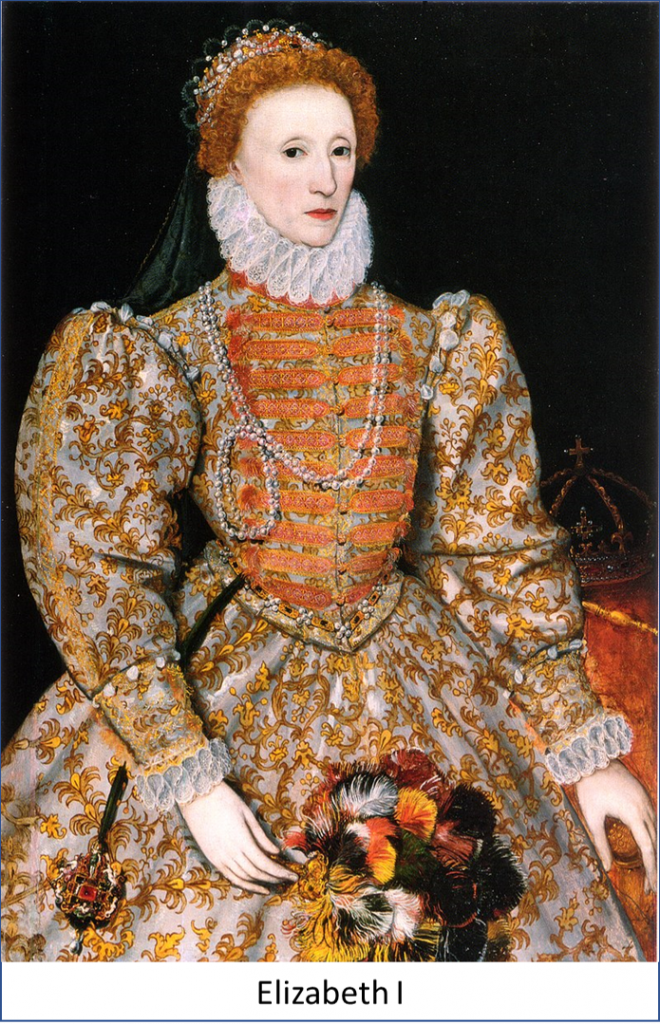
Then, in 1558, Mary’s half-sister Elizabeth I came to power. As a Protestant, she was determined to undo all Mary’s Catholic changes. Elizabeth had two key reasons for being a Protestant; her mother Anne Boleyn had been a reformist, and Elizabeth had also been brought up by Katherine Parr. So the new Queen set out to restore her late brother’s reforms.

It was fairly straightforward for Elizabeth to implement the Religious Settlement that reinstated Protestantism; between 1559 and 1663 she introduced a number of changes – such as the Thirty Nine Articles that codified the doctrines of the Church of England and the Act of Uniformity that restored Cranmer’s Book of Common Prayer. Together these meant that the Reformation, started by her father and advanced by her brother, had effectively been completed.

What, then, of John? Now in his early 60s, he had a choice to make. Should he continue as a Catholic, but in secret and at risk to himself and his family? Or should he embrace the reformed faith and stay within the Elizabethan state and ecclesiastical laws? And whatever his choice, what would be the risk to his immortal soul?

It would have been a difficult decision, and I do understand if he opted to remain a Catholic. Initially this would not have been too risky, as Elizabeth took a tolerant position. She is understood to have said ‘I will not make windows into men’s souls’. While she professed to be against the practice of Catholicism, she supported her Catholic subjects, provided that they made no trouble.
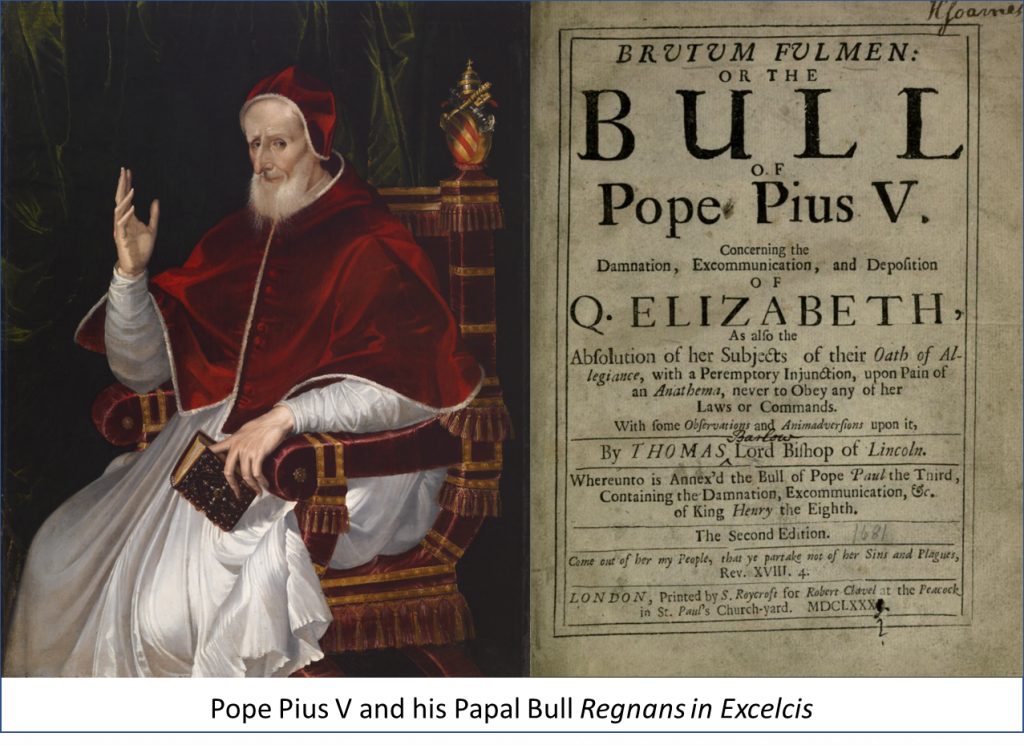
But in 1570 everything changed. Pope Pius V issued a Papal Bull called Regnans in Excelcis; a proclamation which declared Elizabeth to be a heretic and usurper.

Pope Pius made it every Catholic’s duty not only to disobey Elizabeth, but actively to seek her death. Not surprisingly for Elizabeth, this turned every Catholic into a potential traitor, and encouraged a succession of Catholic plots to put her cousin Mary Queen of Scots on the throne. All of these plots were foiled by Elizabeth’s chief spymaster Francis Walsingham, and Mary was eventually executed in 1587.

Would the Papal Bull have been the final straw for John? For the last five years of his life, would he have decided to give in, and embrace the Protestant faith outwardly in public? And who knows, maybe also inwardly in his heart?

Either way, this would have been the final time he had to choose which faith to follow in a long life of such difficult choices.

Jonathan’s latest book The Lawyer’s Legacy is available now for pre-order on Amazon and on Amazon uk.
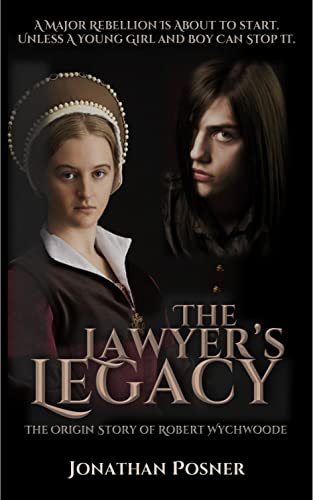
It’s 1535, and young Robert Wychwoode has his life all planned out – he’s going to become a successful lawyer, fighting for truth and justice. And when he falls for a beautiful young girl, he naturally amends his plans to include her as well. But together they are caught up in a violent plot to overthrow the King and Robert has to decide if he is prepared to compromise his ideals if he’s going to foil the plot – and save the life of the girl he loves.
How maps changed the world

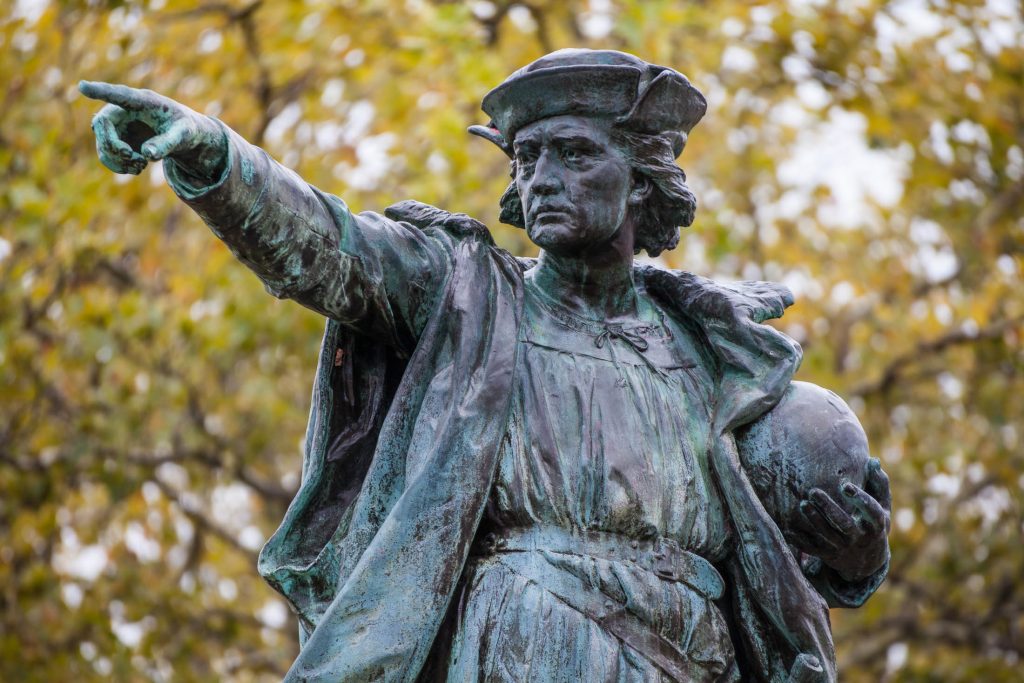
Columbus, despite being unusually learned about cartography when he set sail for the Americas, was convinced he would arrive in Asia. And even after he’d made landfall in the Caribbean he still believed he was near India.

Statue of Christopher Columbus, Rhode Island , courtesy of Wikicommons

‘Ten journeys away is the river Ganges,’ he wrote in 1503 when he was in what is now known as Guatemala. And when he reached Cuba soon after he believed they were almost upon Cathay.

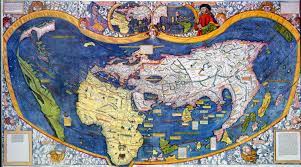
World Map by Waldseemuller 1507, courtesy of Wikicommons

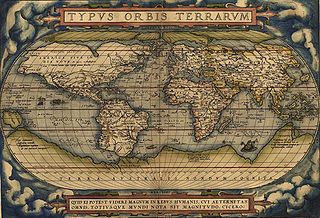
Barely fifty years later the great era of map making was at its zenith and in 1570 the most successful book of the century Theatre of the countries of the world was published in the then most powerful city of the western world, Antwerp. The world’s first ever atlas went through numerous printings (including a pocket edition) and was translated into several languages.

World Map 1570 from Theatrum of the countries of the world, courtesy of Wikicommons

Ortelius, the creator of the first atlas, started out as a map colourist, a profession which I have my character Mainard eager to follow in The Conversos. To become a colourist required not only training but acceptance into the appropriate guild, in this case the Guild of St Luke which admitted sculptors, engravers and printers as well as painters.

What Ortelius did, in creating his Theatrum, was to bring together the work of a number of cartographers with careful attention to making sure their work was as accurate as possible and based on the best sources available. He made several visits to Italy (Venice and Rome were great centres of mapmaking) and attended the Book Fairs in Frankfurt (whose famous fairs began in 1445 and were unsurpassed even then) to source the work.

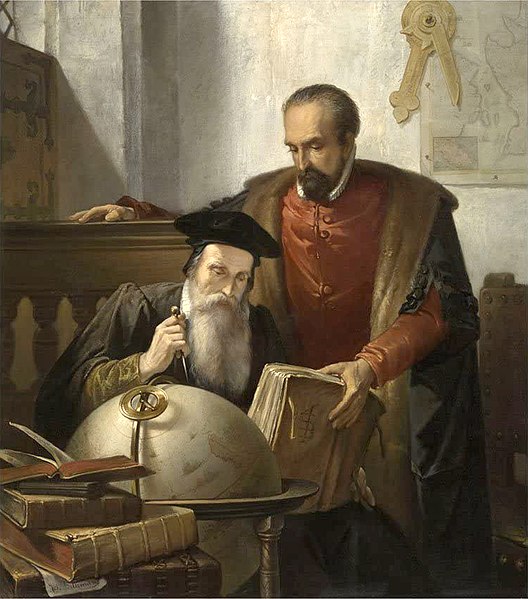
Ortelius met the geographer Gerard Mercator while they were both attending the Frankfurt Book Fair of 1554 and they became great friends. Mercator did not live in Antwerp, which would perhaps have been expected since it was the centre of printing, but in a small town in Germany. He had previously lived within the Hapsburg realm but, after being arrested for the foul crime of “Luthery” (being a follower of Luther), he fled from the Catholic country as soon as he was released. Those arrested with him were not so fortunate: one man was decapitated; two were burned at the stake; and two women were buried alive.

Mercator and Ortelius by Joseph Bellemans, courtesy of Wikicommons

‘How we see the world depends on what we believe it to be,’ writes Paul Binding of Ortelius, and others, in his book about the making of the first atlas, Imagined Corners. The great “discovery” of the Americas tested Christian Europe – for how could such sophisticated societies as the Aztecs have flourished without knowledge of, and belief in, God. Mercator rationalised it by deciding that biblical writers knew all about these lands and Ortelius decorated his Theatrum with many classical references to Pliny, Plato etc… who ‘got their measurements of the world right.’

The great non Christian cultures of the “New World” were accorded no respect for their achievements in mathematics and astronomy, their genius in urban planning and engineering nor their art and music and were destroyed by a Europe in which, as Binding writes… ‘in their brutal actions against it can one not read an emotional resentment born of so radical a challenge to their identity?’

Geddy Map of St Andrews 1588, by kind permission of the National Library of Scotland

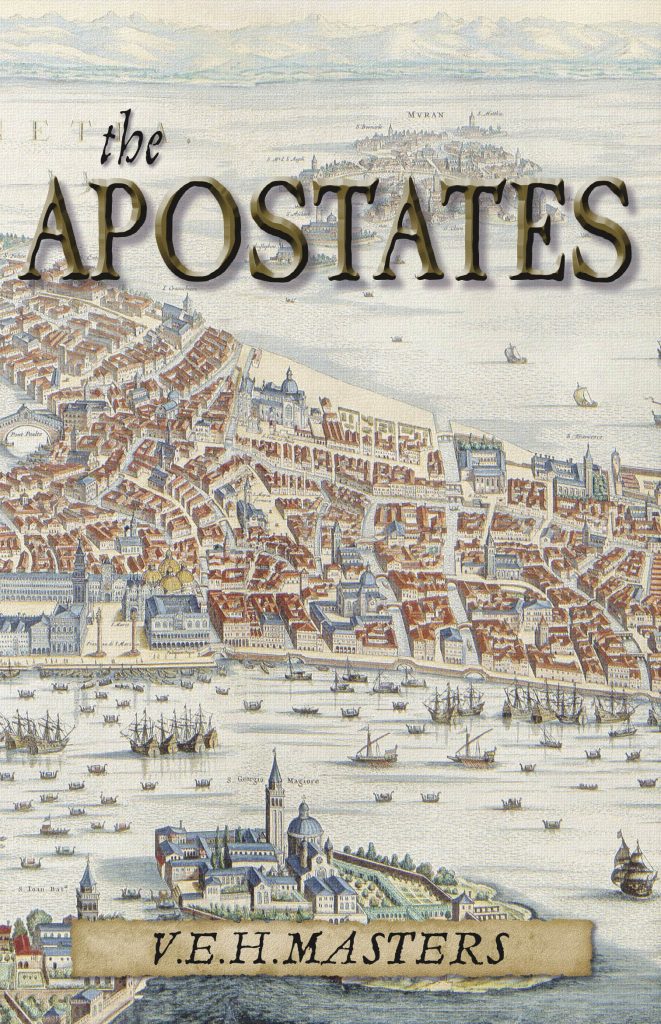
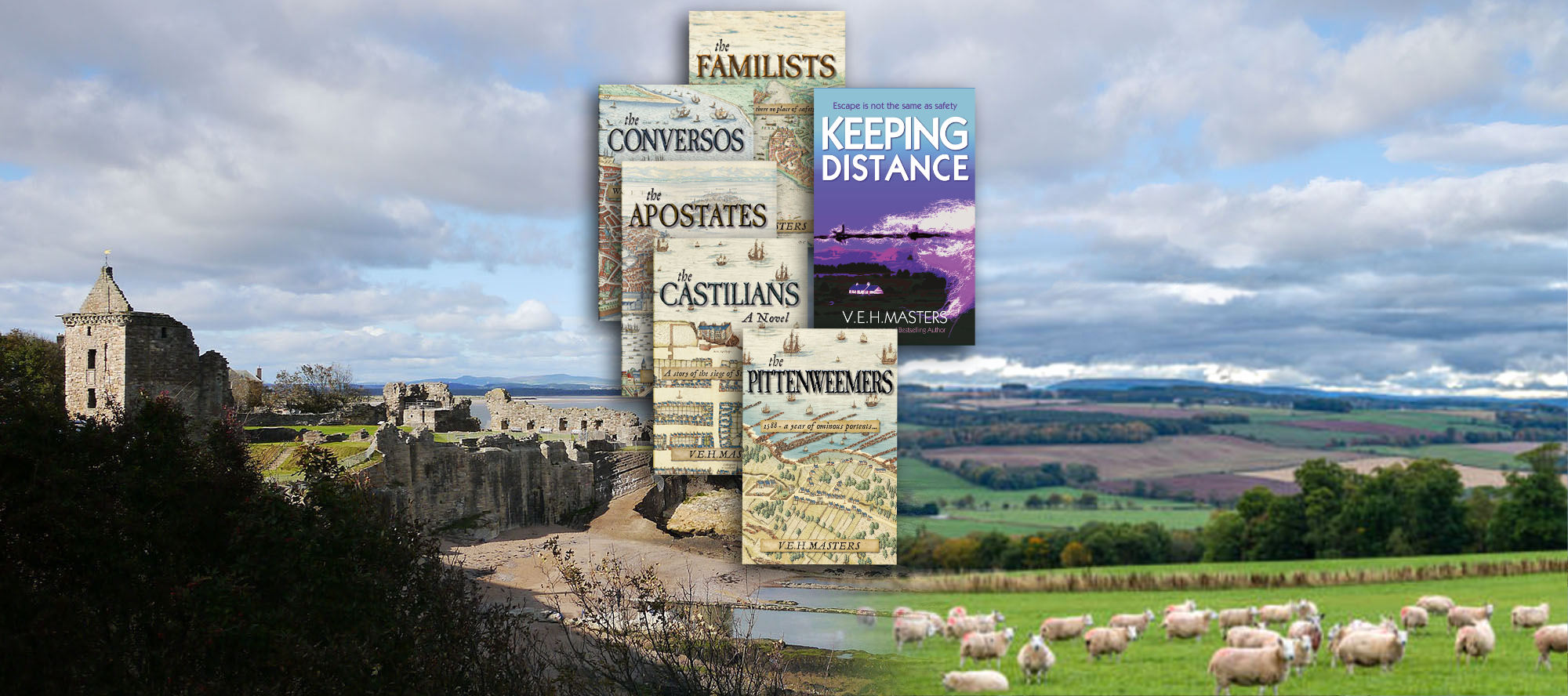
In the later 1500s it became fashionable for the well-to-do to display large scale maps on their walls and the demand for cartography of each city grew. Not only do the maps produced of St Andrews, Antwerp and Venice make beautiful covers for my three books The Castilians, The Conversos and The Apostates, they have also helped me better understand the world my characters inhabit.

For example, in St Andrews the only high walls encircle the grounds of its cathedral (and still do). The city gates are much more about controlling trade than protecting its citizenry from attack, for the guilds were very powerful.

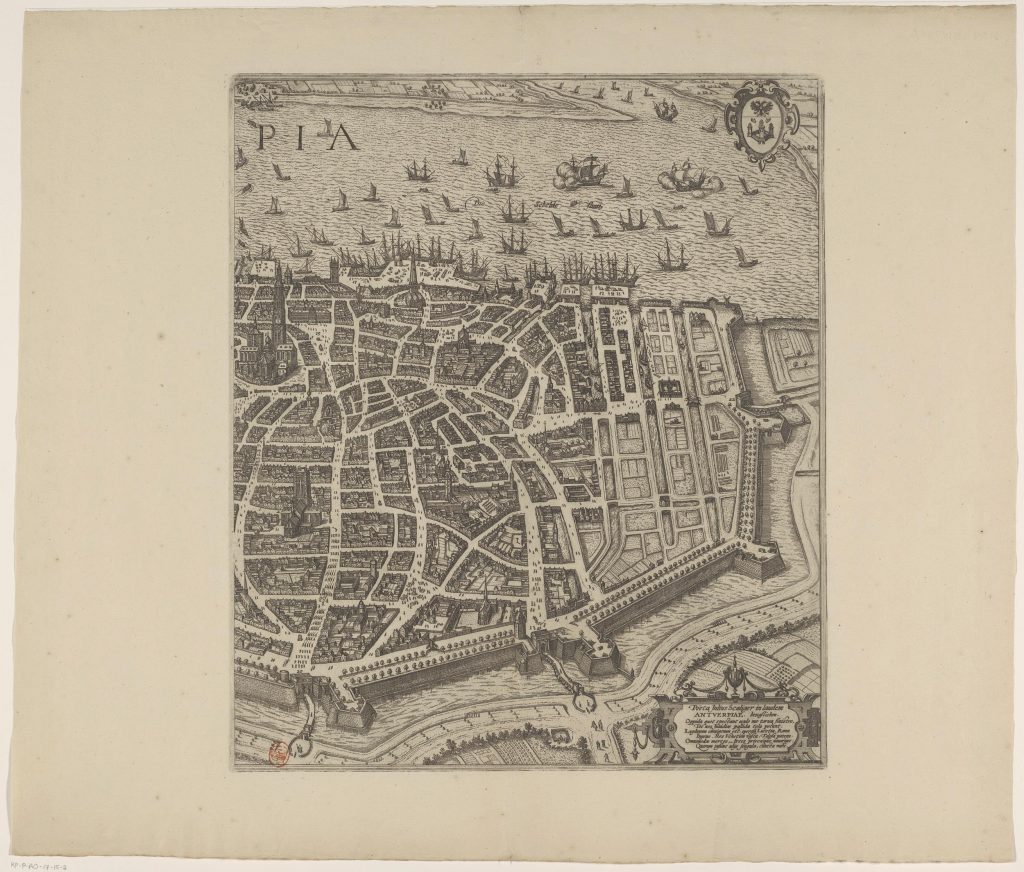
Antwerp, on the other hand, has massive fortifications and the canals encircling it were more about protection than easy movement of goods.

Map of Antwerp by Hieronymous Cock 1557 courtesy of Look and Learn

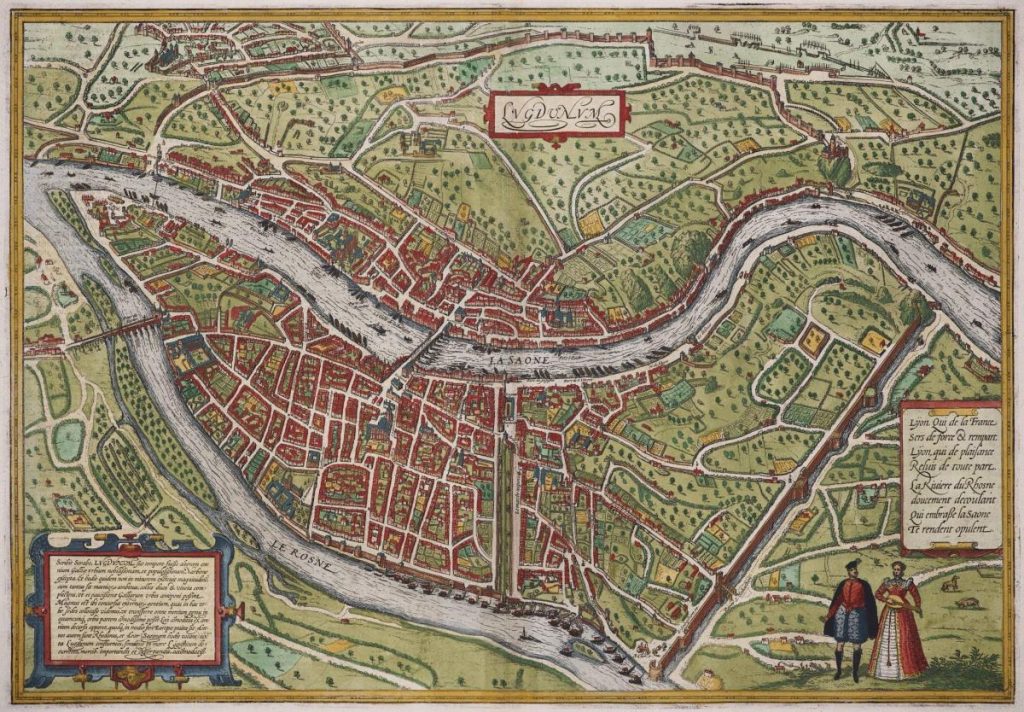
Here’s a map of Lyon from the same era which shows how building in the bend of the river created a defensive barrier on three sides of the city. In The Apostates Bethia and Will find themselves enticed to Lyon where Bethia has an encounter with astrologer, physician and seer, Nostradamus.

Map of Lyon from 1500s, courtesy of LyonMap360

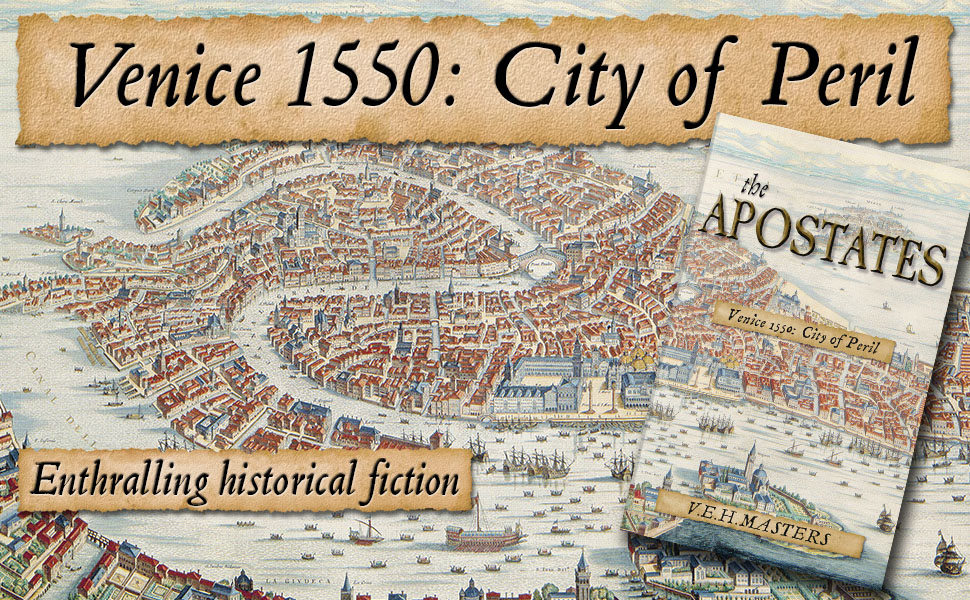
And of course we have Venice where The Apostates is in part set, which is again all about trade and easy access for the many galleasses and other smaller craft.

My most recent in series The Apostates is out now and, I’m delighted to say, selling well. Here’s a lovely review from bestselling author, Mercedes Rochelle

‘Beautifully illustrates the religious strife of the period
In this volume, we continue the travels of Bethia and Mainard (and their growing family). It’s beginning to look like there isn’t a safe place in Europe for these religious outcasts. Neither Catholic nor Jewish, the Conversos are rejected by both, and Bethia is tainted by association with her new family…

Poor Bethia’s world seems to constrict all around her, though she initially finds solace in Venice, which still leans toward veneration of the Virgin Mary, giving her comfort. But before long, the old persecutions are rearing their ugly heads in Venice as well. The author depicts the fears and frustrations of the Conversos very effectively. I was easily able to identify with their paranoia:

Then one day da Molina came to warn Mainard that the family were under suspicion. Katheline’s activities were not so secret after all. And there were questions about Papa’s burial. Neighbours had reported the unnatural speed with which he was interred and even worse that the corpse was wrapped in white linen – a most foreign and unchristian act. The sense of being constantly watched grew until Bethia was glancing all around whenever she left home.

At the same time, Bethia’s brother Will has gone back to Calvin and trains to be a preacher, himself. So now she has something else to worry about. The Protestants are beset with internal fighting between Calvin and the heretic Servetus, and although this is all in the background, it serves to illustrate even more religious strife in the period. There is no safe place for Bethia to raise her family, and it’s a wonder she is able to hold body and soul together. As a character she is amazingly resilient, and provides the anchor for the reader to hang onto.

The Apostates is available on Amazon UK and Amazon US , and other Amazon sites.

If you want to be kept up to date with new releases, free short stories and other tales of The Seton Chronicles you can subscribe to my monthly newsletter here.

How perilous was travelling in the Renaissance?

In my most recent book, The Apostates , my characters Bethia, Will and Mainard are forced to flee across Europe. I was curious to uncover their likely means of travel and just how perilous the journey would be.

Researching I came across a delightful book called Touring in the 1600s, and was surprised to discover that, even then, people chose to travel rather than have it forced upon them. Although the era of pilgrimage had faded – St Andrews in Scotland once a huge centre for pilgrims had seen a decline well before the Reformation – artists and a sterling few curiosity seekers did travel for pleasure, mostly to Italy.

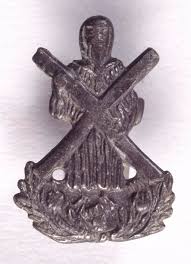
Pilgrim Badge

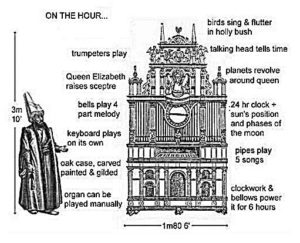
But still virtually all journeys were taken out of necessity, either for business or on the orders of others. Thomas Dallam, for instance, was a master organ builder who Elizabeth I sent off to Constantinople with her gift of an organ to Mehmed III. Dallam was then required to play the instrument for the sultan which he did with great trepidation having been forewarned that to lay a finger on The Grand Turk meant instant death – and the sultan sat so close behind Dallam to watch that ‘I touched his knee with my breeches’.

Organ made by Thomas Dallam gifted to Sultan Mehmed III by Elizabeth I

Any journey, whether embarked upon willingly or not, was difficult, dirty and uncomfortable. Roads were likely to have great potholes, often dug by the local villagers for materials to repair their homes. Travellers were advised to never journey without food in their pocket, if only to throw to the dogs who attacked them, and to line their doublet with taffeta since it was lice proof.

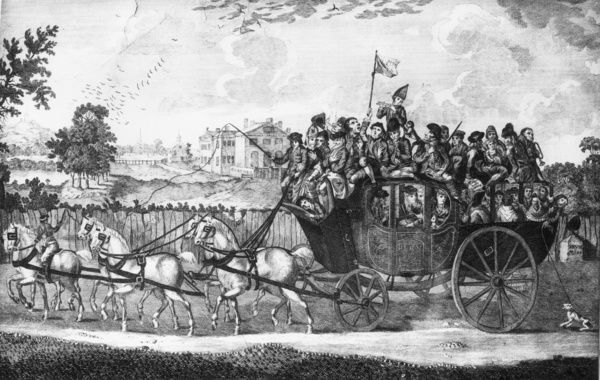
Another excellent piece of advice was, ‘when going by coach, to avoid women, especially old women for they always want the best places.’ Although generally if you were a woman, or married, the recommendation was to avoid travelling.

A coach taking passengers to Bury Fair. Artist – John Ogborne. Engraving – Joseph Strutt

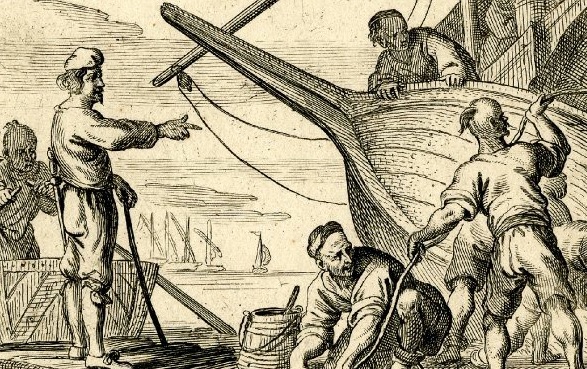
By water was the fastest means of travel, and the rivers and lakes of Europe were well supplied with boats. They were towed, or sailed, between towns with fares fixed by the local authorities, although there were complaints about drunken boatmen, who frequently landed their passengers in the water.

An account by an Italian priest en route to Amsterdam, tells how he and his fellow passengers travelled by night in an open barge unable to sit up, much less stand, because they were at risk of a severe dunt on the head from the low bridges which were invisible to the eye in the moonless night. He adds that they were forced to lie in the pouring rain, on foul straw as if they were “gentlemen from Reggio,” – a synonym for pigs. 

Travelling across lakes could be perilous too, because of storms, as this account reveals…

‘The boat was made of fir-trunks, neither sound, nor tarred, nor nailed. A storm came and the helmsman left his post and called out to all to save themselves, if they could; nothing was to be seen but rain and lake and perpendicular rock until a cave was sighted towards which all joined in an effort to row. We found a way up the rock and , at the top, an inn.’

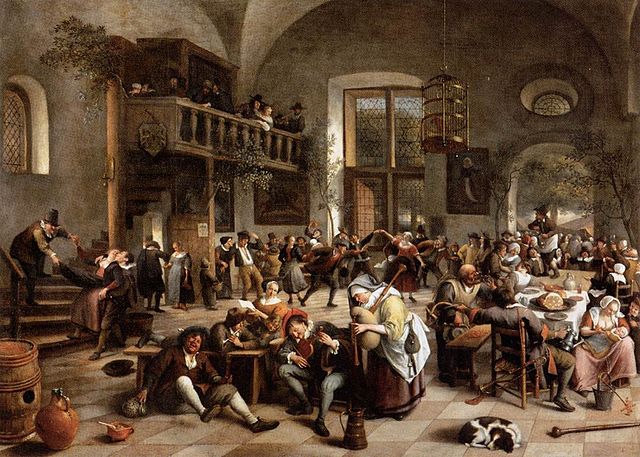
Revelry at an Inn by Jan Steen

Yet finding an inn didn’t mean a traveller was in a place of safety. Inn keepers were often in cahoots with thieves, letting them know when those with an abundance of goods were in residence. Travellers were warned to check their chamber carefully and to look behind any large painting in particular, in case it concealed a secret door or window through which a robber might enter in the dark of night.

And as for Bethia, Will and Mainard’s journeys, they do have a tumultuous time… read The Apostates to find out more.

References:

Dallam’s Voyage to Turkey, The Musical Times 1905

The Sultan’s organ: presents and self-presentation in Thomas Dallam’s “Diary”: article by Lawrence Danson

Touring in the 1600s by E S Bates

Do animals have souls?

In my current book The Apostates (due out early November), the reformer John Calvin features. My character Will is very happy to be learning at the feet of the great man, his sister Bethia, a Catholic, less so and her sister in law, who is determined to return to the faith of her ancestors, Judaism, even less so.

I was curious to learn about Calvin, a Frenchman who had a big influence on the Scottish Reformation, even though he never visited Scotland.

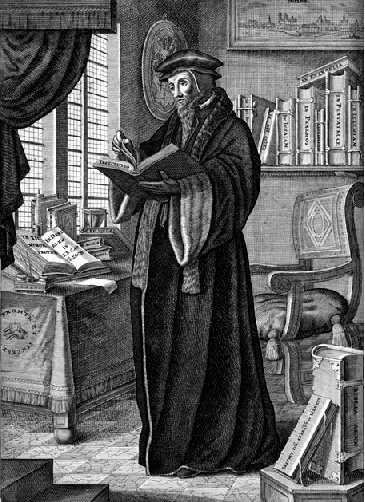
John Calvin

In the very early 1500s Geneva had a name as the dirtiest city in Europe. Calvin closed the gambling houses and brothels, introduced education for all, including girls and generally cleaned up the city.

Inevitably this didn’t make him popular with everyone, especially if they’d previously enjoyed gambling or made their living from manufacturing playing cards. Some Genevans derided Calvin, claiming they were being taken over by a Frenchman, and making his life difficult in many ways including: misnaming him Cain; ringing handbells beneath his window at night; playing skittles outside the church while he was preaching; and naming their pets after him.

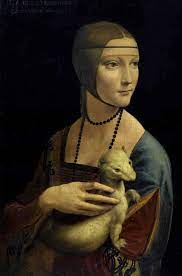
The mention of pets named Calvin or otherwise left me wondering. Did people keep pets in the 1500s? Of course I knew they kept working animals, and we see enough of them in portraits: the hounds, hawks, horses and so on. But what about lap dogs or cats (other than those used as mousers or for their soft pelts)?

Leonardo da Vinci’s Lady with an Ermine

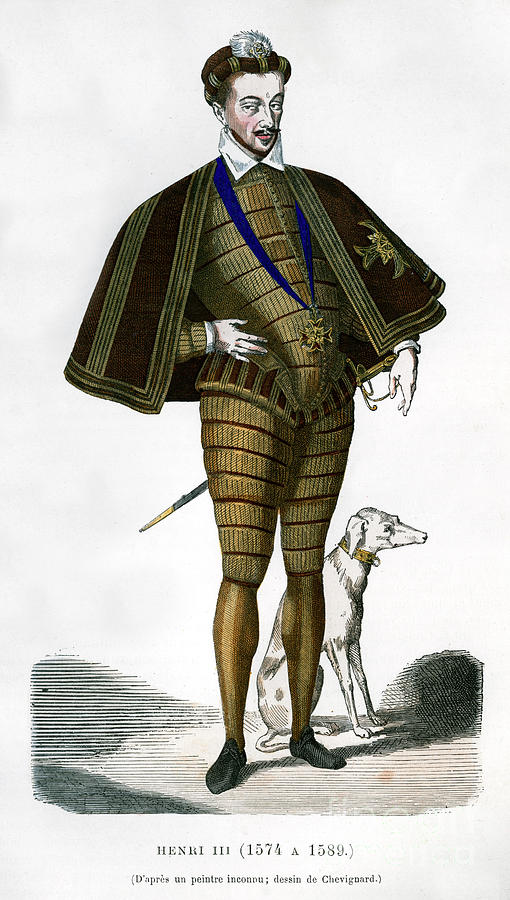
And it seems they did, although small dogs were considered the province of women and clergy For a non-celibate man to keep a pet indicated a lack of manliness and Henri III of France’s strong attachment to his lap dogs was derided as a sign of weakness unsuitable in a king.

King Henri III of France, and dog lover

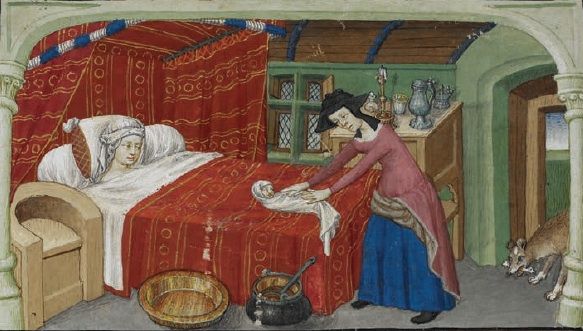
However, putting King Henri’s affection for his dogs to one side, one of the main purposes of keeping pets (and an animal becomes a pet at the whim of its owner, i.e. is kept indoors, is not eaten and is given a name) was to reinforce status. Only the wealthy could so indulge themselves. Their pets were fed the best quality food and were allowed into spaces where servants were forbidden or constrained. Indeed animals are often present in paintings of childbirth. Some medical texts of the period even recommend that those suffering pain of the belly should press their pet dog to their chest to ward the pains off.

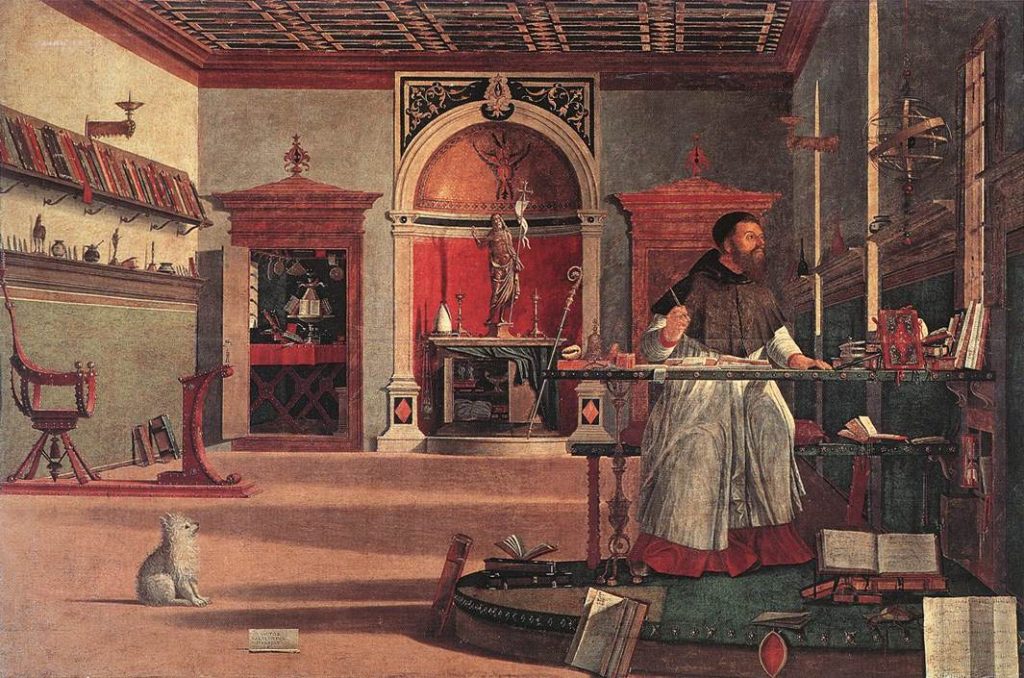
Increasingly too, scholars kept a pet as their muse, to lie quietly at their feet while they worked and to provide a welcome distraction from study … much as the internet is a constant distraction for me, I should imagine.

When the animal died elegies were written, often in Latin, in their memory, as well as epitaphs on their tombstone. Here’s Robert Hendrick (1591-1674) ode to his deceased spaniel.

Now thou art dead, not eye shall ever see,
For shape and service, Spaniell like to thee,
This shall my love doe, give thy sad death one
Teare, that deserves of me a million.

Although it became common for bereaved pet-owners to erect tombstones and pen elegies, not everyone agreed that this was appropriate, indeed some considered it blasphemy. Others, like Aldina, the Dutch philosopher, talked of his dog’s little soul crossing into the underworld. And soon a debate arose as to whether animals did have souls.

St Augustine, and Dog, by Carpaccio

In the late 1500s Montaigne wrote that not only were animals moral and rational, they were more moral and rational than humans. He considered that, because they live in accordance with the dictates of nature, beasts possessed reason, affection, jealousy, hate, joy and grief and that those passions arise out of knowledge.

Followers of Aristotle disagreed, saying that animals have only a sensitive soul while humans have a rational soul. Descartes waded in denying that animals have the ability to reason and, although they have passions, they are no more than bodily functions. Beasts die because the body decays, humans die because the soul leaves the body.

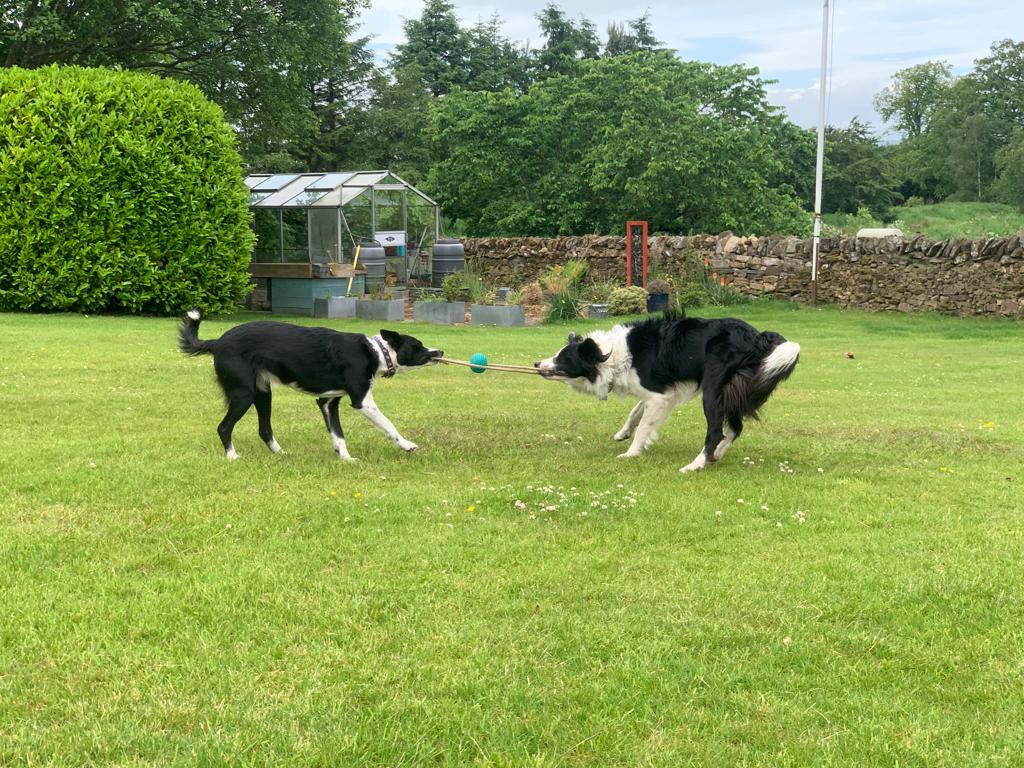
Tug of War

So the jury is out on whether animals have souls but I’ll leave you with a photo of my neighbour’s collies playing tug of war – a very determined, if not soulful, pursuit.

Ps The Apostates will be released on 15 November.

References

Late Medieval Pet Keeping: Gender, Status and Emotions by Kathleen Fiona Walker-Meikle

The Virtues of Animals in Seventeenth-Century Thought by Peter Harrison

What did it mean to be ‘worth your salt’?

In my saga The Seton Chronicles the family make their money through trade. I spent a fair amount of time trying to unpack just what Scotland would be trading across the North Sea (which was known as the German Ocean until just after WW1 ). In the 1500s hides, wool and fish were the main exports but increasingly salt became important too.

National Library of Scotland – An illustration by William Brownrigg showing 18th Century salt making

The production of one ton of salt required six tons of coal to keep the fire beneath the iron pans, which contained the sea water, burning over several days until the water evaporated. Several villages dotted around the Forth Estuary in the east of Scotland had the perfect combination of sea and coal seams needed.

Culross Palace home of Sir George Bruce, a salt entrepreneur of the 1500s

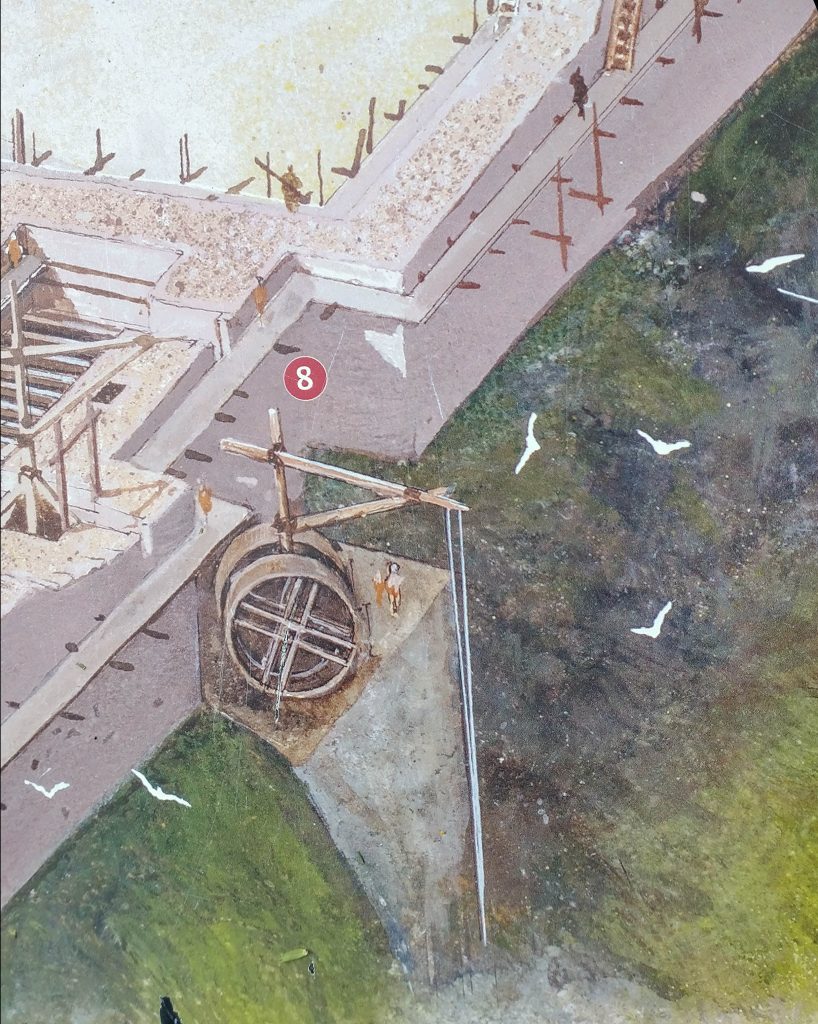
In Culross, the coal was mined from beneath the sea, always a dangerous process but even more so in the 16th century. The owner of both mine and salt pans, Sir George Bruce, invented a horse drawn bucket and chain system that continually drained the seawater from his underground mine allowing the coal to be extracted. It was such a curiosity that visitors, including King James VI, came to Culross especially to see it.

Sir George Bruce of Carnock

Culross has become part of the Outlander tour circuit since scenes from the series were filmed there, so welcomes quite different visitors from the time of Sir George’s invention. Although the geographical information being given to Outlander tour groups seems a little hazy; visiting Culross the other day I came across a lovely American who was under the impression that she was in the Highlands.

Inevitably the salter serfs, who worked the salt pans had a hard life. The 1606 Act placed both salters and colliers in permanent bondage to their employers and anyone who absconded was to be punished as a thief – which could mean anything from having their ears chopped off to a hanging. Not only were they bound to their place of work for life, but any children they had were too. They were paid in salt and if you visit Culross palace you will see the small window they reached their cupped hands through to receive their ‘handful of salt’.

However to be worth your salt is an expression that pre-dates the poor salter serfs of Culross. It goes back to Roman times when their soldiers were paid in salt, and buying salt was seen as a shrewd investment. The origin of the word salary harks back to then. Sal was the Latin for salt, the soldiers month payment was called a salarium, which in French became salaire and then in English, salary.

Ornate Salt Cellar 1660

To sit below the salt refers to your lowly status. As a valuable commodity, the salt cellar was placed on the high table of the Lord of the Manor and was readily available to him and his high ranking guests. And salt cellars were often very ornate underpinning the value of the commodity and the status of its owner.

The first mention of status defined by the salt cellar is credited to Bishop Joseph Hall, in verses he penned in 1597 …

A gentle Squire would gladly entertaine
Into his House some trencher-chapelaine,
Some willing man that might instruct his Sons,
And that could stand to good Conditions:
First that He lie vpon the Truckle-bed,
Whiles his yong maister lieth ore his hed;
Second that he do, on no default,
Euer presume to sit aboue the salt.

But writing satire was a risky business as the good bishop discovered when, in 1641, his levity led to a charge of high treason and he was imprisoned in the Tower of London.

References:

The Scottish People 1490-1625 by Maureen M Meikle

The Salt Industry and its Trade in Fife and Tayside c1570 to 1850 by C A Whatley

Why did men wear codpieces?

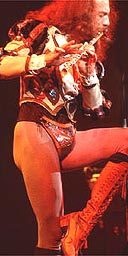
I went to see the rock group Jethro Tull perform on several occasions when I was a lot younger. The front man, Ian Anderson, would stand on one leg playing the flute, which was fairly impressive, but what really drew the eye was the glittering codpiece he wore while doing so.

Ian Anderson lead singer, Jethro Tull

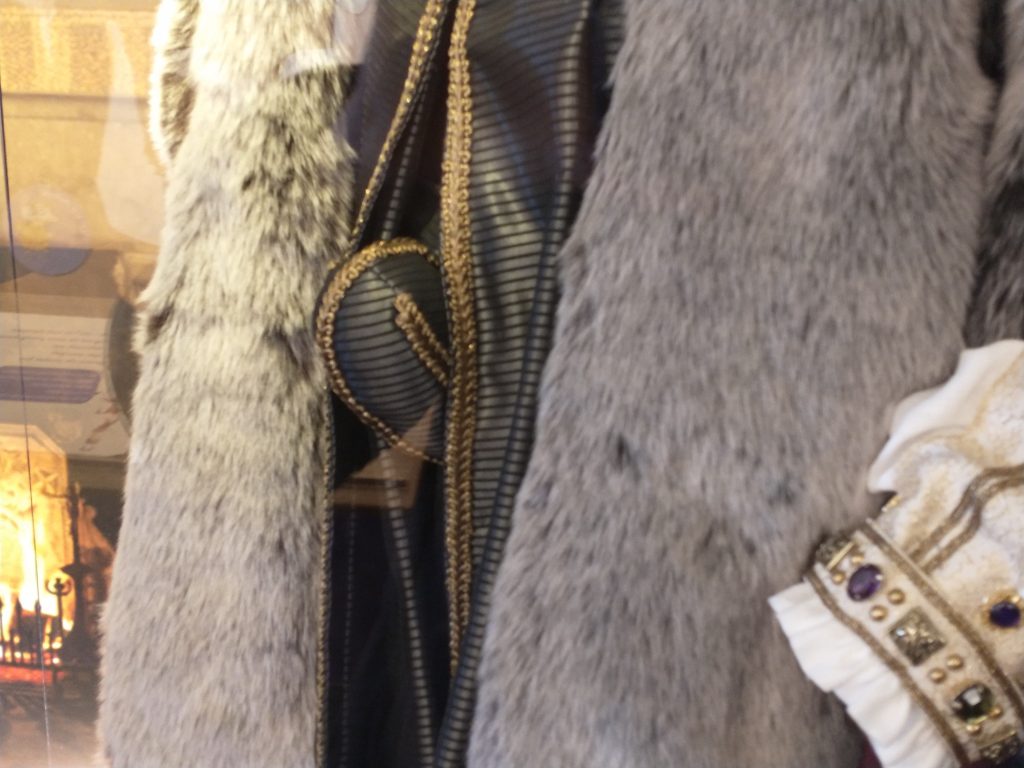
The next time I encountered a codpiece was many years later amongst the dressing up clothes at Stirling Castle. This was on a whole different level to Anderson’s which seemed remarkably discrete by comparison. Indeed, to my 21st century eyes, it was so immodestly large and protruding I was embarrassed to be caught staring at it, and moved swiftly on.

Stirling Castle’s display model

When I came to write my first novel I debated whether my characters should don them or not and wondered if they were indeed commonly worn by the men of Scotland in 1546. I decided to delve, metaphorically, into the codpiece further.

Cod, in this instance, has nothing to do with fish but was the slang for scrotum. Codpieces began as something quite practical – a small piece of cloth to fill the space between tunic and hose, serving the function of the contemporary zip fly and preserving men’s modesty. But as the fashion in doublets became shorter, greater covering was required and the codpiece became a fashion statement of itself, and a sign of virility in the early 1500s. 

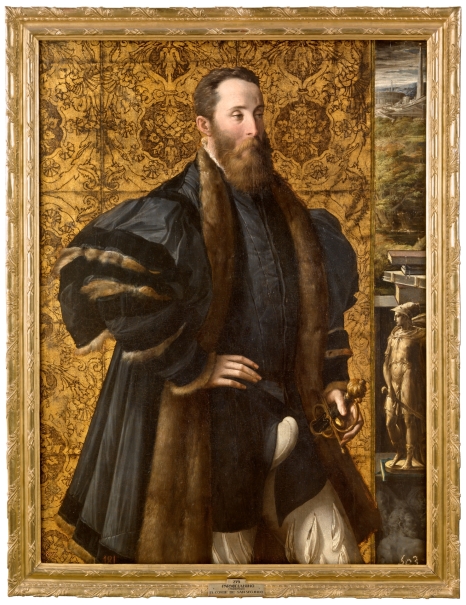
They were inevitably the provenance of the wealthy, a statement of power and masculine bravado and, as such, were worn by the swashbuckler about town as but were not acceptable wear for the humbler members of society – although smaller twill versions have been found.

Pietro Maria Rossi, Museo Nacionale del Prado, Madrid

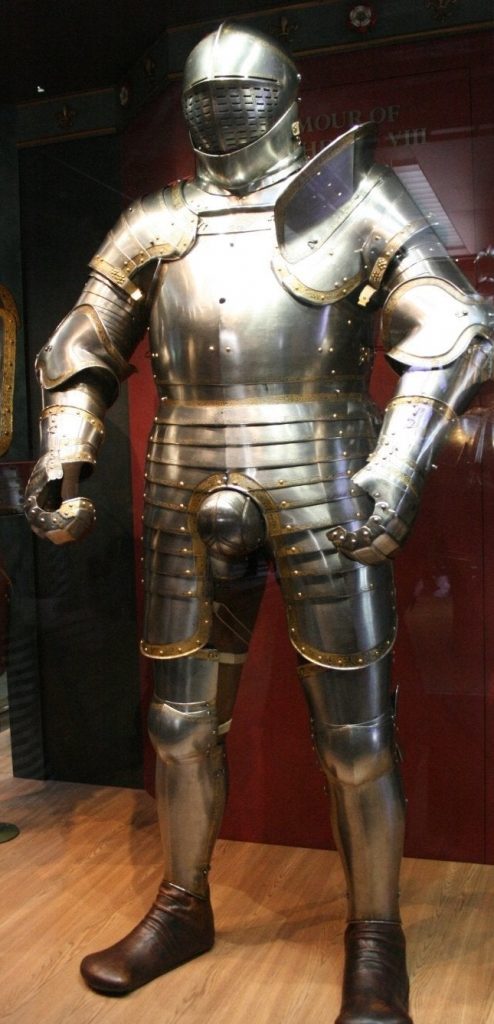
Often they were decorated with tassels, bows or jewels. Some were large enough to store coins, a handkerchief or even a handy snack. The increased padding provided protection from swords, lances and other implements of war. Here’s King Henry VIII’s armour, with protective appendage

King Henry VIII’s armour

But the era of the cod piece was also the period when the pox was rife throughout Europe. Treating syphilis involved a range of herbs, sticky unguents and decoctions. Containing it all within a large codpiece helped protect clothing from stains, as well as keeping the poultice in place.

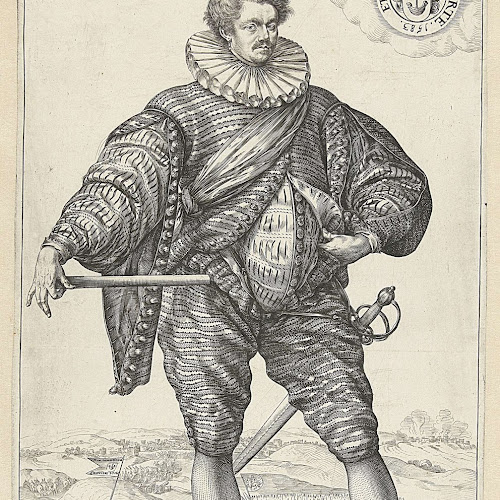
The sumptuary Act of 1562 raises ‘the monstrous and outrageous greatness’ of codpieces, although the new double ruffs worn at the neck also incurred disapproval. Both were categorised as inappropriate apparel for any but those attending court and the phrase ‘aping your betters’ was much bandied about.

In any case by late 16th century the cod piece had had its day and was replaced by the well padded stomach, known as a peascod belly; the codpiece beneath gradually shrinking in size – as in this Portrait of a Gentleman below painted circa 1580 where the codpiece only peeps out.

Pointed Peascod Belly, Rijksmuseum

And did I have my male characters sport codpieces…  in my third in series The Apostates one does pop up, which I had some fun with…

Bethia turned to the man on her other side who was wearing a most alarming headdress, consisting of a number of ostrich feathers set in a metal ring around his bonnet. They were dyed in alternating red and green, drawing all eyes to him and making him seem much taller than he was. Each time he turned his head the feathers brushed against the side of Bethia’s face.
     ‘Your plumes are most wondrous,’ she said.
     He preened, proud as any cock. ‘They are come from Matthaus Schwarz, for he is the king of such designs.’
      Bethia smiled politely.
      ‘You don’t know of Master Schwarz? I thought you were recently living in Antwerp, and he works for the Fuggers who are much in evidence in that city.’
       ‘I do know of the Fugger Brothers for they are great merchants but I didn’t go out much while I lived in Antwerp.’
      ‘You must be very happy to have left then,’ said her companion and she couldn’t stop the bubble of laughter escaping.
      They discussed ostrich feathers, and the delicate task of dyeing them so they weren’t damaged, until the subject was exhausted at which point he moved onto cod pieces, standing up to display the thrust of his.
      ‘Look, I had my jeweller provide a few diamonds to make it sparkle and the tassels are of my particular design. It even cunningly holds this,’ he said fiddling at his package.
      Bethia knew she should avert her eyes but somehow could not. She waited to see what would emerge. He tugged out a handkerchief, flourishing it to the applause of those around them. 

References:

Grace Vicary, Visual Art as Social Data: The Renaissance Codpiece
Ruth Goodman, How to be a Tudor: A Dawn-to-Dusk Guide to Everyday Life
https://www.cam.ac.uk/research/features/what-goes-up-must-come-down-a-brief-history-of-the-codpiece

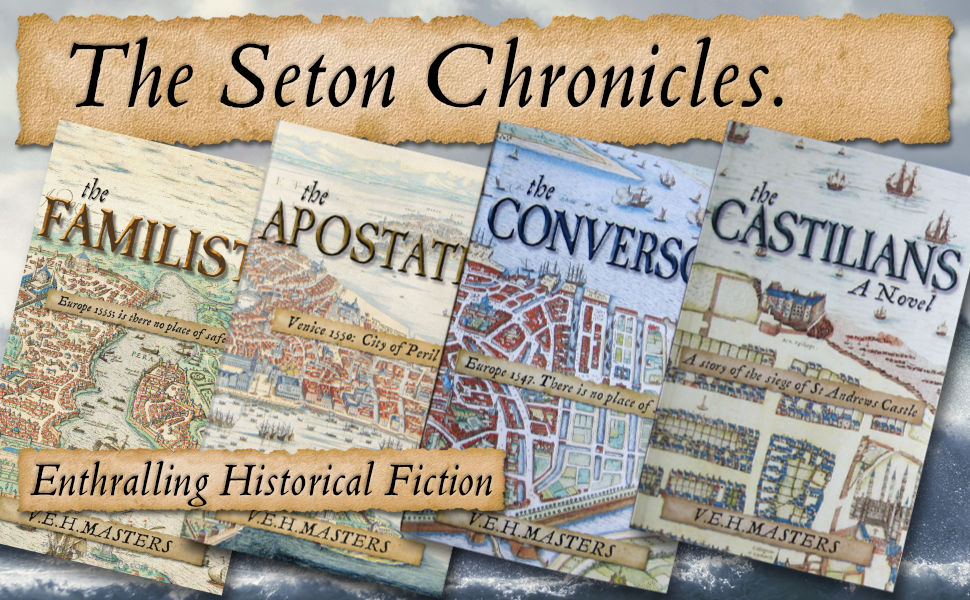
VEH Masters is the awrd winning author of The Seton Chronicles

Click here to buy in Canada.

Click here to buy in USA

Click here to buy in Australia

Click here to buy in UK

My monthly newsletter offers subscribers updates on research and my writing as well as a couple of free short stories (available to subscribers only) and tales of my latest castle visit.

Subscribe here – you can unsubscribe with ease at any time.

Why is it called a Thunderbox?

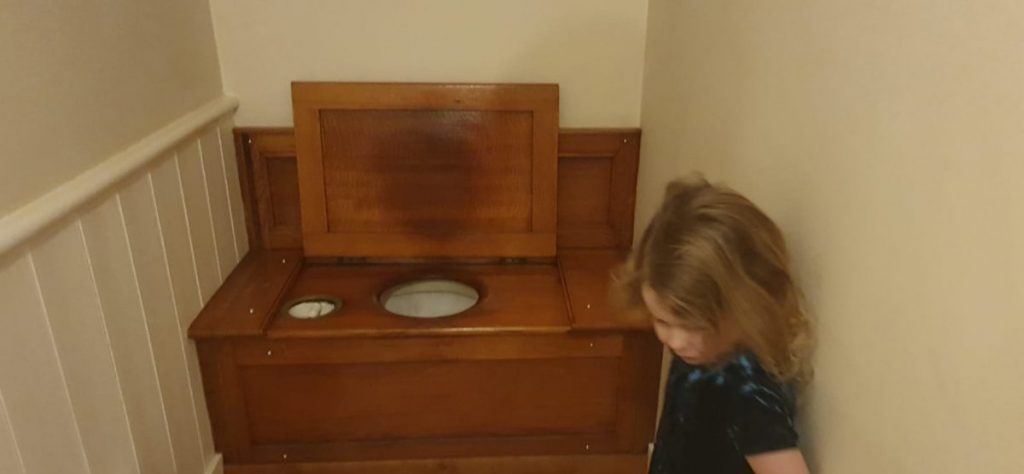
Recently we had the absolute pleasure of a few days stay for a family celebration at Abbotsford, the home of Sir Walter Scott – one of Scotland’s most famous writers. Among the many wondrous things of this wondrous house was the thunderbox, found amid the maze of corridors off the kitchen.

Thunderbox at Abbotsford

An object of fascination and some fear for the children of the party, they were curious as to why it was called a thunderbox. The answer was much more mundane than I expected. It is a thunderbox because of …er… the noise it makes when in use. I’ll leave the rest to my reader’s imagination, although I do have one final thought to add – which you’ll find at the end (appropriately enough) of the blog.

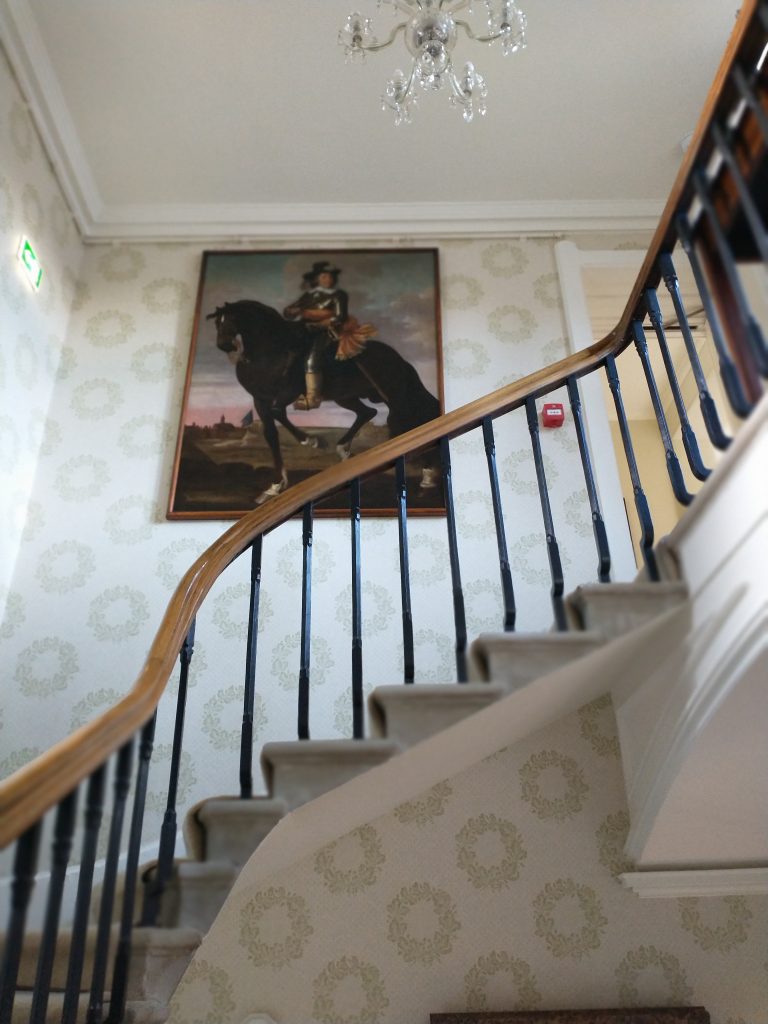
The Guest’s Staircase

There were three staircases in this maze of a house and according to my fitbit I managed to climb 111 floors in three days. It felt like much more. By the final day I was beginning to get some sense of the layout but the chances of getting lost on any journey between lower ground floor kitchen and top floor bedroom were always considerable. The kids loved it – actually we all did.

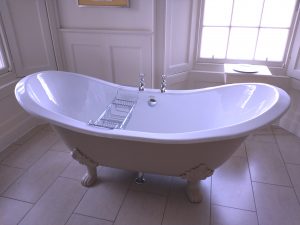
Bath at Hope Scott Wing Abbotsford home of Sir Walter Scott
Quirky bath

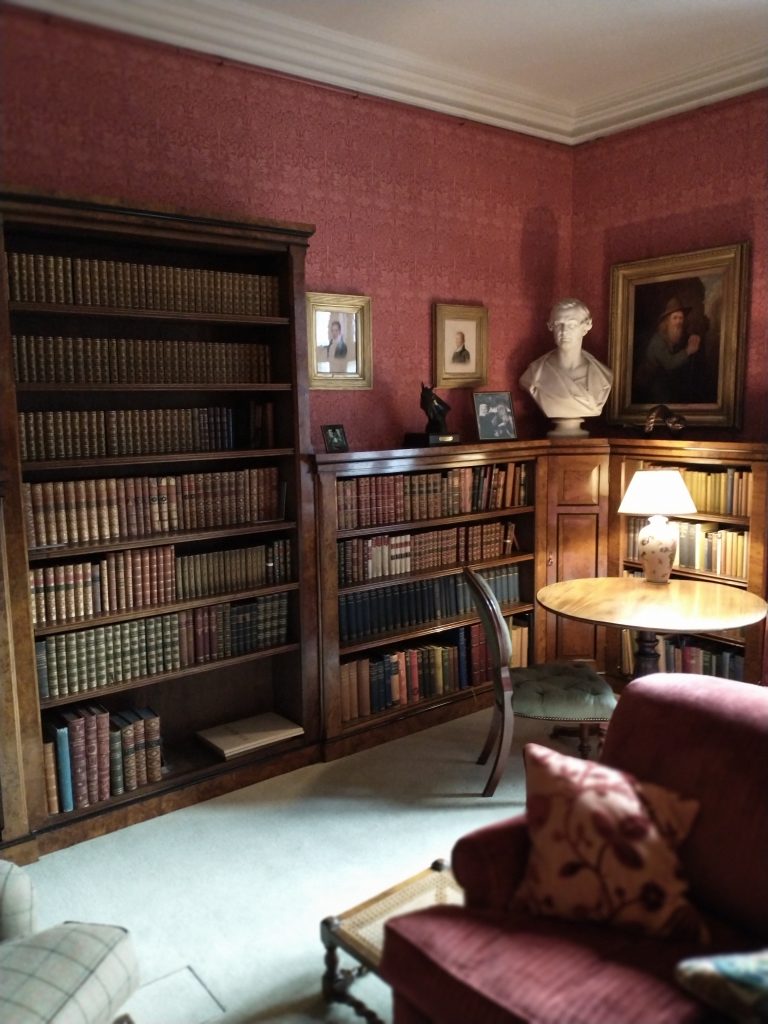
The house was designed by Sir Walter Scott and, after his death in 1832, was opened to the public who came in their droves. We stayed in a wing which includes the oldest part of the building, as well as the library where Scott worked before the main house was built. Of course I went there to write and actually had quite a productive time – I’d like to think I was channelling Scott …who knows!
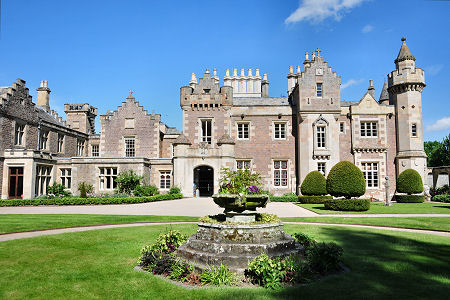
The Library Sir Walteer Scott Abbotsford
Scott’s library before the main house was built

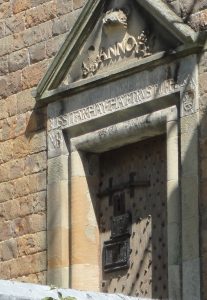
The house is built with all Scott’s vivid imagination, baronial splendour and love of Scotland. Below is a door he rescued from the old Tollbooth in Edinburgh, demolished in 1817, and which he had inserted high into the wall of his home.

Door rescued from demolished Tollbooth in Edinburgh

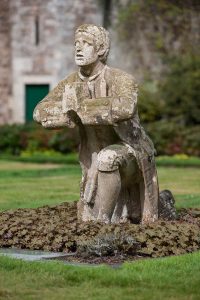
In the garden there are several sculptures including this of  Morris, one of the characters from Rob Roy. Morris is on his knees begging forgiveness from Helen MacGregor-Campbell after betraying her husband, the eponymous Rob Roy, to the authorities. The hands are still a solid block because the sculptor, John Greenfield, died before he could finish the work.
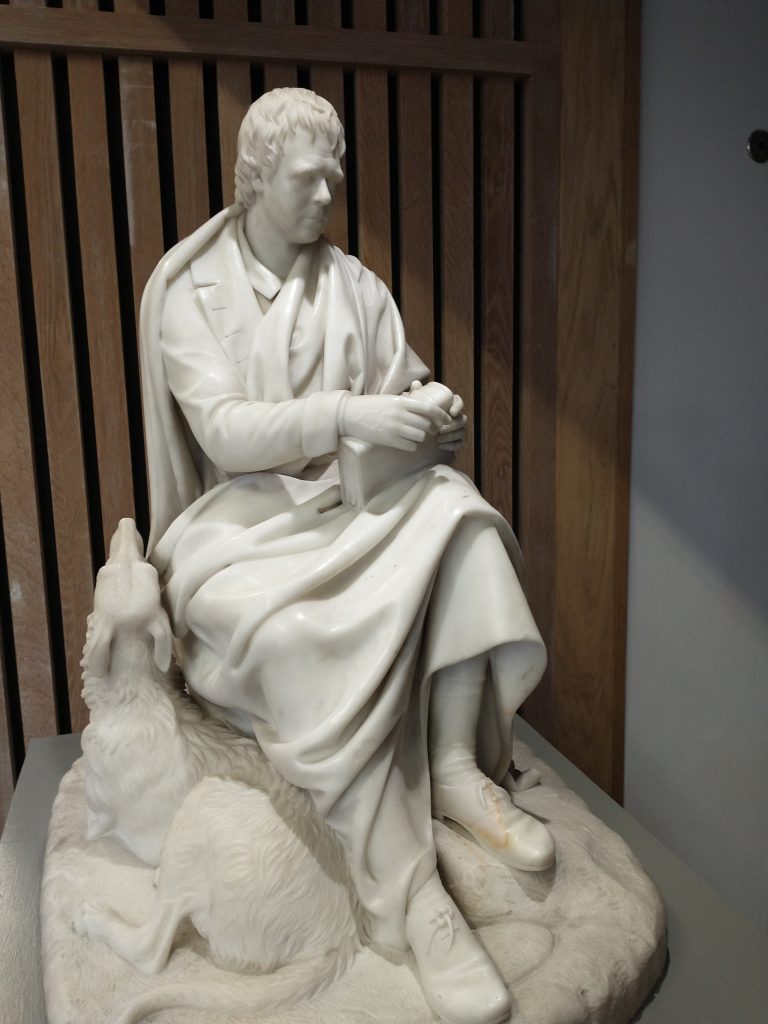
Morris begs for forgiveness

But his determination to create his dream house, gardens and estate (he was an early conservationist and planted hundreds of trees) nearly destroyed Scott. He ended up in debt to the tune of £10 million in today’s money.

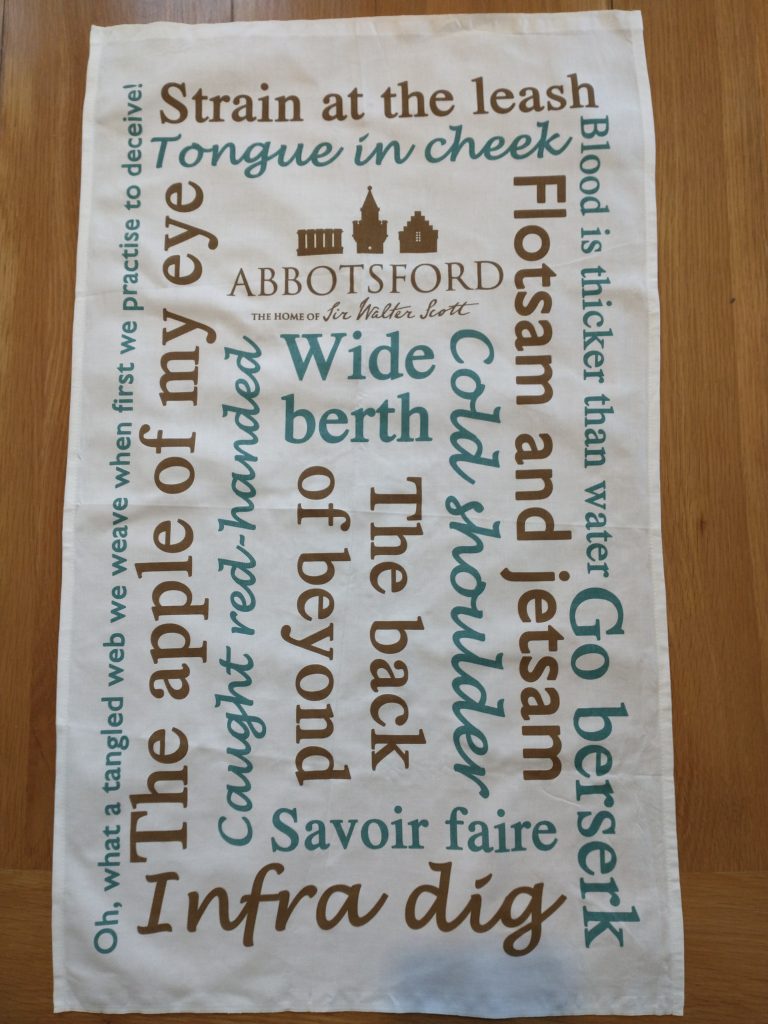
And my buy of the short break was a tea towel with some quotes from Scott’s novels which are now common parlance…

Some famous sayings from Scott's writing
Some famous sayings from Scott’s writing

This is a magical place to stay, lovingly cared for and remarkably warm for an old house during a storm ridden few days in February.

Sir Walter Scott

PS The original thunderboxes, in the days before indoor plumbing, would have consisted of a metal bucket beneath the seat – which no doubt made a fairly thunderous noise when used!

The Perils of making an Audiobook

My good friend Marian is both a great hillwalker and a great lover of books – and manages to combine the two perfectly thanks to audiobooks. Indeed she’s such a big consumer of audio that she rarely reads. During lockdown when her walks were restricted to the local streets she says, ‘having an audiobook made it much less boring’.  
Marian Larsen audiobook The Castilians by VEH Masters

So when I was considering making an audio version of The Castilians and narrating it myself, who better to ask for advice than Marian. I am nothing if not a demanding friend, so I sent her a, fortunately short, recording of me reading a couple of pages.

Marian phoned the next day. 

   ‘I’m not sure it’s a good idea,’ she said. She’s nothing if not an honest friend.
   ‘Why not?’ I asked, trying to control the rising note of indignation in my voice. ‘I’ve listened to loads of podcasts and read lots about how you can record your own audiobook.’
   ‘Your voice is good, your pacing’s good, your Scottish accent is of course excellent but… it’s the dialogue. The listener needs to know which character is speaking when.’
   ‘Ah, I get it,’ I said, indignation fading. ‘It’s probably okay to do-it-yourself if it’s non fiction, like a self-help book.
   ‘Yes,’ she said, ‘that would be okay.’ I could hear the relief in her voice that she didn’t have to devote any more time to soothing ruffled feathers.

So I contacted my friend Beverley who is a fabulous singer and actor – and who was actually available since the pandemic meant that all the work she had lined up was either postponed or cancelled.

Beverley Wright narrator of The Castilians by VEH Masters
Beverley Wright narrator of The Castilians

Bev, after studying the book, soon told me that there were at least 24 different characters therein who had dialogue to say – clearly some considerably more than others. We spent time discussing the motivation, age and background to the main characters for Bev considered this the lynchpin, and the biggest challenge, to getting the recording right so the story becomes real. 

She says, ‘it helps when you like the book and care about what happens to the characters. I read it aloud several times and marked anything that was a problem such as a change in tone or feeling or emotions. Then I would memorise where those changes were so that it flowed’.

Bev’s advice to anyone narrating for the first time is don’t be afraid, enjoy the experience. And the most important thing is to make sure the writer is happy and be open to suggestions from them – which is something I very much appreciated about Bev’s approach.

Beverley Wright narrator of The Castilians by VEH Masters

My husband, Mike has a home recording setup already, so it was straightforward getting the studio configured for producing the audio tracks. He found lots of advice online including techniques for avoiding pops and clicks when the narrator speaks. Minimising background noise is always a challenge, so care with cabling helps reducing signal noises like mains hum. Perhaps the hardest part of the exercise was meeting the Findaway Voices and ACX specifications for sound loudness and peak levels. His advice to anyone thinking of recording their own book is to go to Findaway and ACX, read the info about preparing audio files to make sure it is something you’ll be comfortable doing – before you begin!

Here’s a short extract for you to listen to and hear the quality of Bev’s work. You can win a free copy by subscribing to my newsletter https://vehmasters.com/newsletter. You can unsubscribe at any time.


A Monk’s Life

It’s been a good work year, despite all the global challenges. Great to get the second book The Conversos out and the audio version of The Castilians.

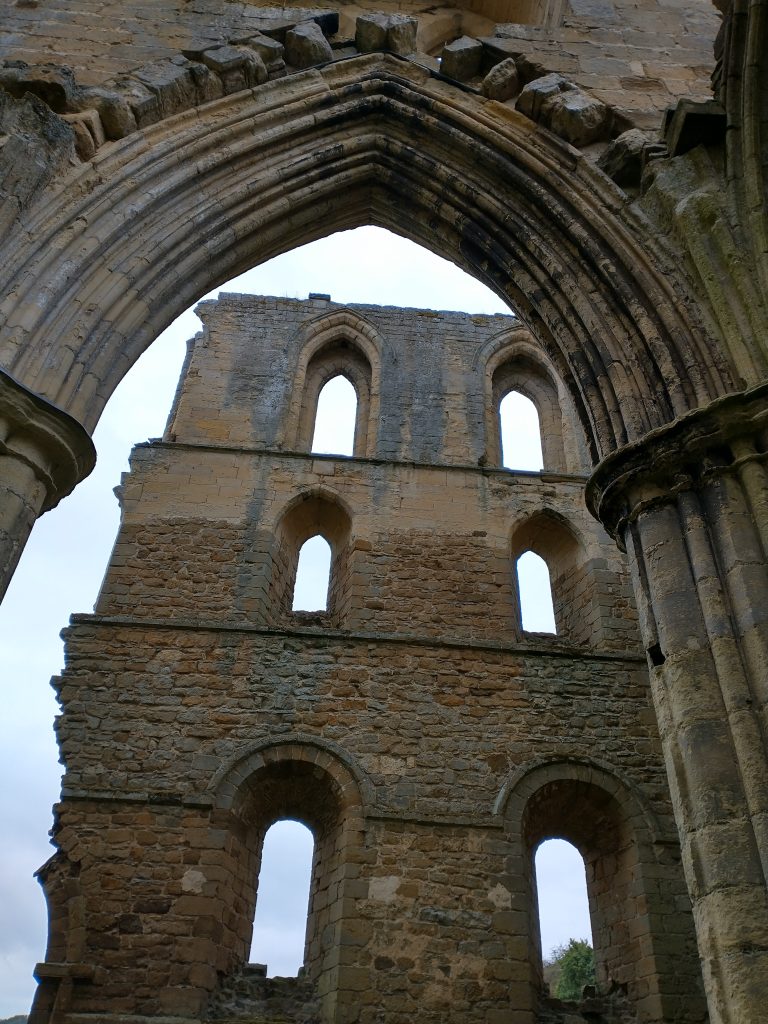
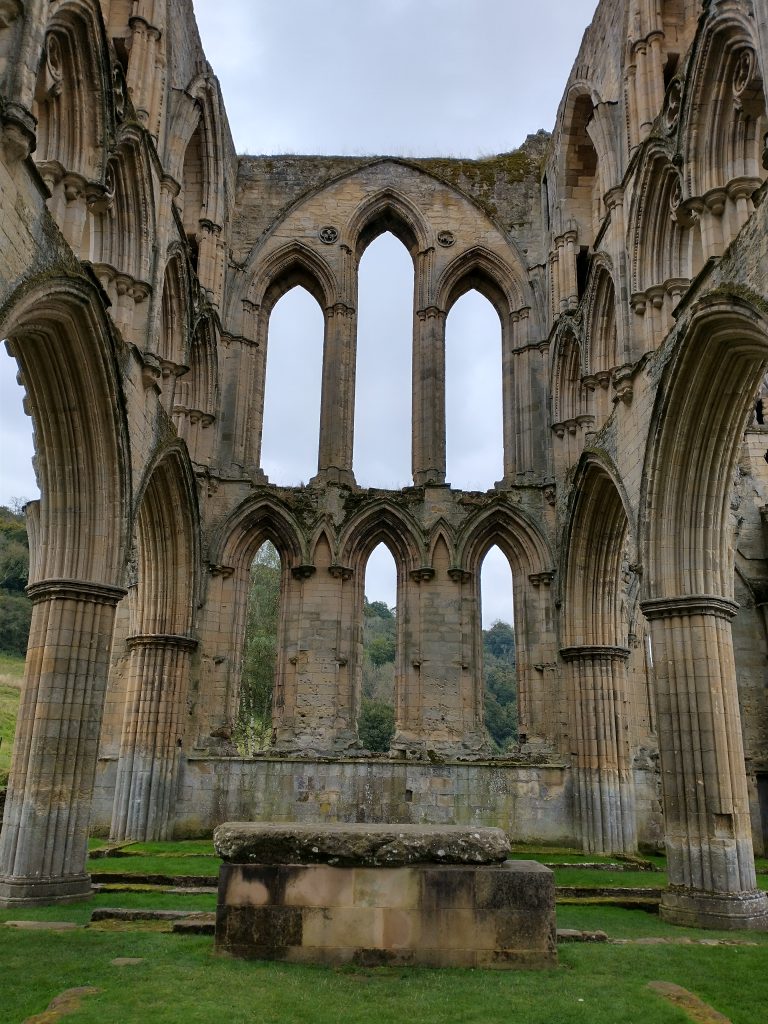
We managed a wee trip to Yorkshire in October and I was in castle heaven. The most dramatic place we visited was Rievaulx Abbe
Rievaulx Abbey High Altar facing Jerusalem
High Altar facing Jerusalem

I was aware that most churches (and certainly in medieval times) were built in the shape of a cross. But didn’t realise that they were also built with the top of the cross facing Jerusalem and the East – how did I not know that!

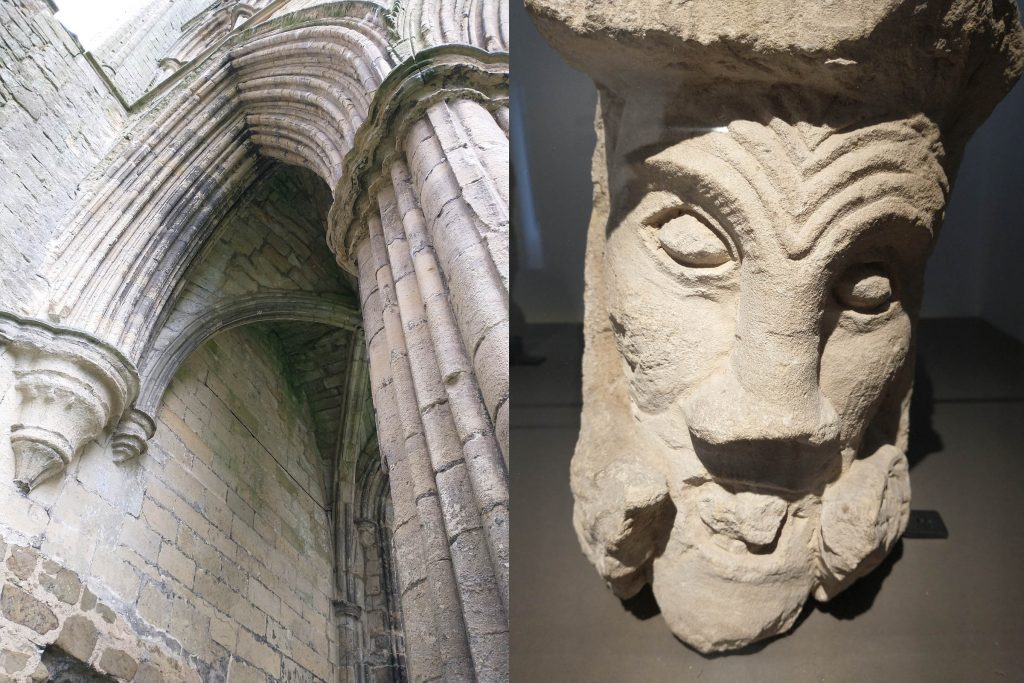
The detailing, the work of the stone masons, all done to glorify God is stunning and yet the monks lived a simple life.

Rievaulx Abbey detailing

The number of monks fell dramatically during the Black Death in the late 1300s. By 1538 King Henry VIII had his beady eye upon the rich pickings to be gleaned from the Catholic Church.

Rievaulx Abbey

Henry sold the land and the buildings but kept the plate, abbey bells and the lead from the roof for himself. It’s remarkable that these building have been without roofs for nearly five hundred years and yet the immense walls are still standing.

Of course I had to investigate the sanitation…

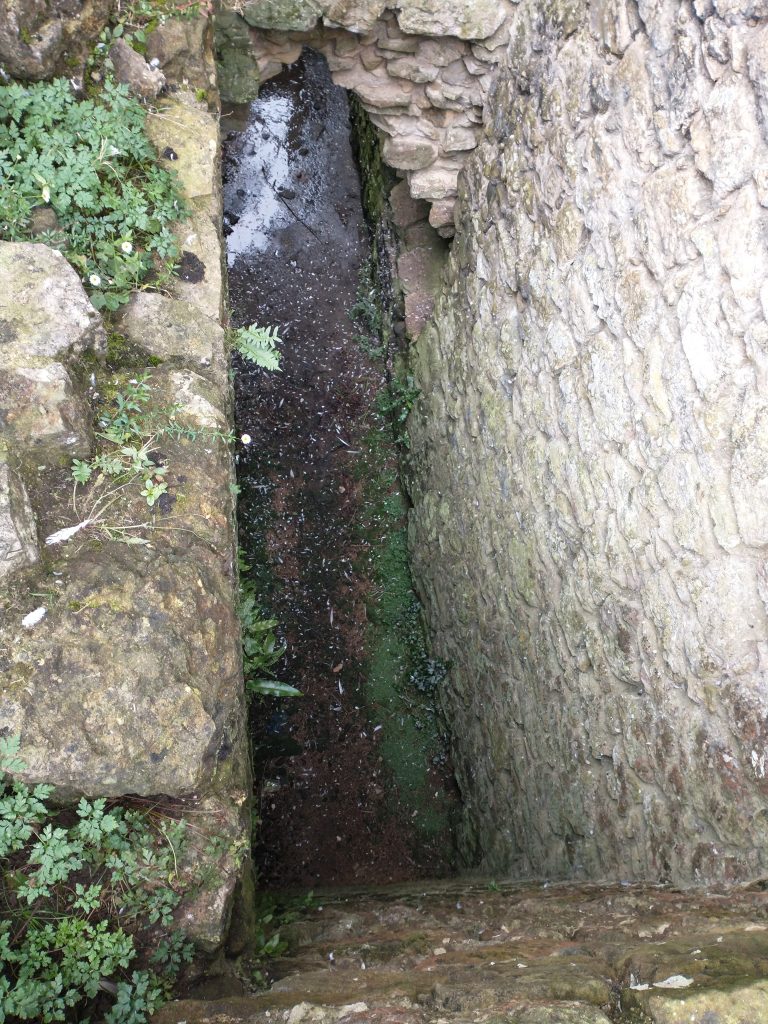
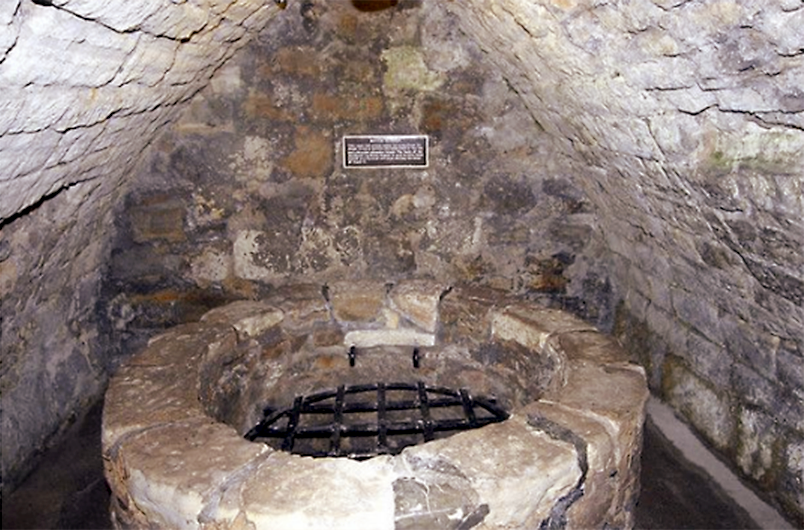
The monks’ latrines, known as the reredorters, were to be found at the top of a three-storey building conveniently connected to their dormitory – but a very long drop if you were stumbling about in the dark at night.

Sanitation at Rievaulx Abbey
The sewer three stories beneath the latrine, which drained into the River Rye

A line of privies were set over the drain and the monks sat on removable wooden seats. The brethren were permitted to use the toilets whenever necessary but must exercise modesty at all times: they had to cover their faces with their hoods, fold their hands in front of them and ensure that their cowls reached the floor.

Before Matins a check was made that no monk was still in bed or had fallen asleep on the privy.

see The Monastic Constitutions of Lanfranc, ed. and tr. D. Knowles, rev. C. N. L. Brooke (Oxford, 2002), pp. 117-119.]

The Seton Chronicles Historical Fiction by V E H Masters

Click here to buy in Canada.

Click here to buy in USA

Click here to buy in Australia

Click here to buy in UK